

Oven Temperature Uniformity: A Practical Validation Plan for B2B Buyers
A single display temperature cannot prove even cooking. Learn how to compare temperature spread, overshoot and recovery under repeatable conditions.
LINDEN INSIGHTS
Practical buyer guides, engineering notes and market-ready checklists for countertop oven programmes.
A single display temperature cannot prove even cooking. Learn how to compare temperature spread, overshoot and recovery under repeatable conditions.

Air fry is a cooking mode, not a complete engineering specification. Buyers should validate airflow, load capacity and food results together.

Rated wattage alone does not explain speed or energy use. Compare preheat, door-opening recovery and idle consumption under the same method.
Nominal litres are useful, but tray area, rack spacing, door clearance and airflow zones often decide what customers can actually cook.
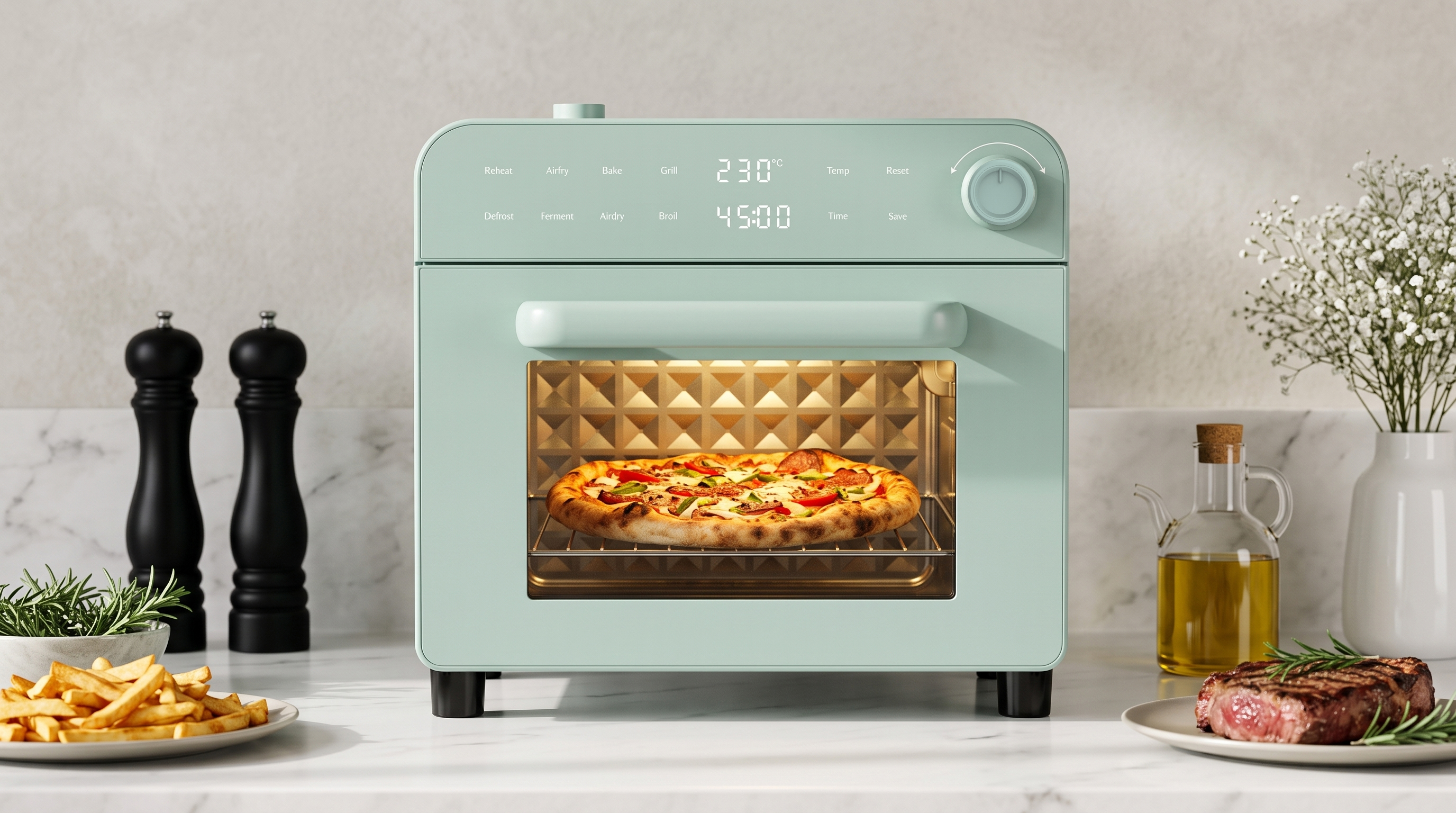
A practical framework for comparing manufacturing capability, compliance readiness, project risk and launch support before supplier nomination.
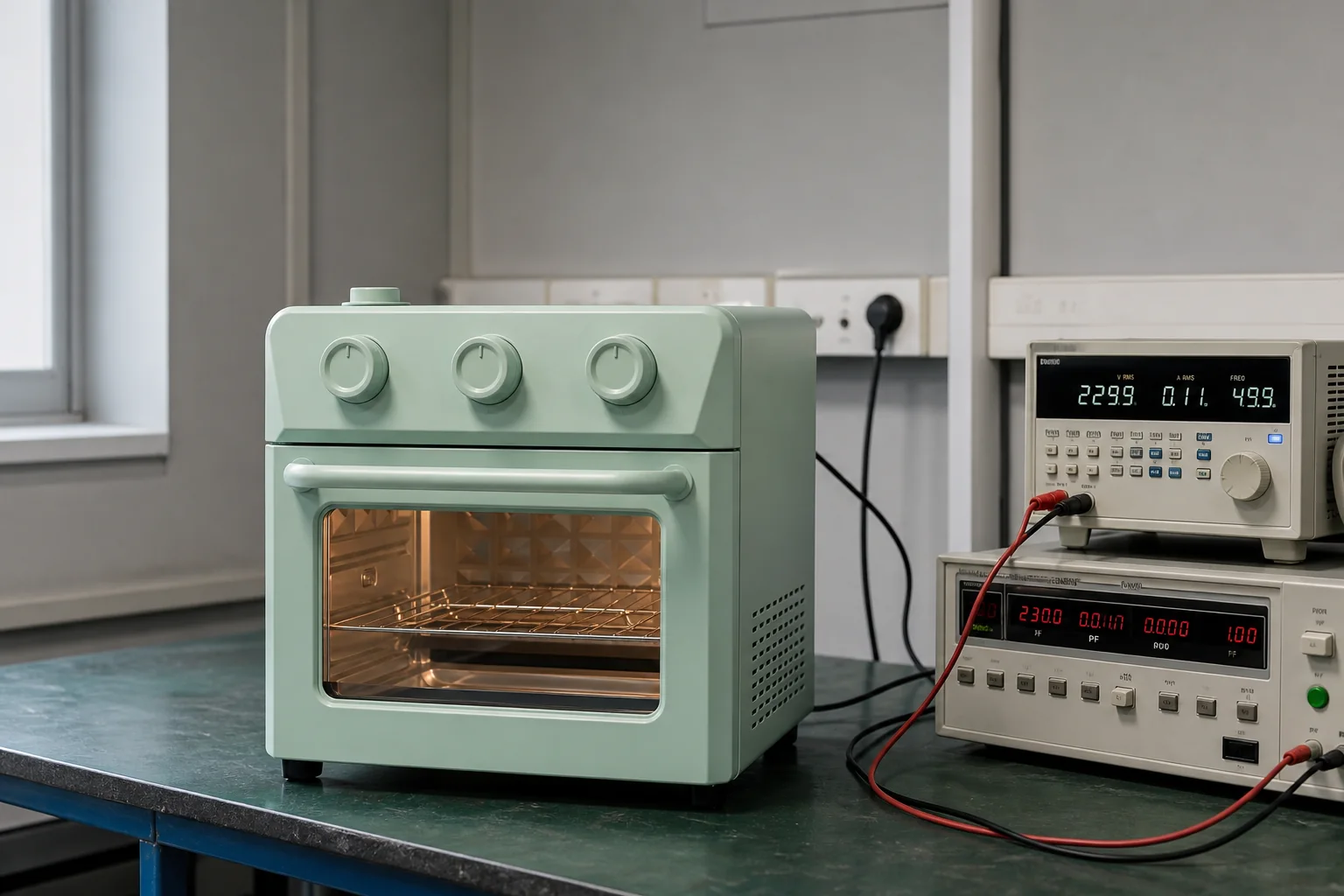
A 220–240 V rating does not make every grid condition identical. Voltage, frequency and local supply variation can change heat-up time, fan behaviour and the evidence behind a performance claim.
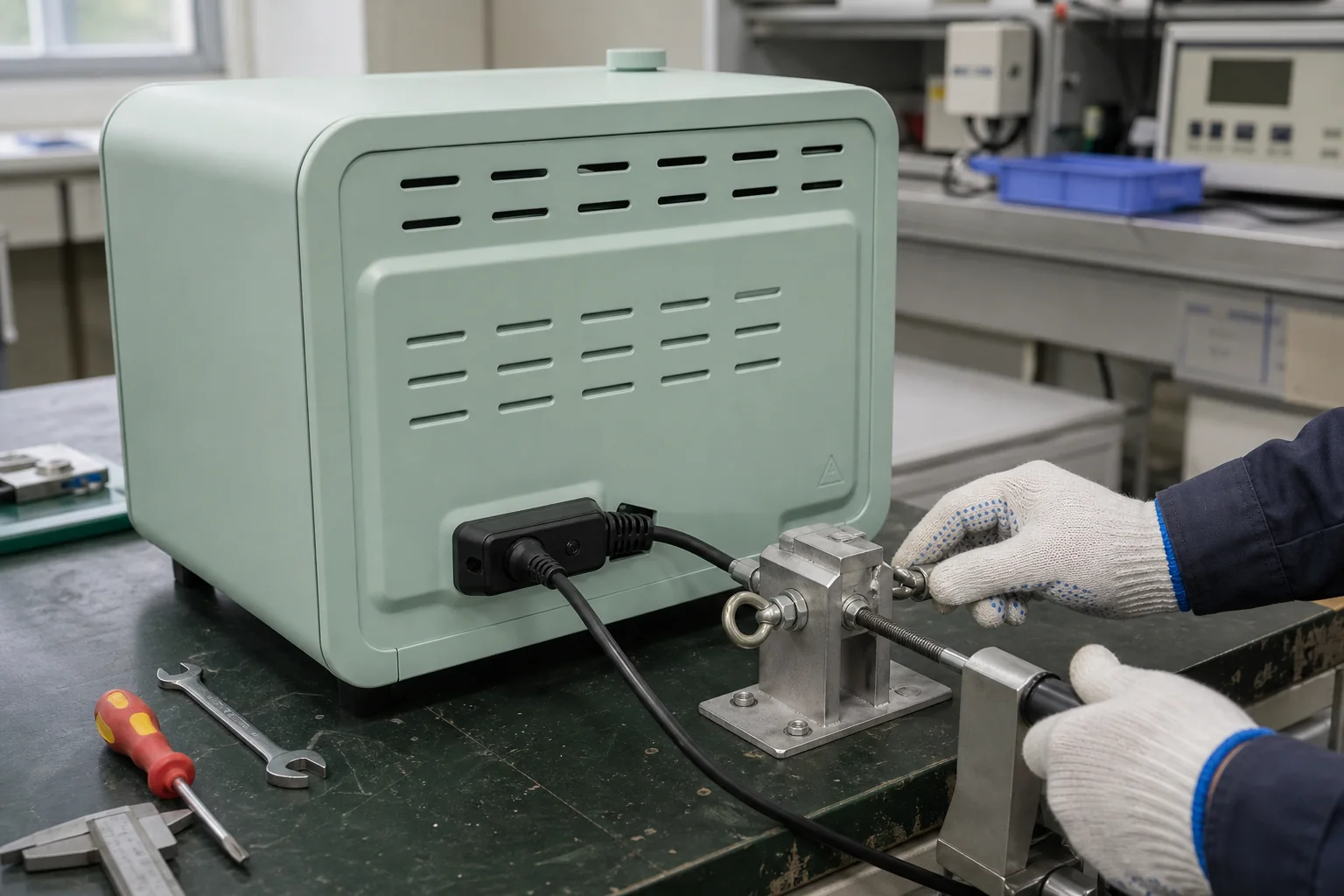
Plug, cord, inlet, terminal and strain relief form one current-carrying system. Changing a cord set late can alter temperature rise, mechanical stress and certification status.
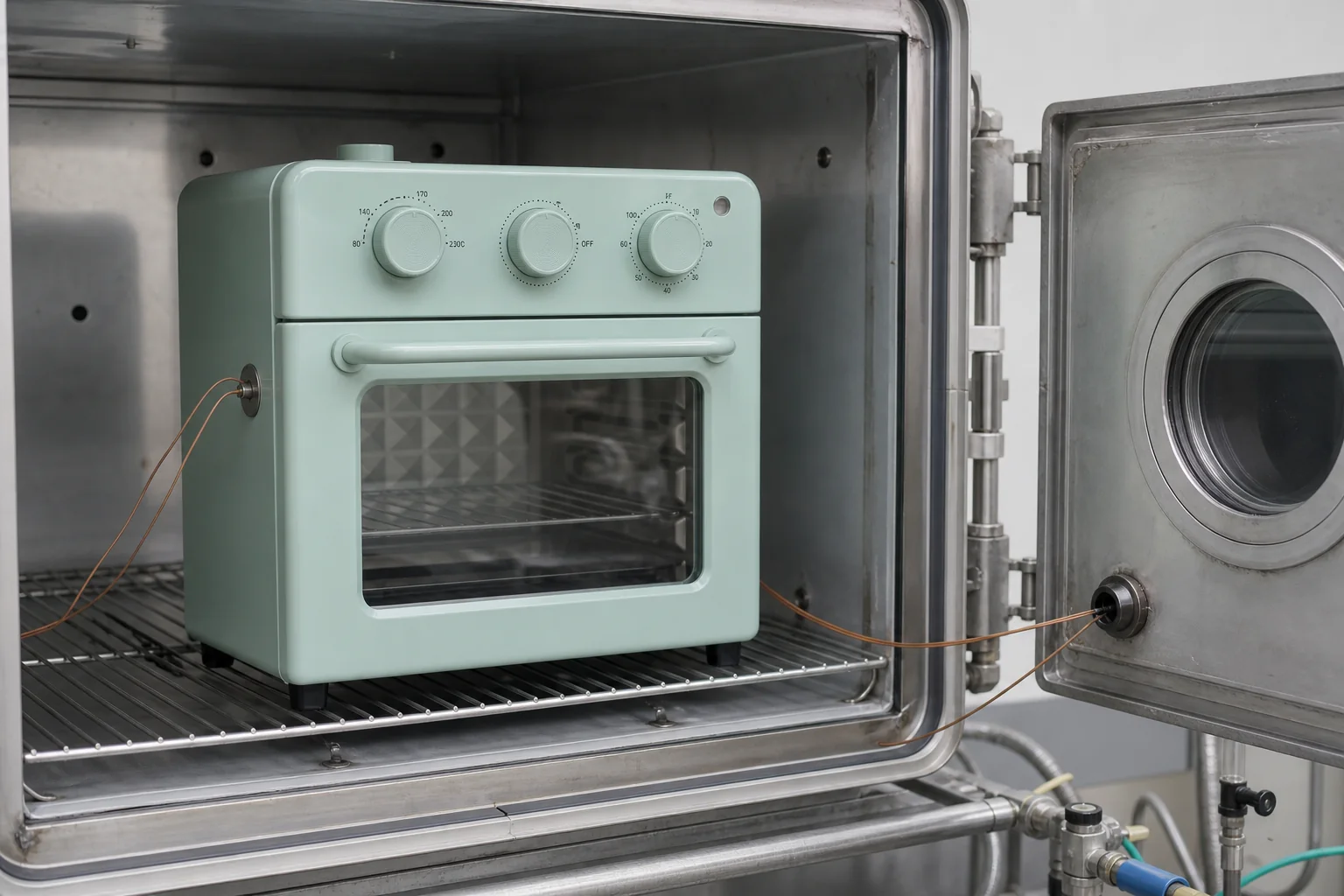
Air pressure falls with altitude. Electrical clearances, cooling assumptions and cooking behaviour deserve a specific review when the sales territory includes high-altitude cities.
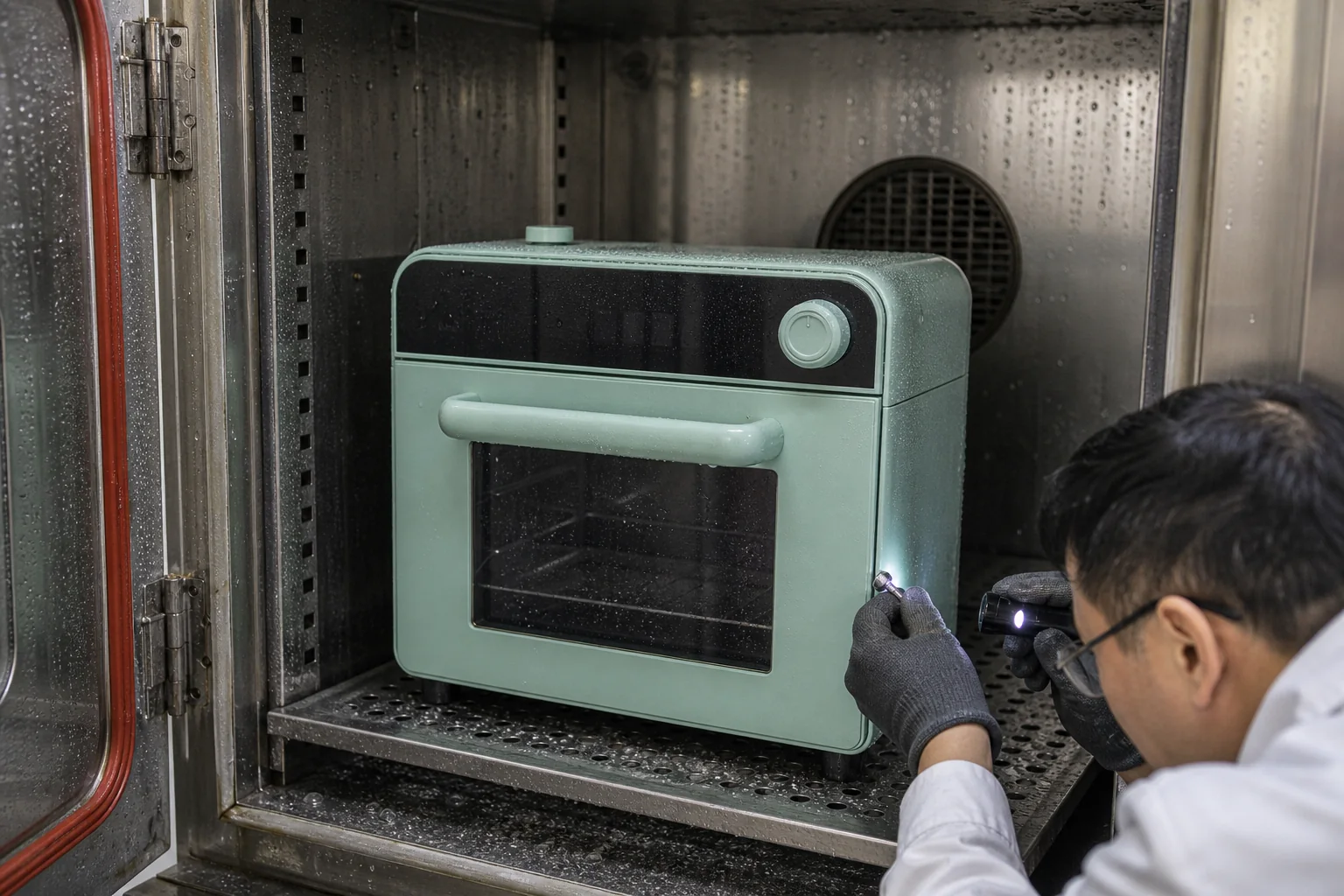
Salt and humidity reach screws, cut edges, connectors and circuit boards that customers never see. A bright front panel alone says little about long-term corrosion resistance.

A usable RFQ does more than request a price. It fixes the commercial assumptions, technical boundaries and evidence requirements that make supplier quotations genuinely comparable.
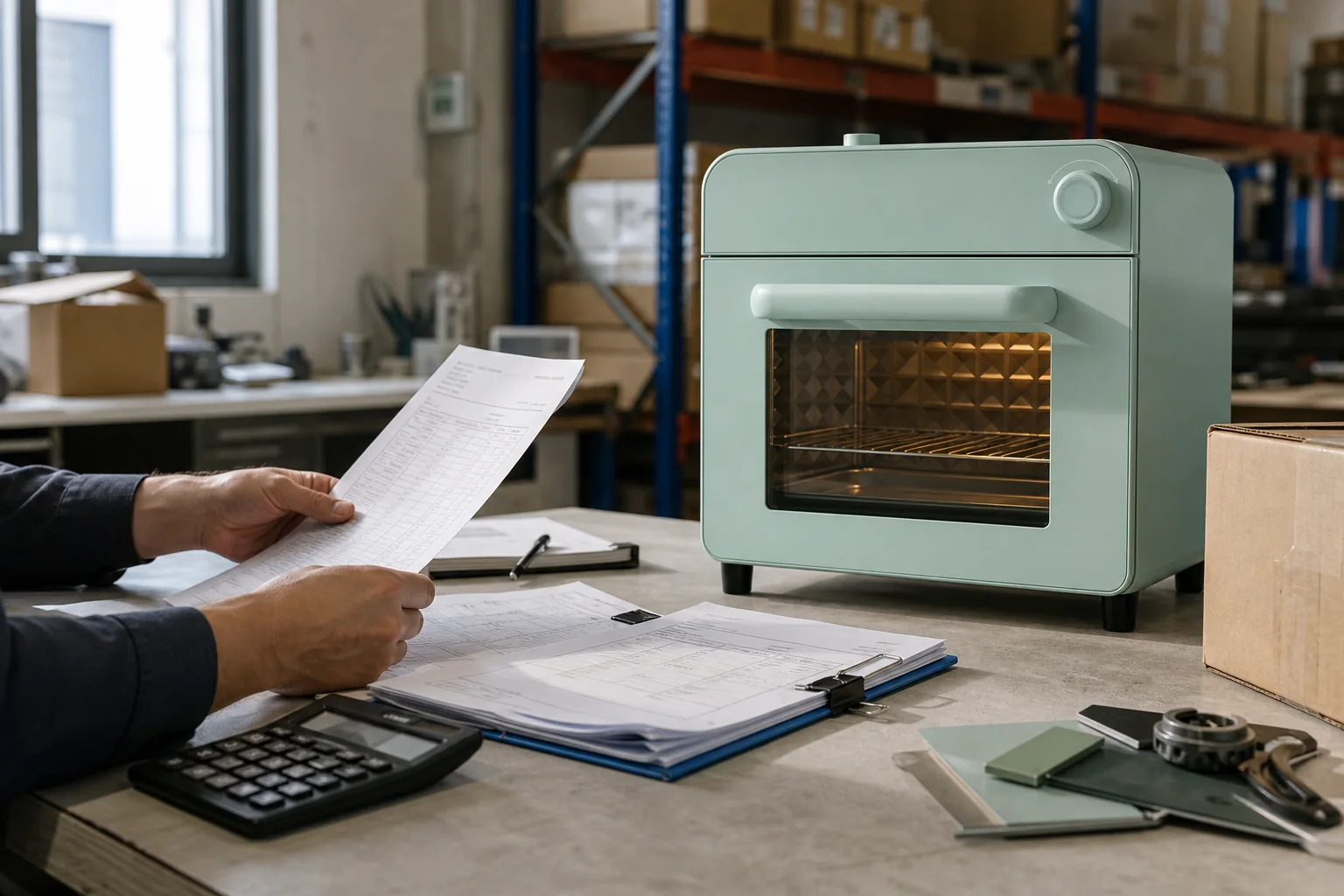
Unit price is only one line in an oven programme. Buyers should normalise certification, tooling, packaging, logistics, quality and warranty assumptions before choosing a supplier.
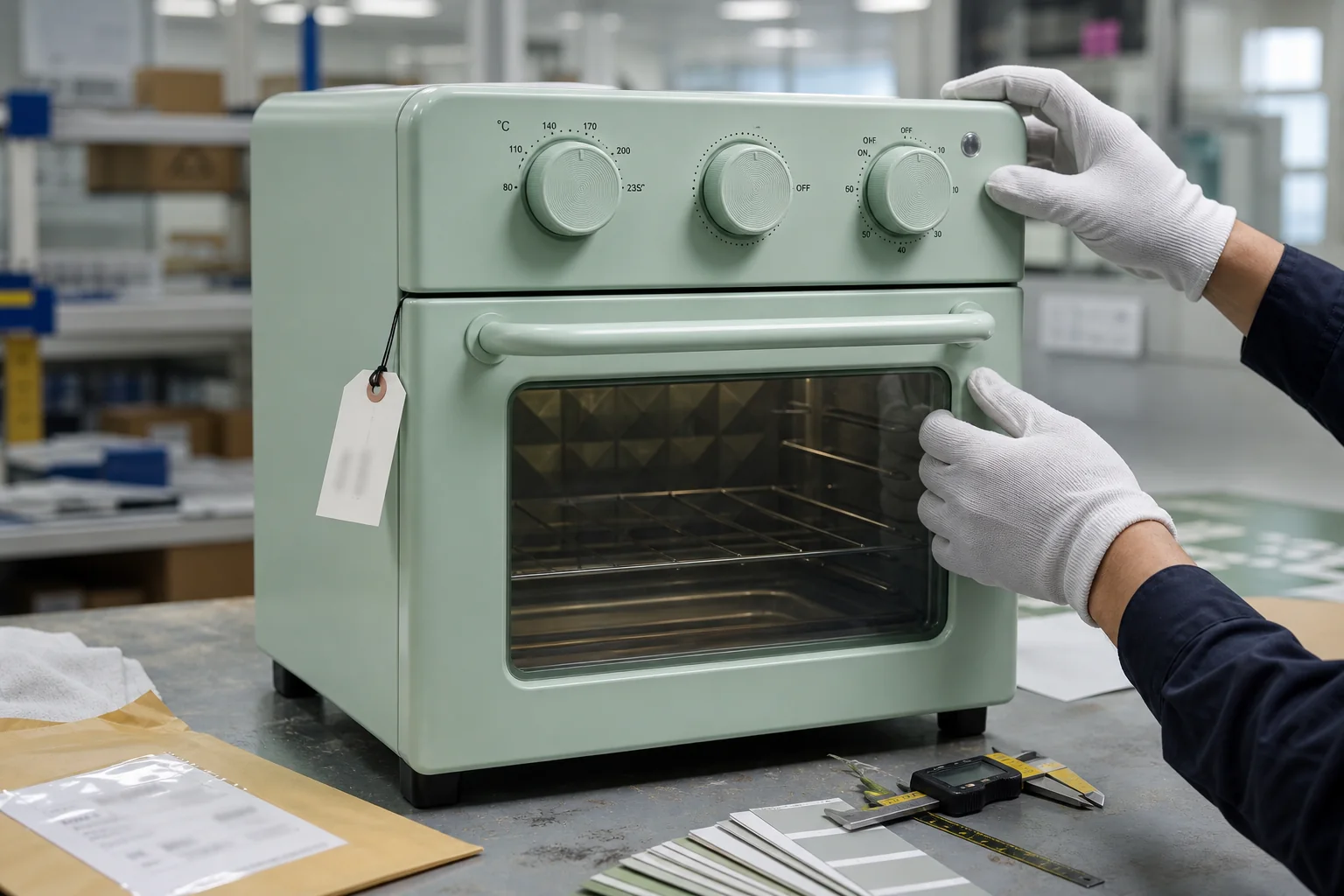
A golden sample is useful only when it is tied to a controlled specification, approved deviations and measurable acceptance criteria.
Standards follow intended use and construction. Selecting the wrong scope early can invalidate quotations, test plans and launch timing.

The EU oven label reports cavity volume and energy per cycle, but small and portable ovens can fall outside this specific labelling scope.
Trays, racks, coatings, seals and accessories need material-specific evidence linked to intended food, time and temperature conditions.

PFAS is a broad chemical class. A credible sourcing decision starts with exact coating identity, intended use, migration evidence and market-specific rules.
Acrylamide can form in starchy foods during high-temperature cooking. Program design should manage time, temperature and endpoint color together.
Cavity air temperature and food core temperature answer different questions. Safe-use content should direct customers to a food thermometer.
Cleaning systems affect cost, insulation, controls, coatings, instructions and customer expectations. Compare the whole system, not the feature name.
A cool handle does not mean every accessible surface stays cool. Claims need defined points, operating modes and standardized safety evaluation.
A dB value is incomplete without distance, room, operating mode, load and measurement quantity. Write conditions before setting a limit.
Reliability is not one cycle count. A credible plan links use profile, failure modes, sample size, inspections and production controls.
CE marking, IECEE CB documents and US NRTL certification serve different legal and market functions. Plan the route by country and channel.
DOE standards and test procedures apply by defined product class and scope. Buyers should map models early and preserve test evidence through launch.
EMC concerns electromagnetic disturbance; RoHS restricts substances in electrical equipment; REACH governs chemicals more broadly. One report cannot replace all three.
Security depends on the device, app, cloud service and update process. Define support periods, vulnerability handling and safe remote functions before nomination.
Packaging should be tested as a product-package system against the real parcel, LTL or unit-load channel—not with a generic drop claim.
The approved sample is a configuration, not just a shape. Control component, material, process, firmware and factory changes through evidence-based approval.
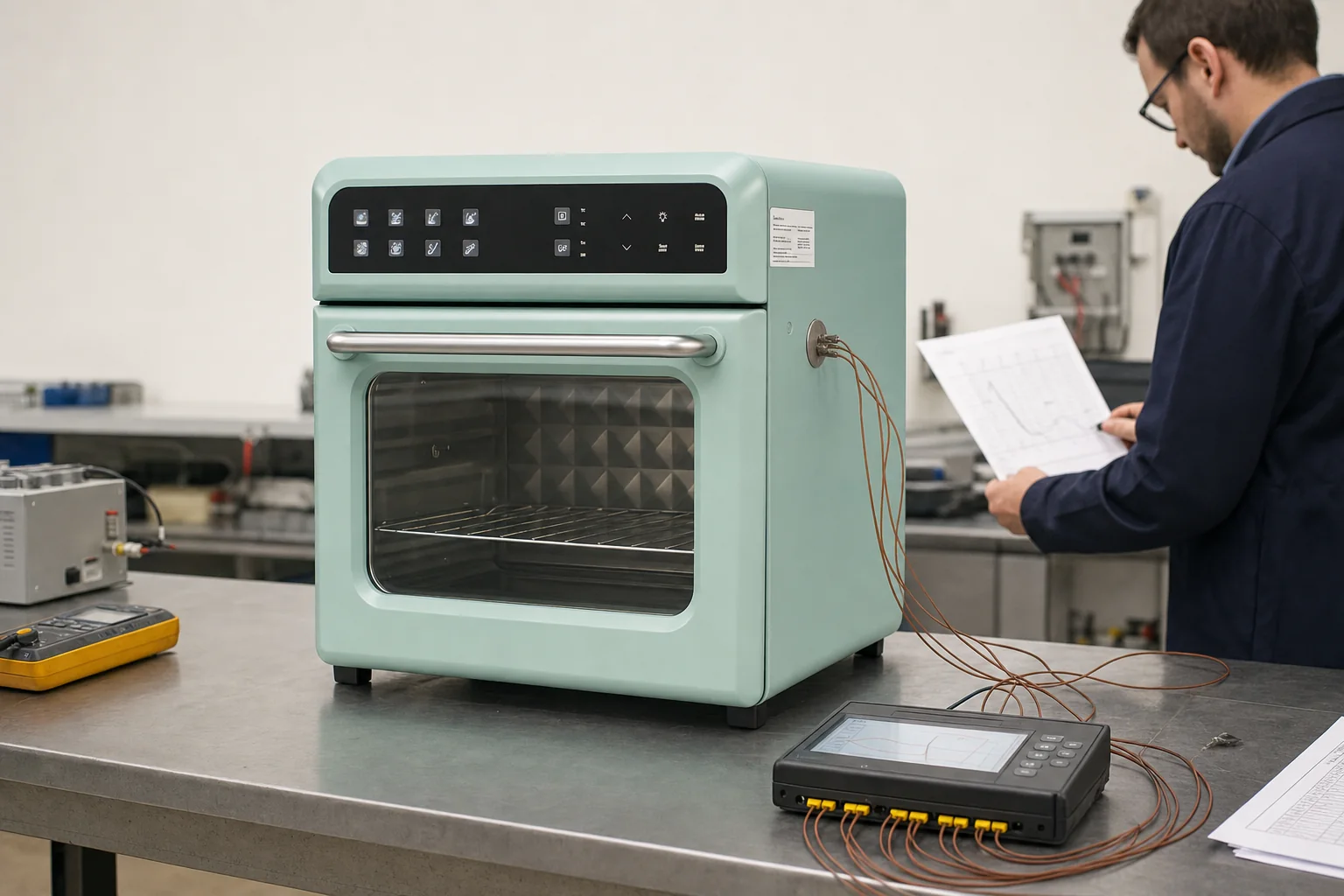
A result close to a limit is not self-explanatory. Buyers need the measurement uncertainty and the decision rule before treating a laboratory report as a clear pass or fail.
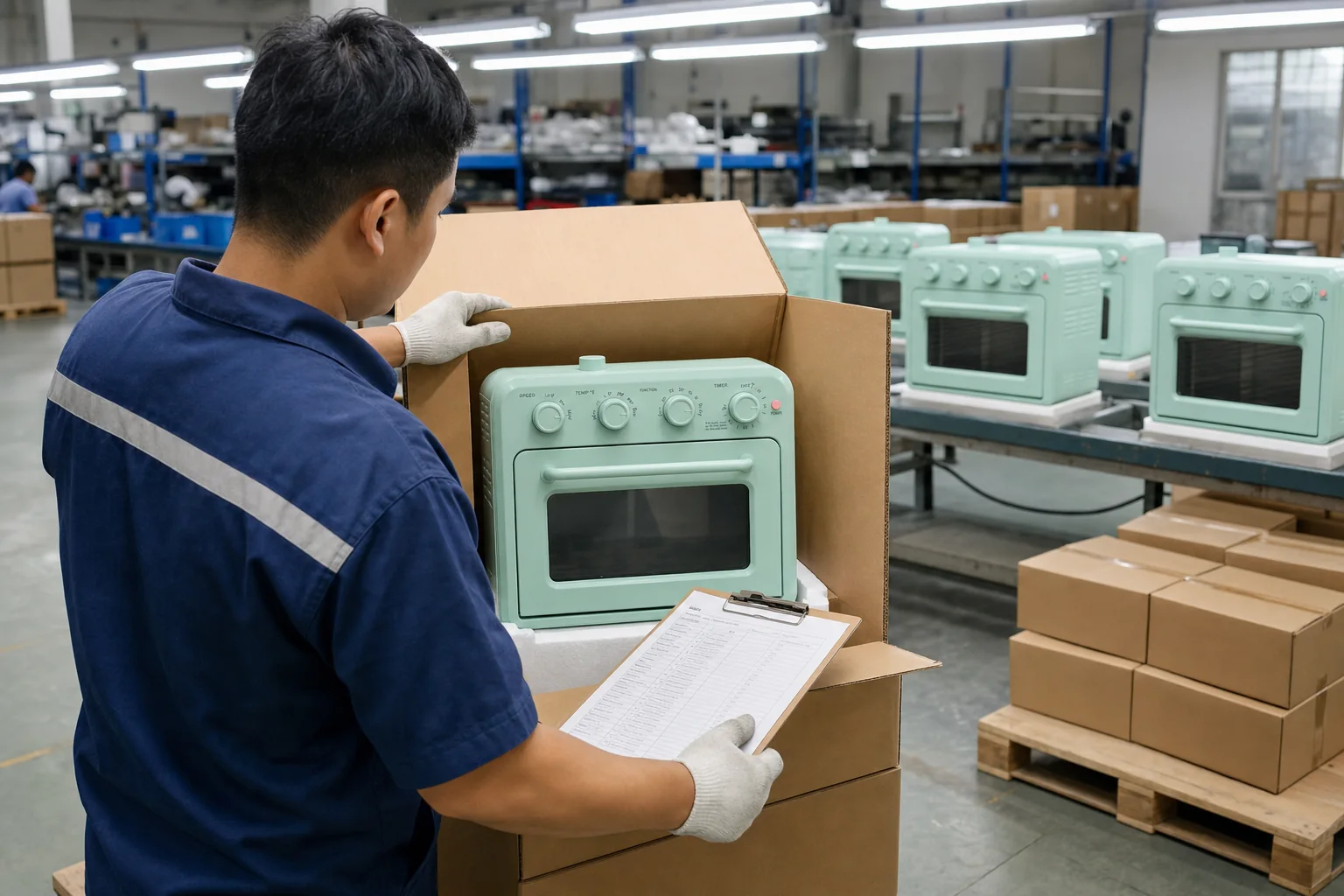
Acceptance sampling helps decide whether to accept a lot. It does not promise that every shipped unit is good, and it should not replace controls for safety-critical characteristics.
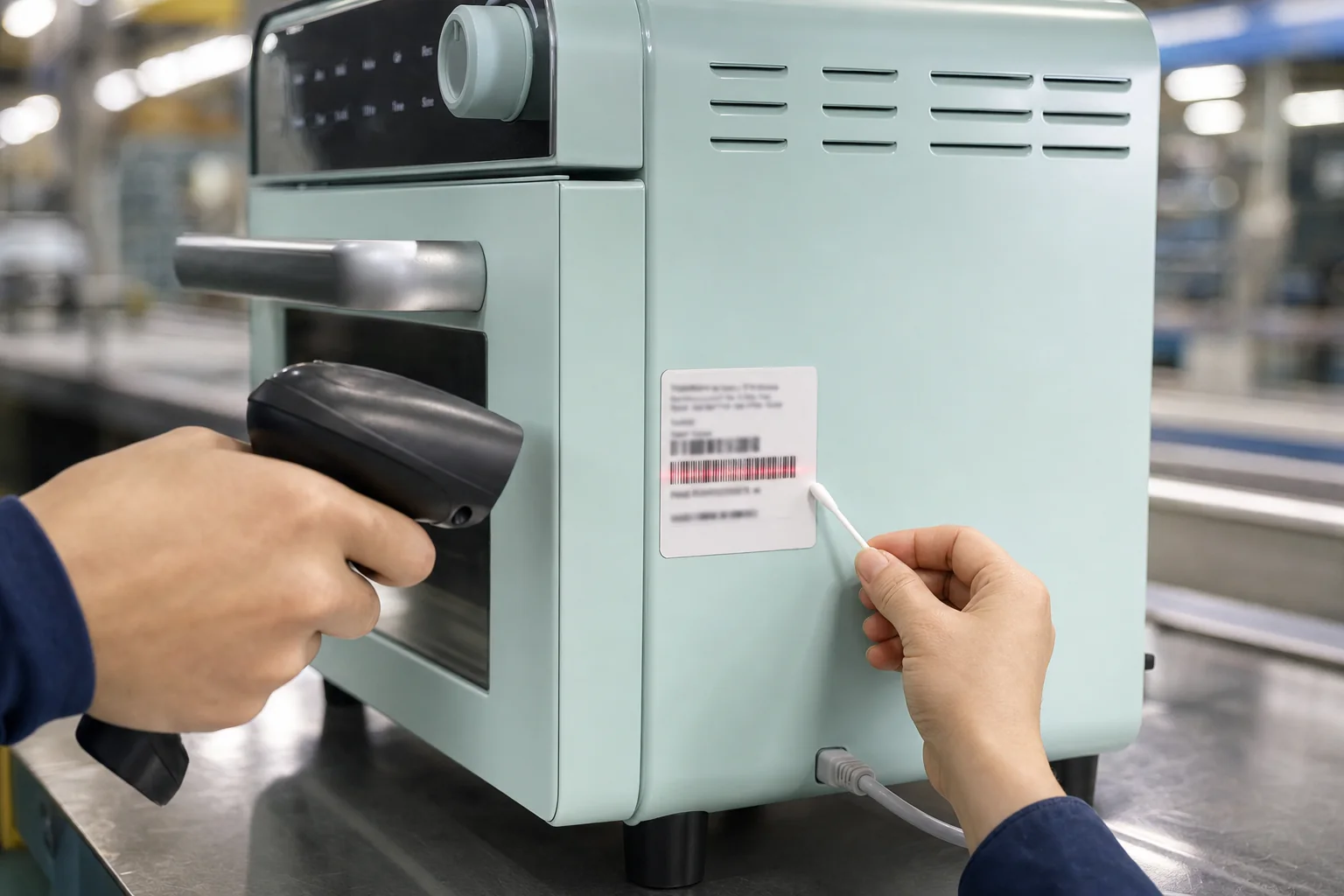
A rating label must do more than look correct at shipment. Product identity, electrical ratings and economic-operator information need to remain legible through heat, cleaning and service.

Long sea voyages create daily temperature swings. Moisture from pallets, cartons and humid loading air can condense inside a container and damage ovens before the cartons are opened.
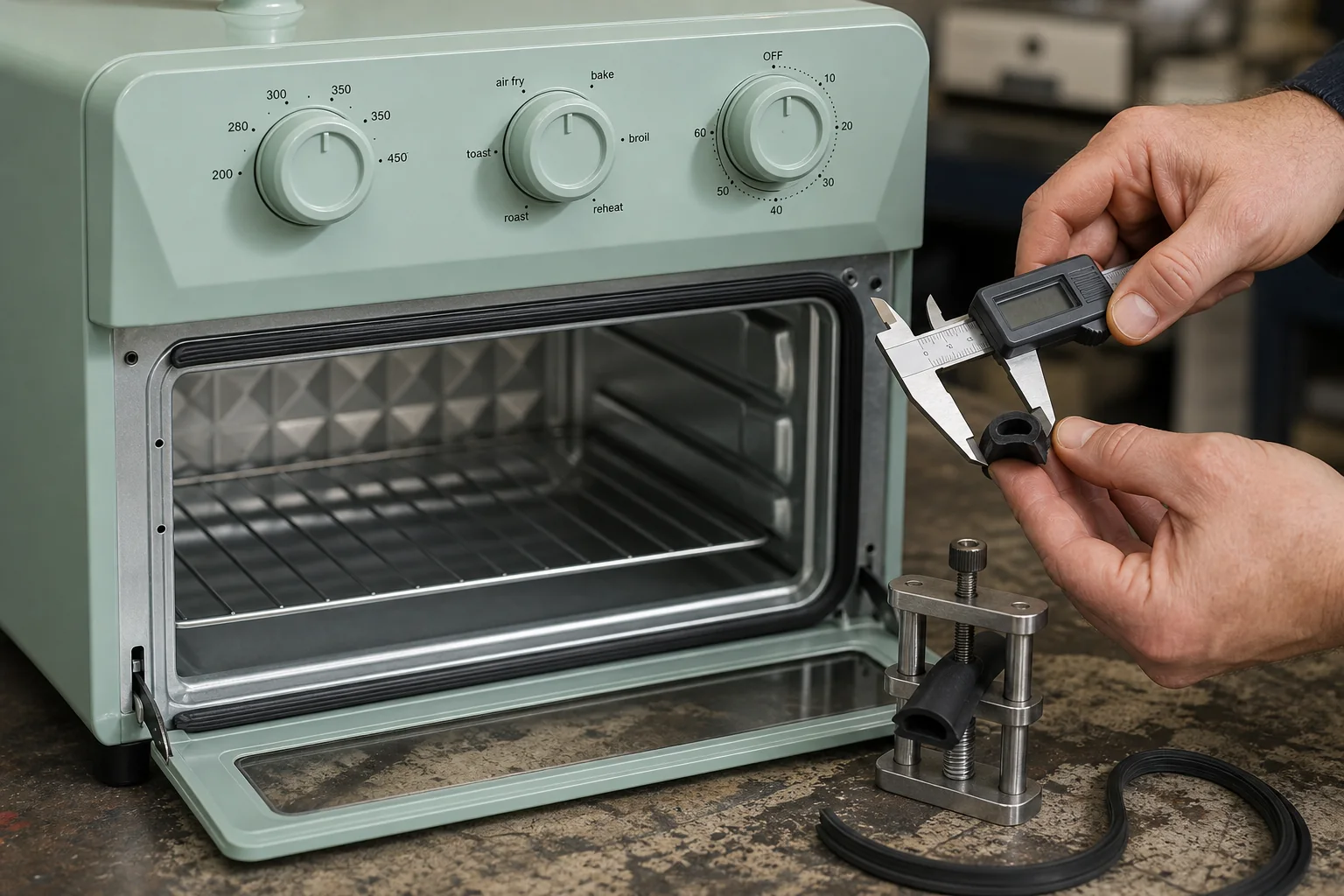
An oven seal can look intact and still lose recovery. Compression set, joint quality and door geometry influence heat leakage, condensation and cooking consistency over time.
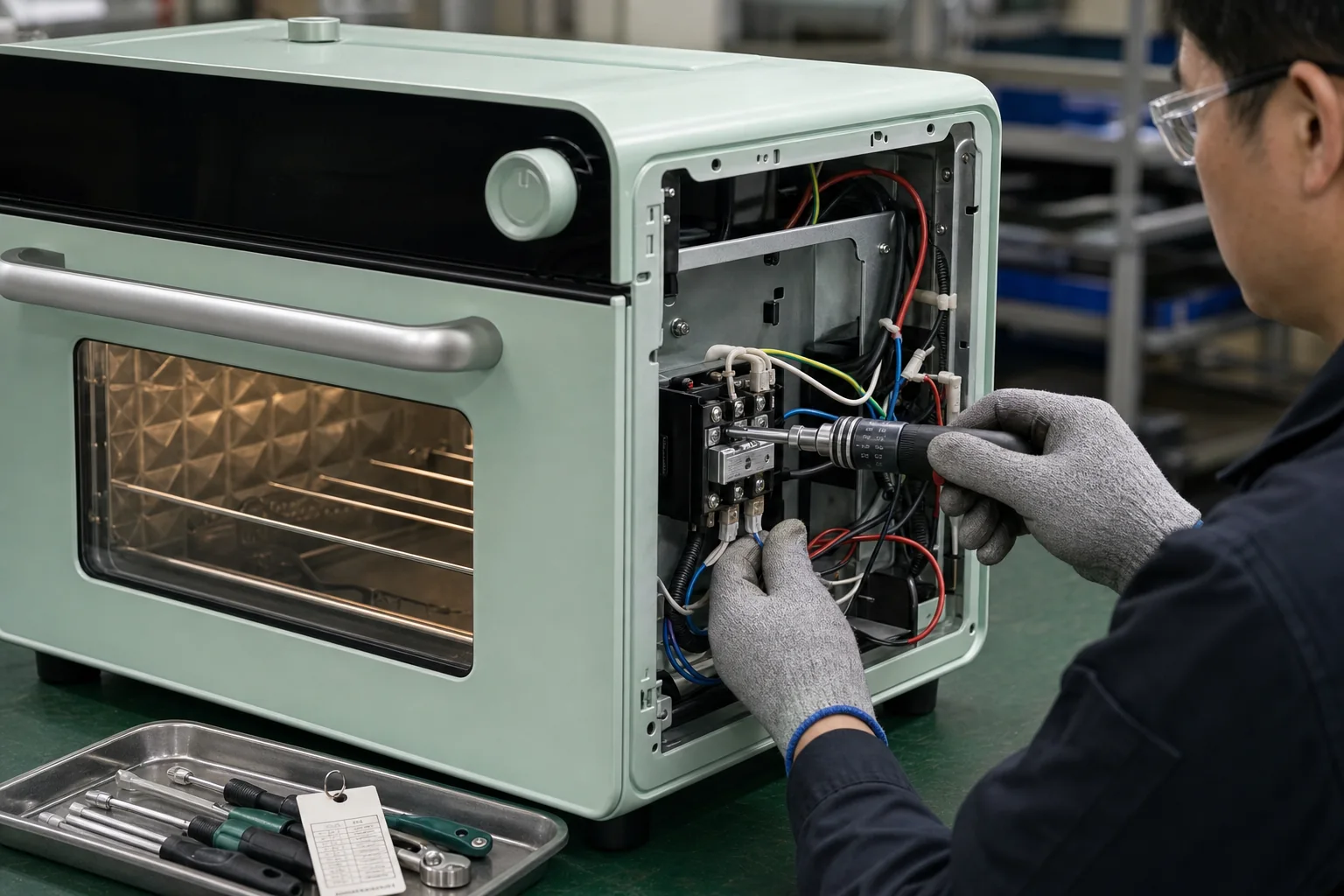
A certified design still depends on repeatable assembly. Terminal preparation, tightening torque and tool verification can decide whether a high-current oven connection stays cool in service.

Sample rounds become expensive when every unit is expected to prove everything. A staged approval plan assigns a clear question and exit criterion to each build.
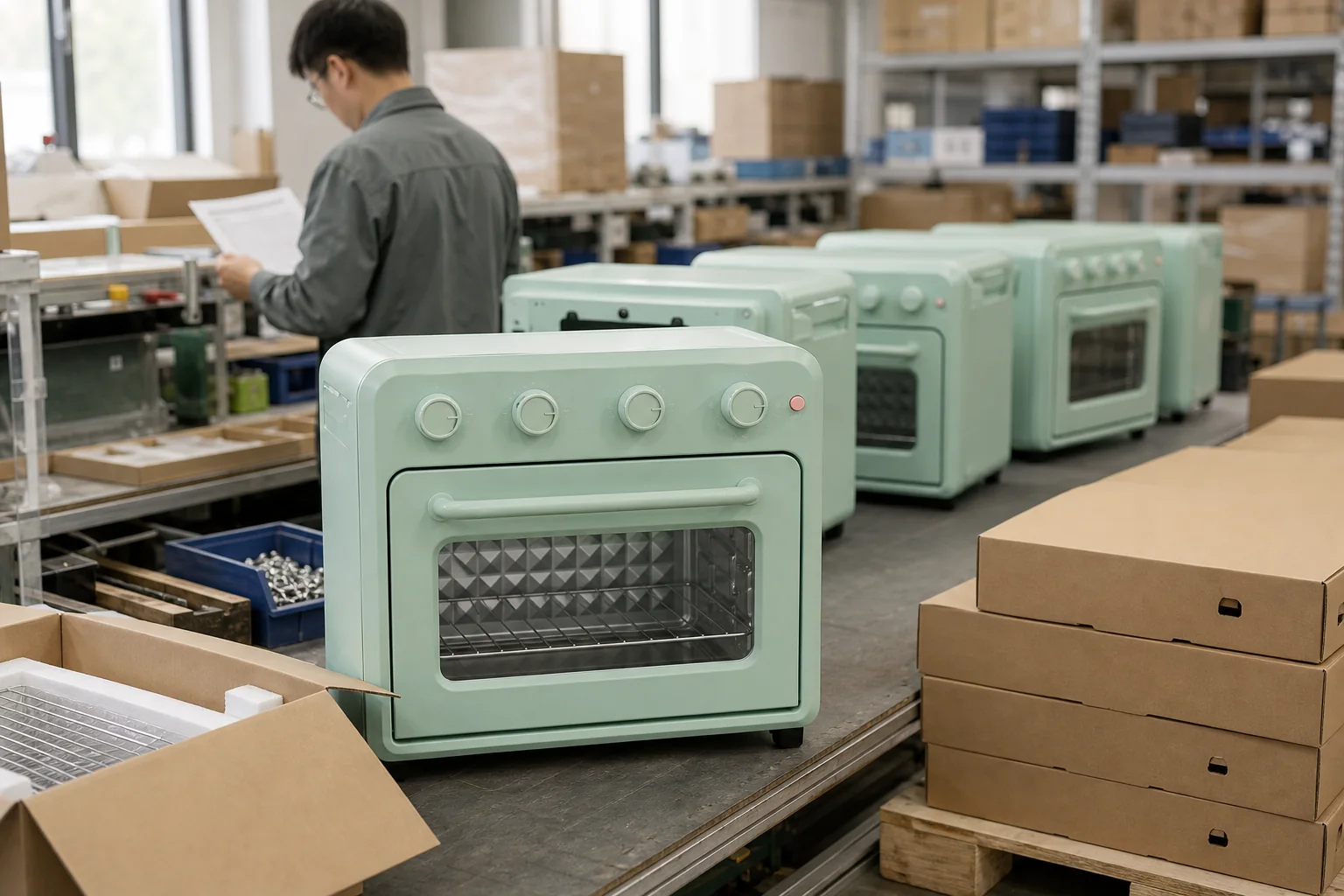
An oven MOQ usually comes from several different constraints. Separating them helps buyers negotiate the right variable instead of asking for one unexplained number to disappear.
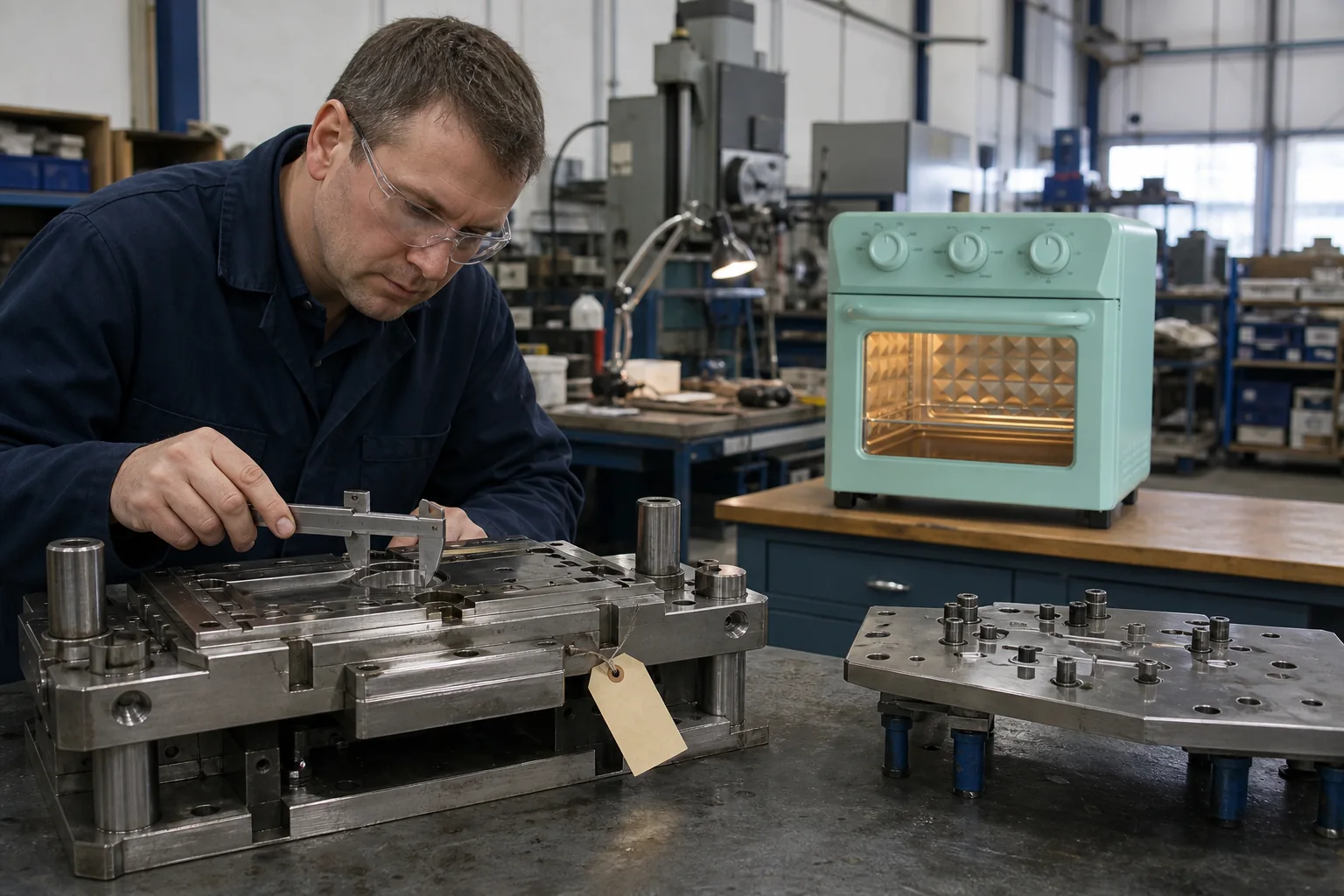
Paying a tooling invoice does not answer every ownership question. Buyers need a written record covering identification, use, maintenance, changes, storage and programme exit.
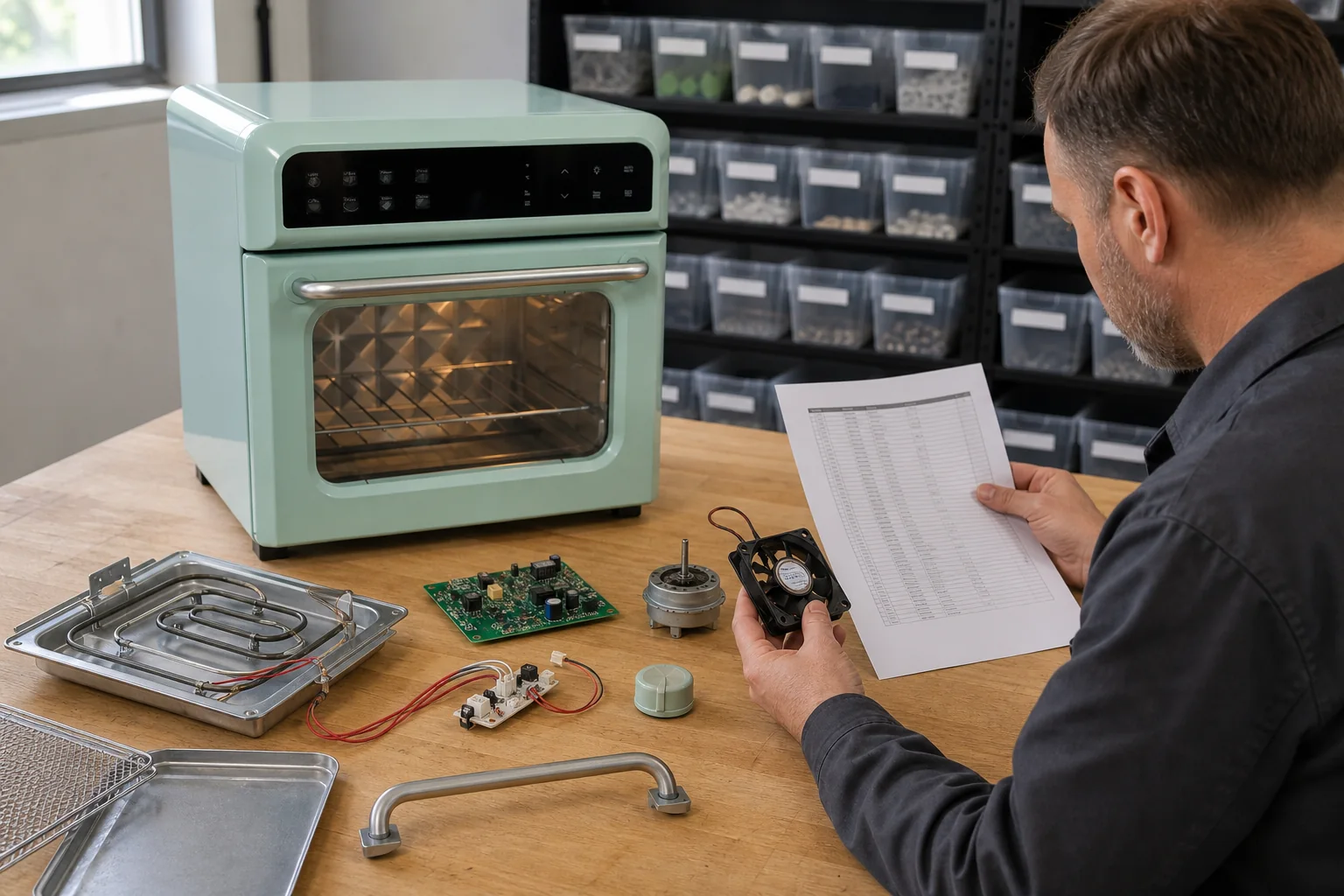
Spare parts should be planned from the bill of materials and service model before the first shipment, not after complaints begin.
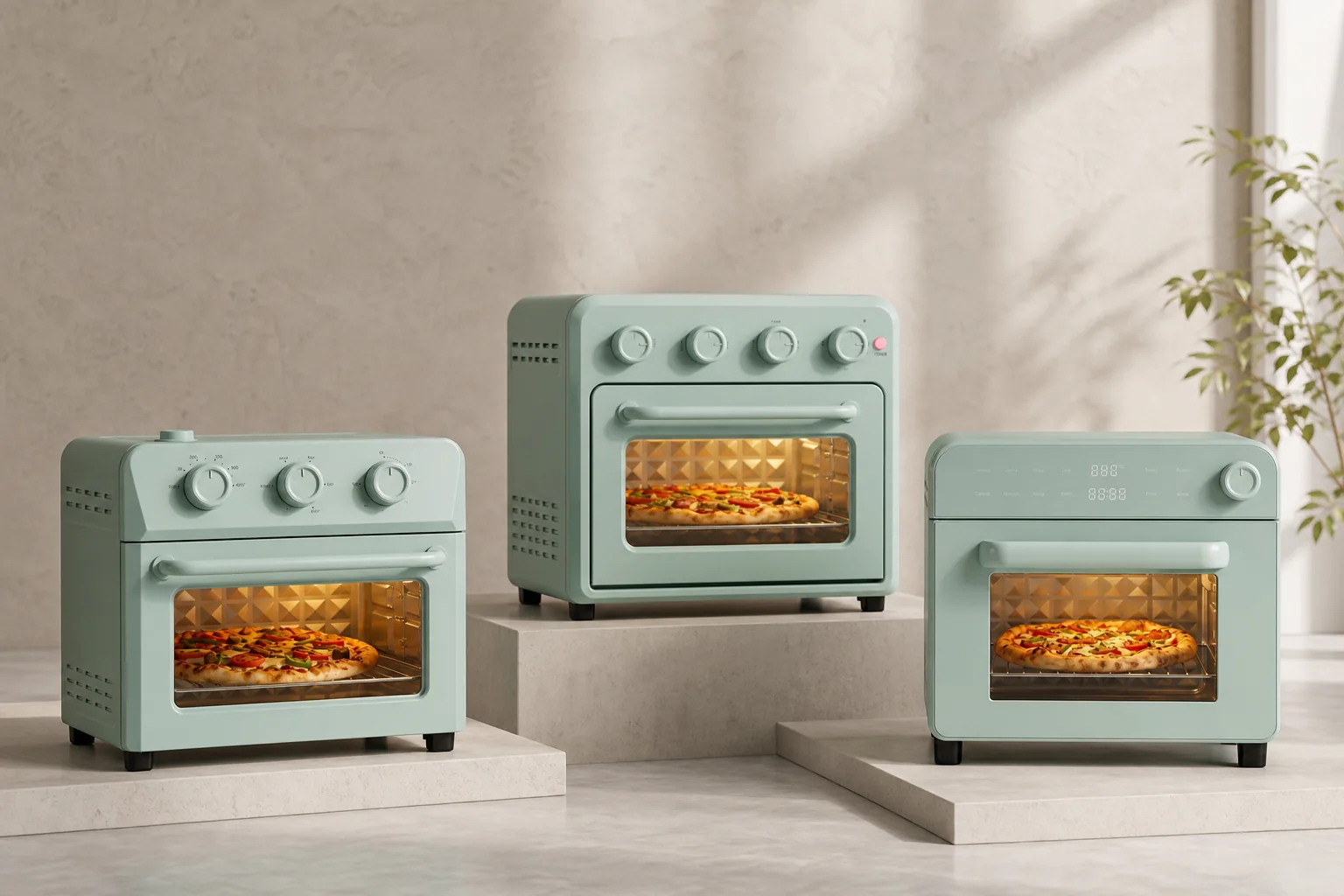
A three-tier oven range works when each step serves a different buying reason. Adding functions without a clear customer job creates cost and confusion rather than value.
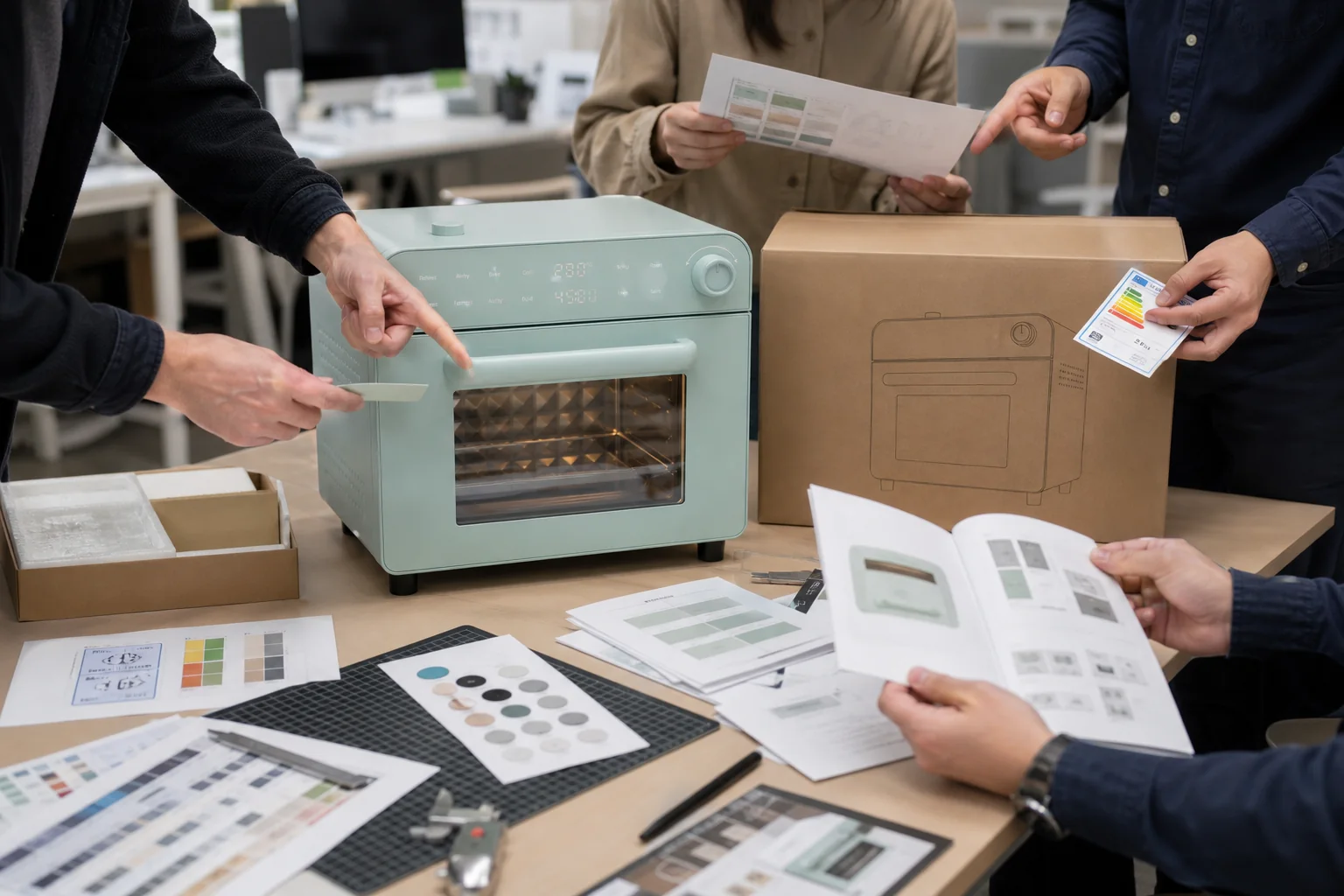
Cartons, labels, manuals and online listings carry safety and traceability information. They need controlled approval just as much as the appliance construction.
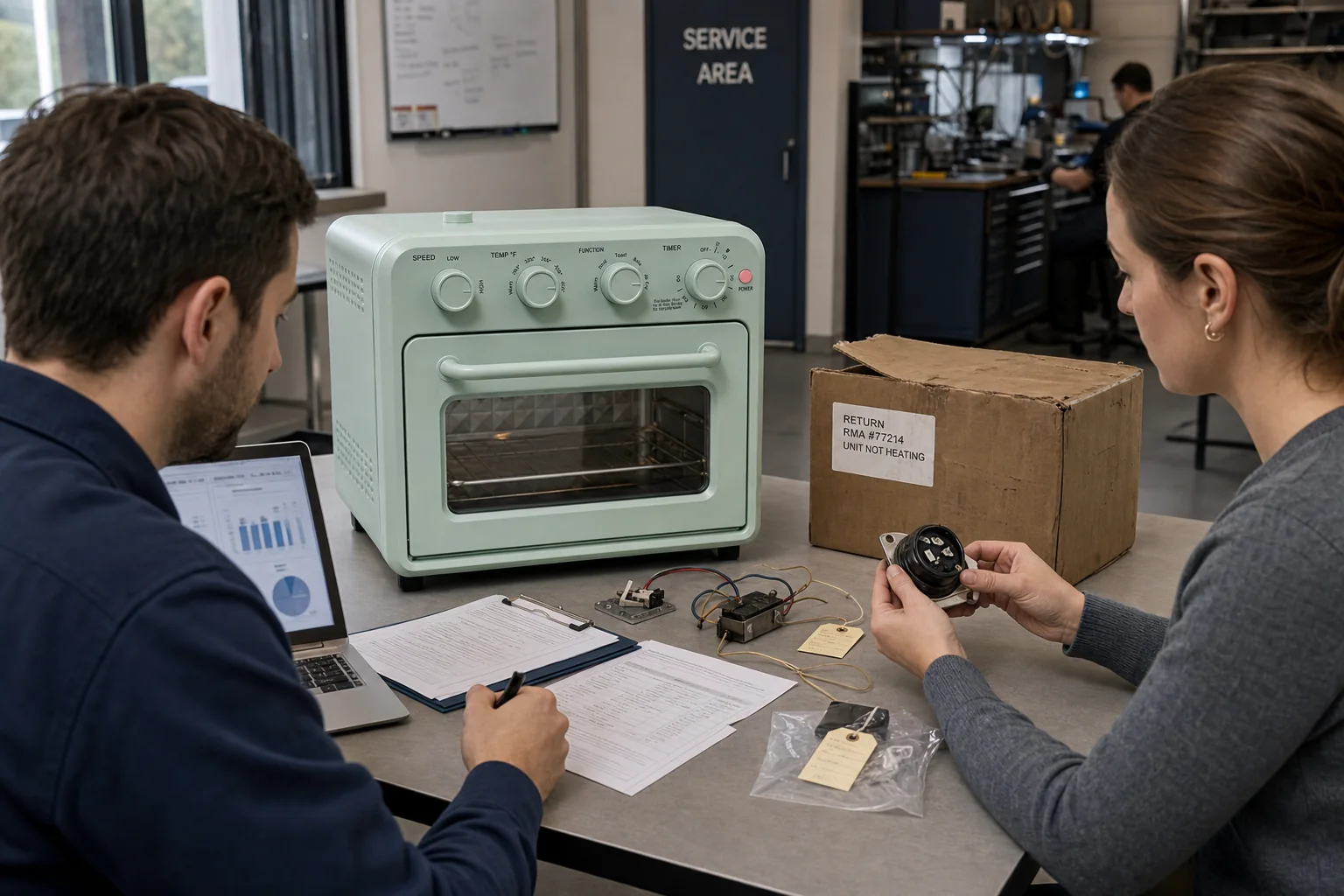
A useful warranty model connects units sold, time in service, confirmed failure modes and actual resolution costs instead of relying on one unexplained percentage.
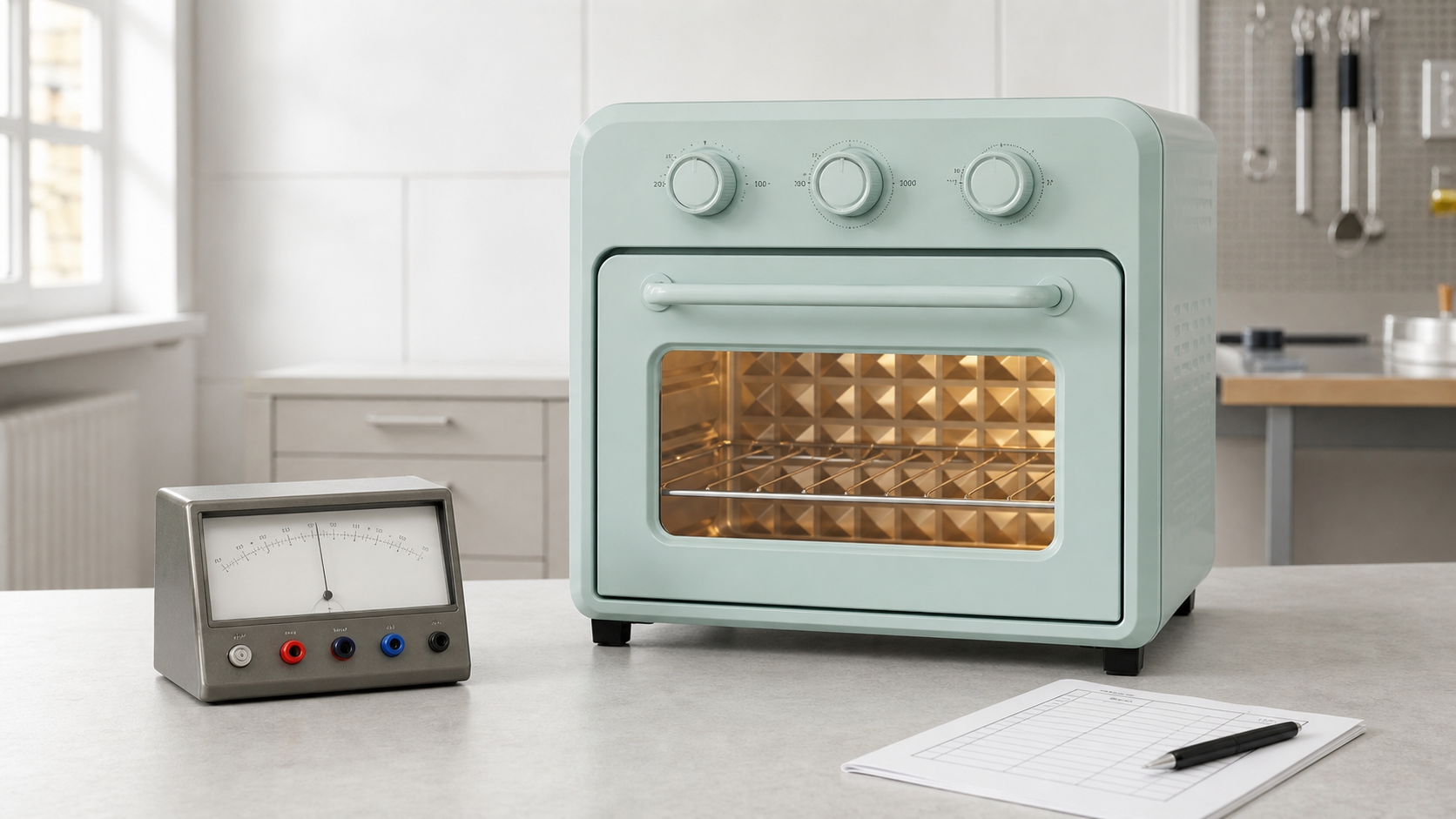
A precise way for US-facing buyers to separate a countertop oven’s product class from the energy rules that apply to conventional household ovens.
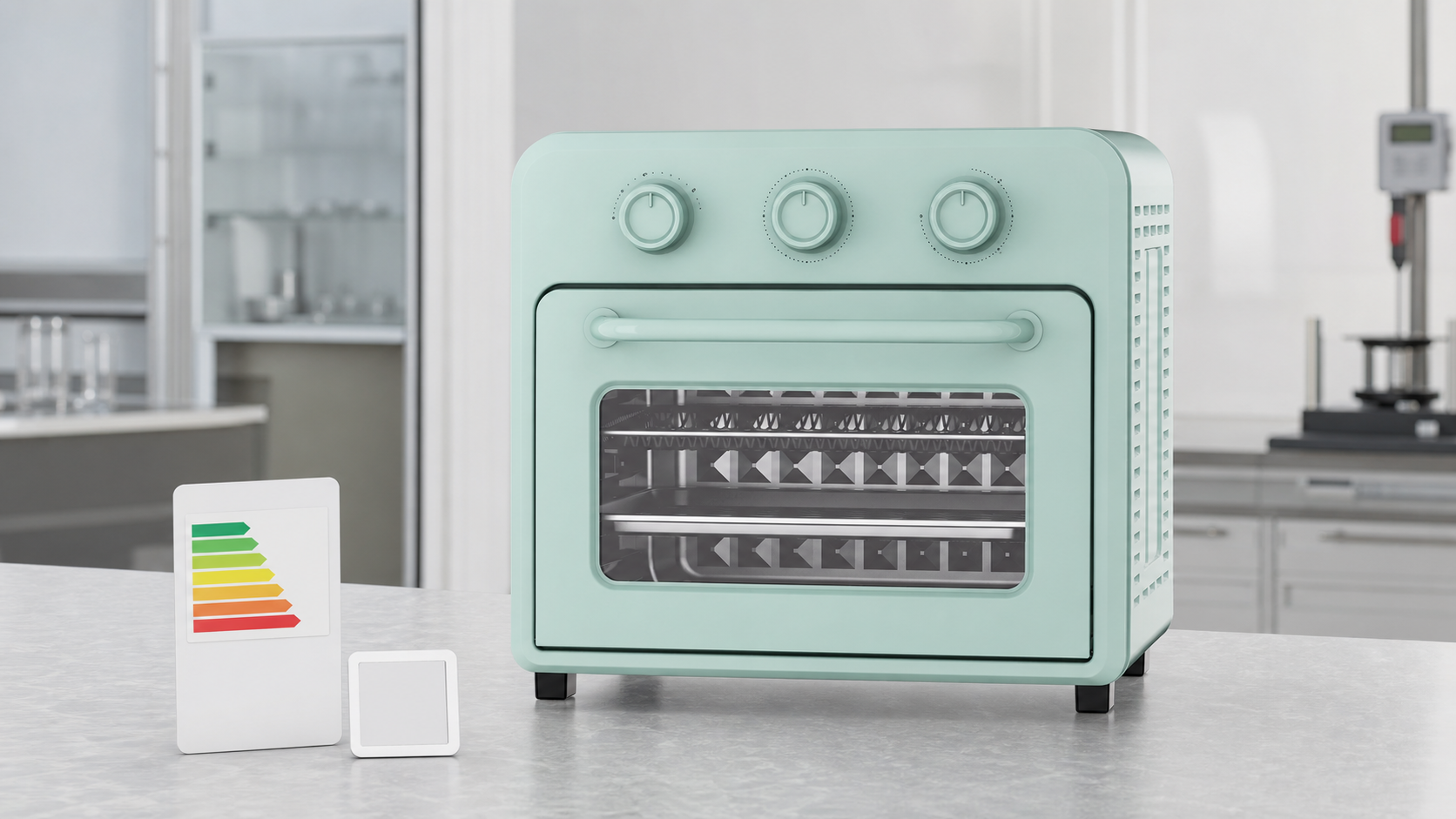
Why being outside the domestic-oven energy-label scope is not a pass from broader EU product responsibilities.
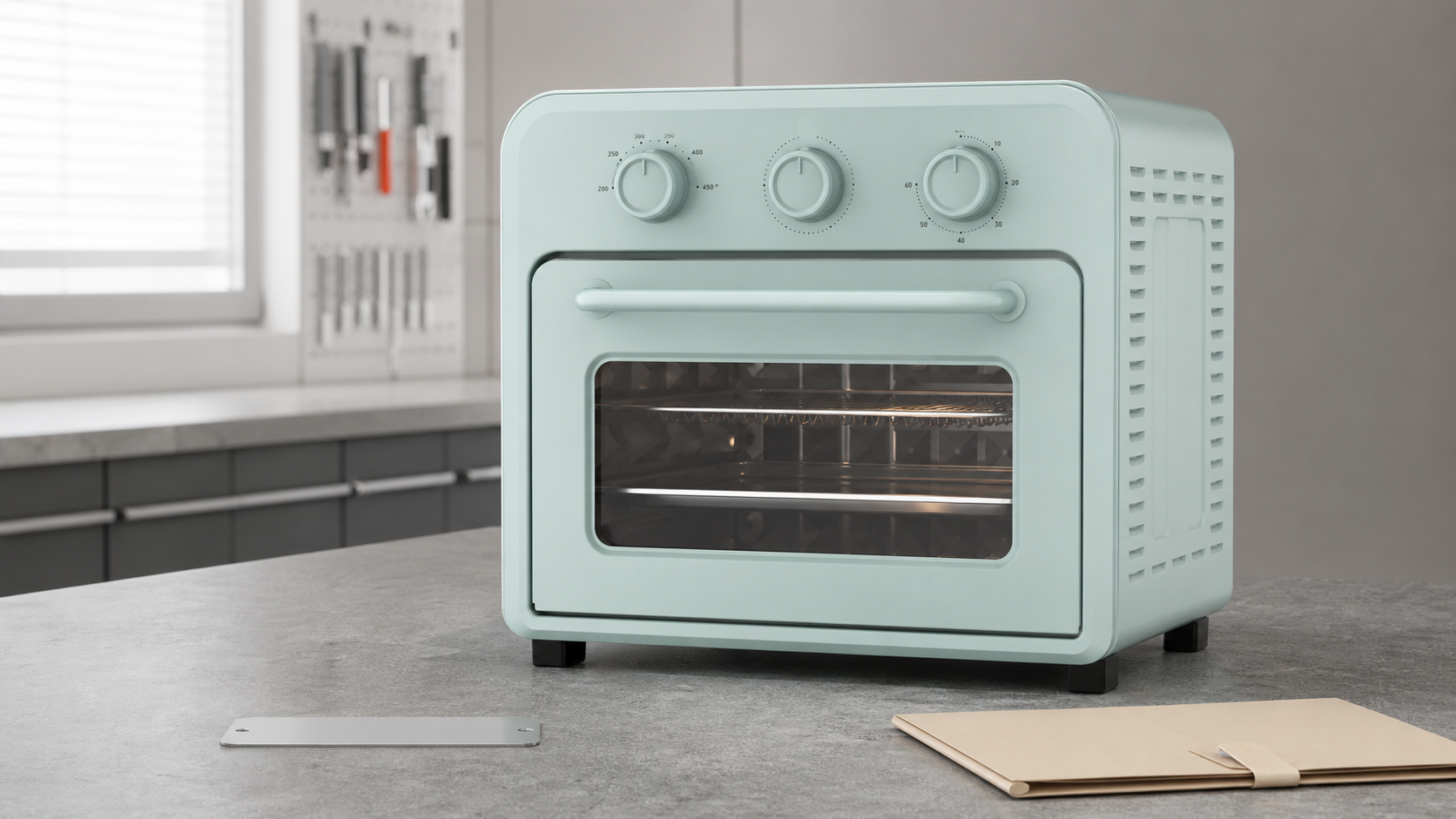
A practical traceability file for brands that need to connect a product, batch, online listing and corrective action quickly.
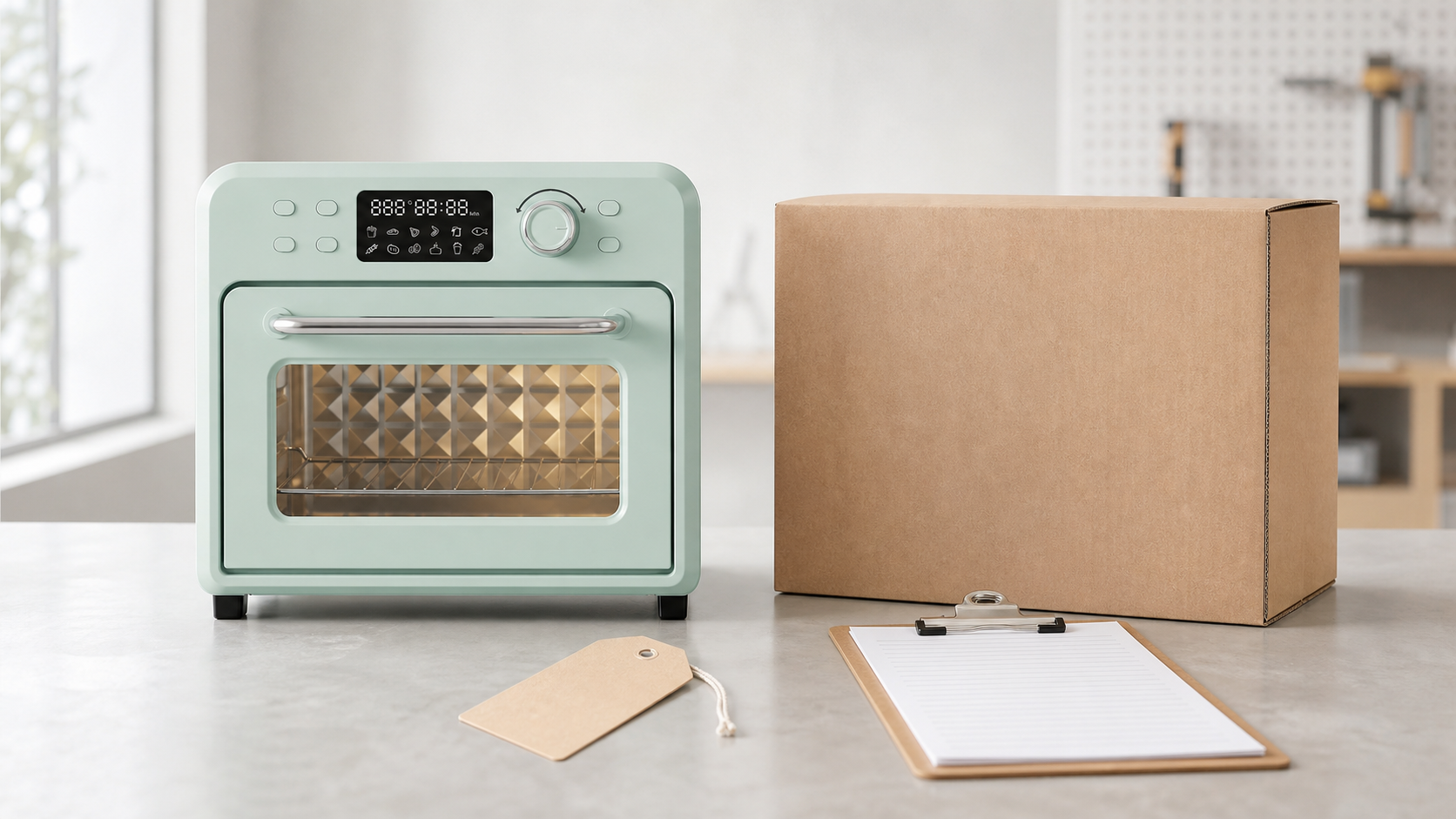
A sober planning guide for building recall readiness into the product and programme before a field incident occurs.
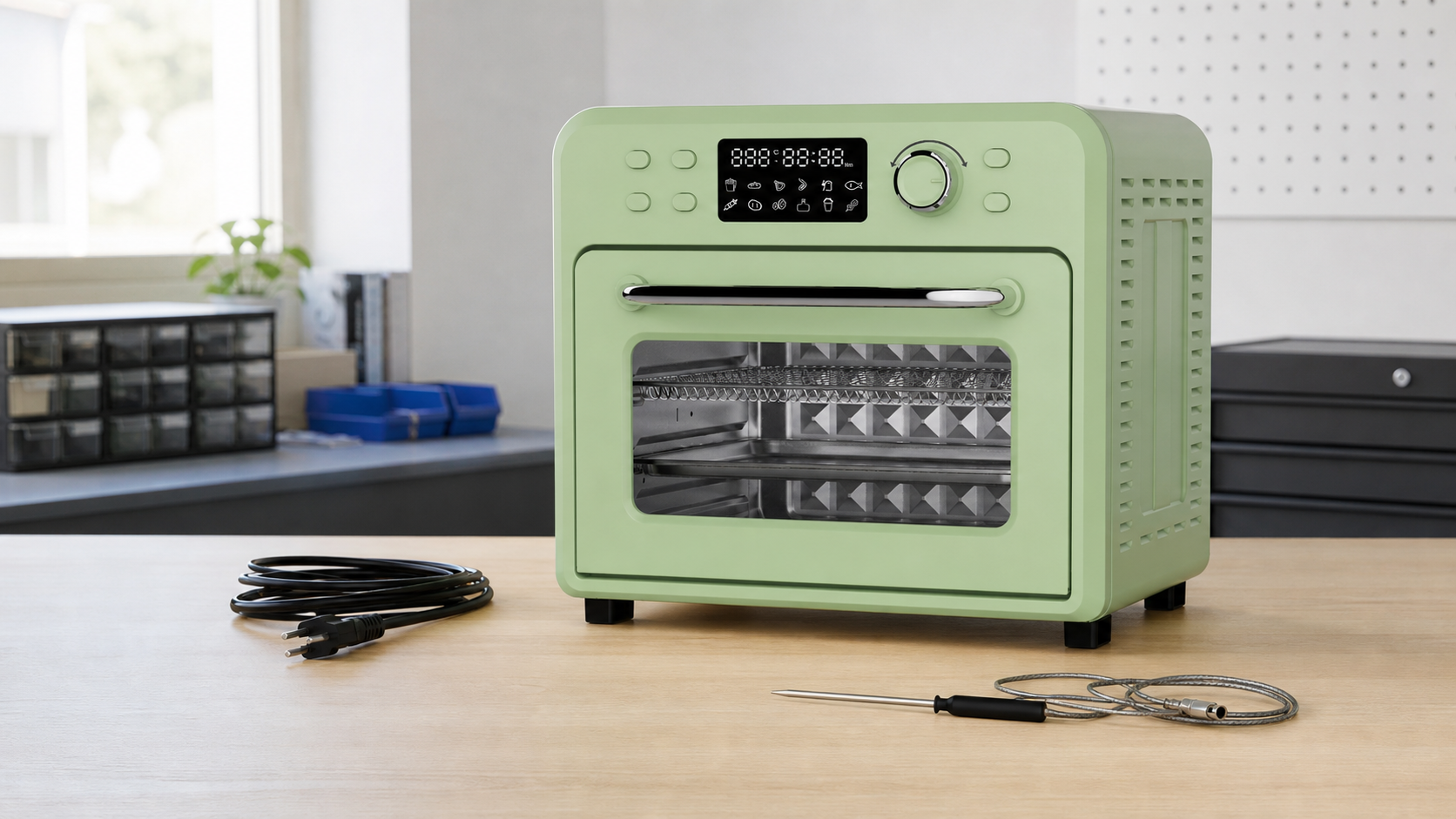
Why a safe heating circuit depends on connection design, assembly control and validation—not only the heating element rating.
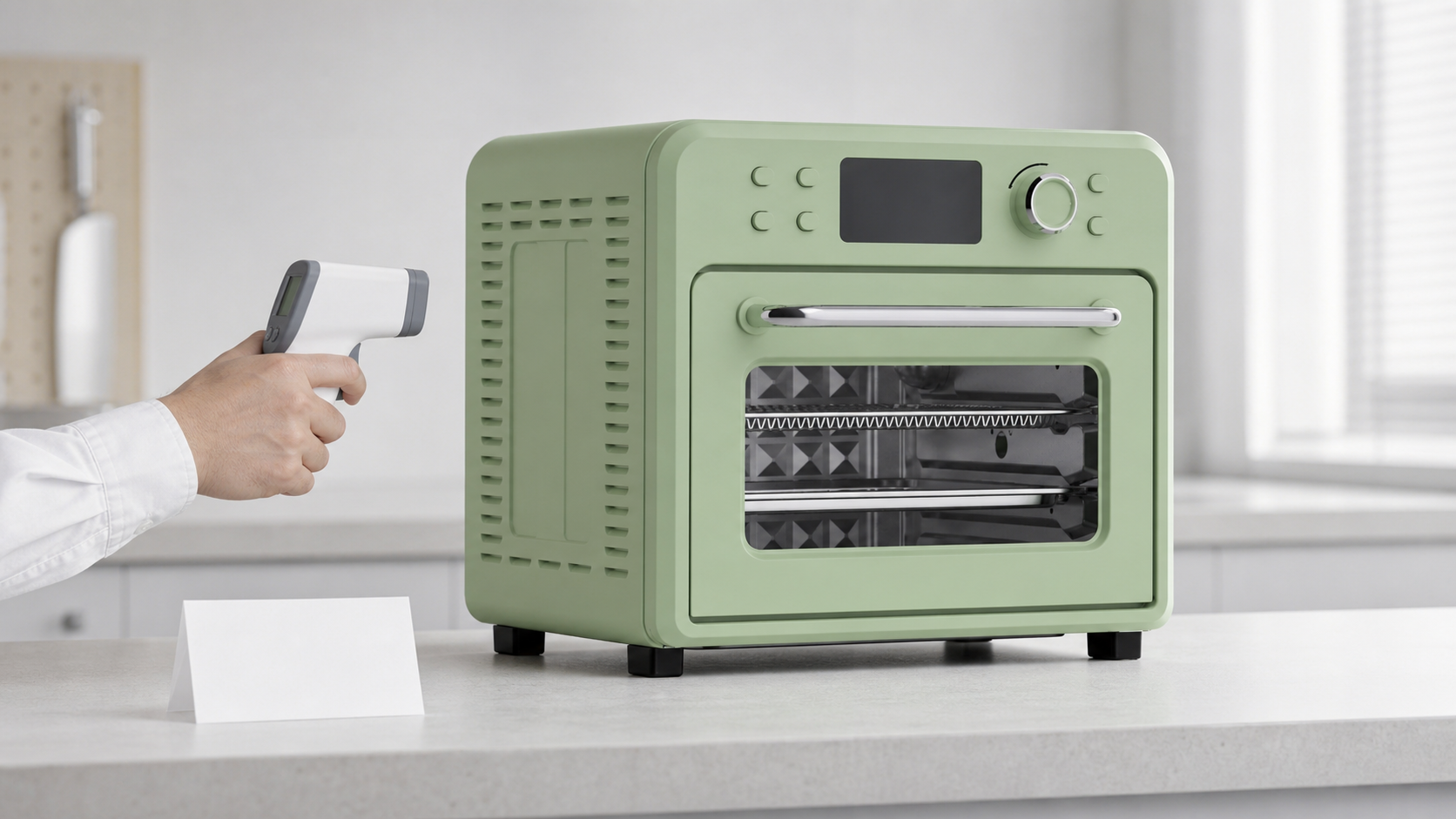
Turn a vague comfort claim into a testable product requirement that product, engineering and marketing can all understand.
A practical evidence filter for fat, calorie and health-related claims around air-fry functions.
How purchasing, packaging and web teams can keep origin statements specific, truthful and supported.
A focused pre-launch check for brands adapting an oven programme for Canada.
How to use digital manuals without making safety information hard to find, unstable or impossible to match to a product revision.
A buyer’s framework for making power-interruption behaviour an explicit product requirement rather than an accidental firmware outcome.

A procurement brief for Wi-Fi-enabled ovens that protects the core cooking product when apps, accounts or cloud services change.

How serviceability choices affect warranty cost, customer recovery time and the usable life of a countertop oven.
Why cleanability must be considered together with grease routes, heater clearance, airflow and user behaviour.
A practical method for deciding whether racks, trays, baskets and handles can carry a dishwasher-safe claim.
A pre-shipment risk review for ovens that may sit in warm, humid warehouses or containers before sale.
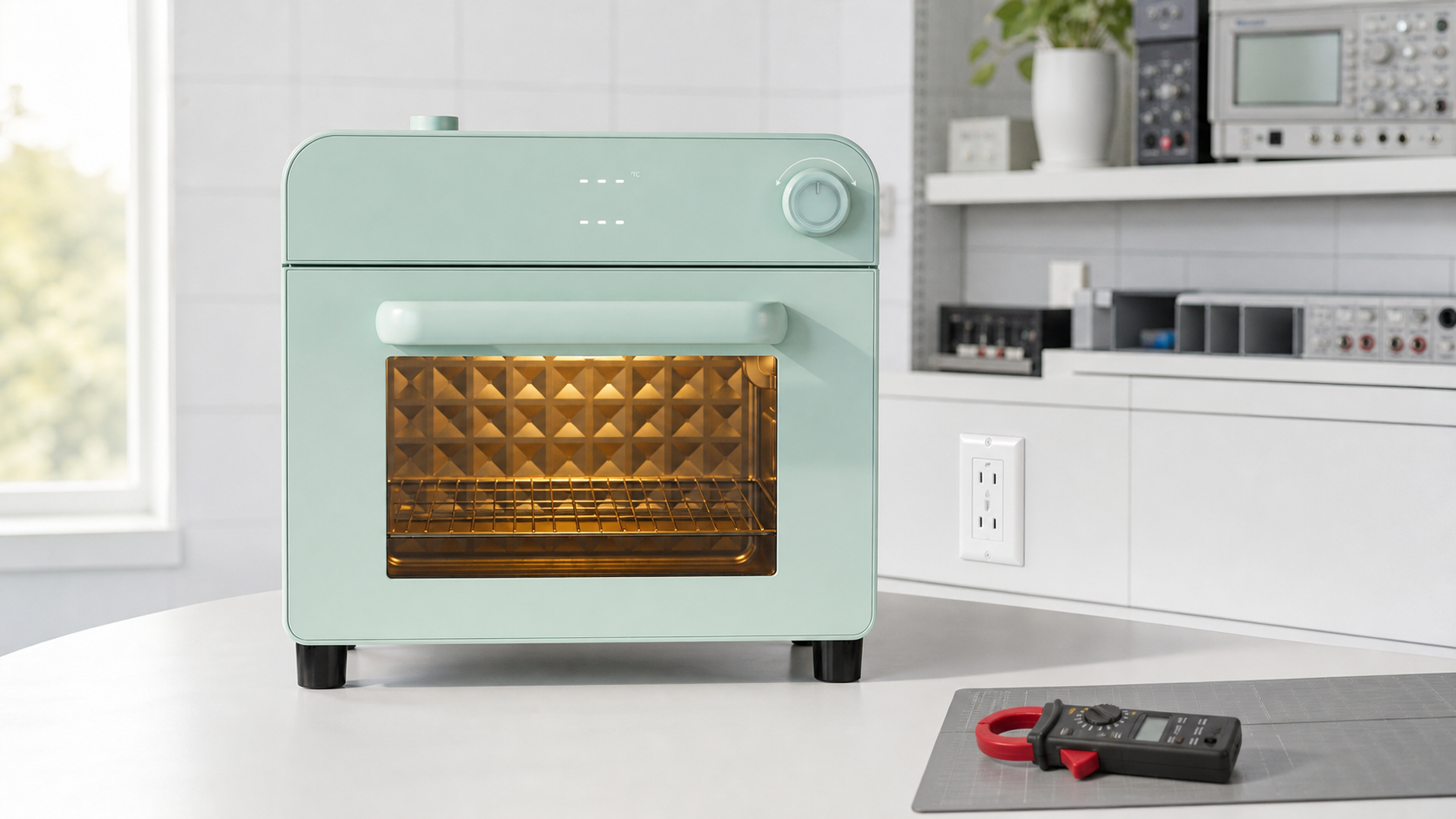
Questions to settle before a high-power countertop oven reaches a kitchen where other appliances share the circuit.
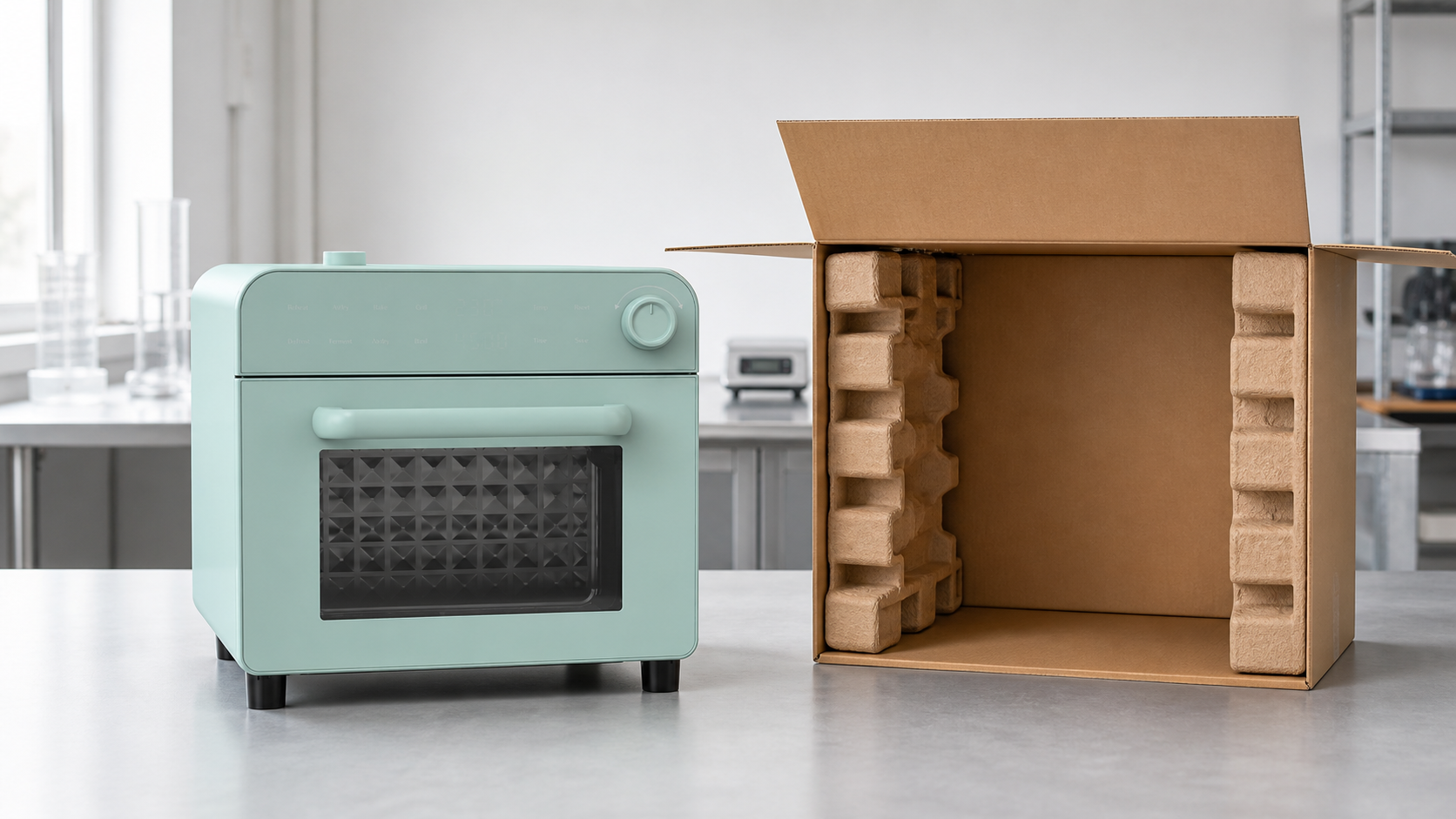
A clear division of responsibilities for teams that need to reduce packaging impact without weakening protection or safety information.

Design choices that can make an oven easier to identify, service and route responsibly at end of life—without overstating recyclability.

A review process for product images that keeps visual selling assets aligned with the production SKU and evidence file.
Share your market, volume and certification direction with our team.