
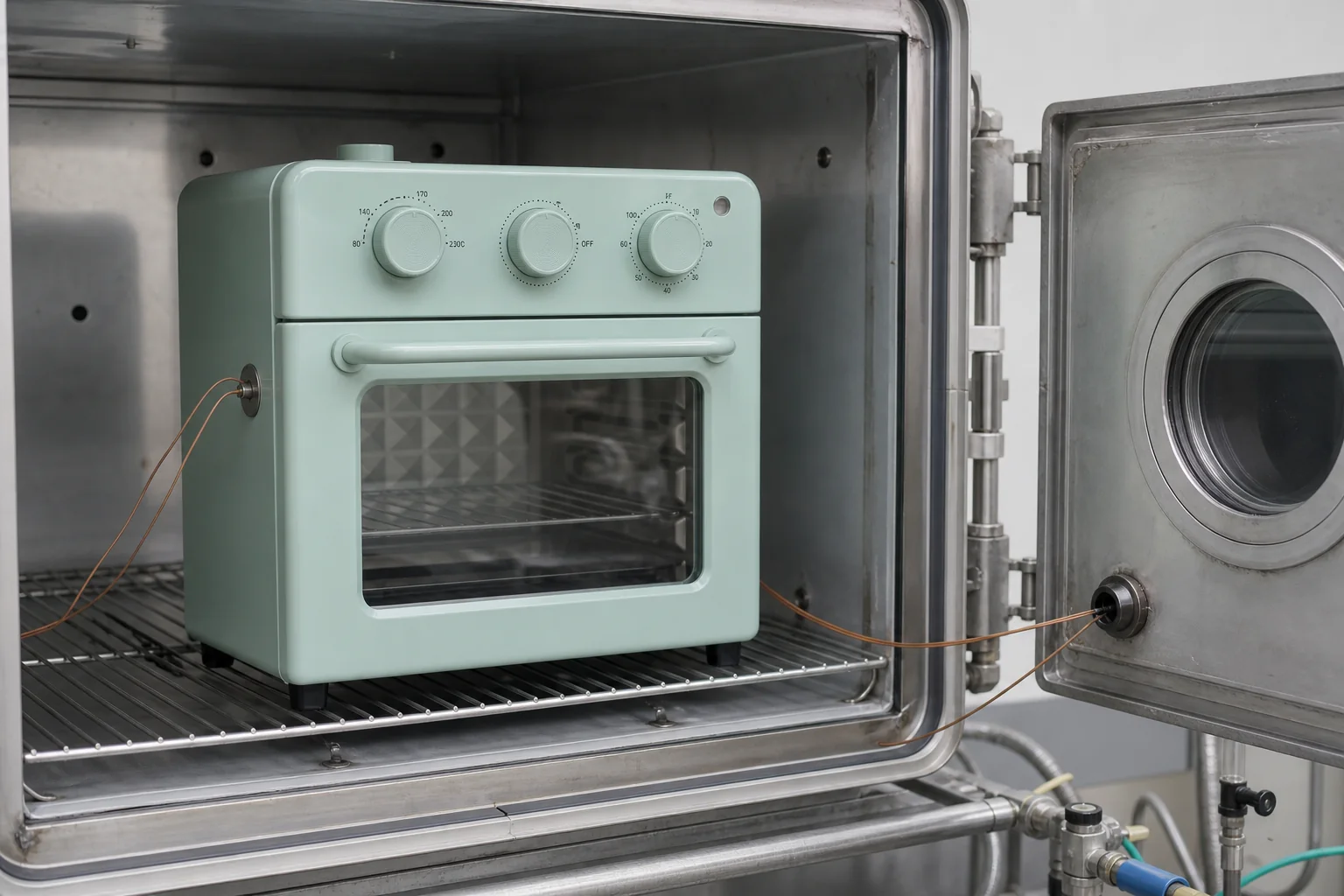
Altitude changes more than a recipe
Lower atmospheric pressure changes the behaviour of air and water. Customers may notice longer moisture removal, different boiling behaviour or changes in browning. For the manufacturer, the more serious question is whether electrical insulation and component cooling assumptions still hold at the intended installation altitude.
The 2,000 metre line matters in insulation coordination
IEC 60664-1 applies to low-voltage equipment used up to 2,000 m above sea level and provides guidance for higher altitudes, including altitude correction for clearances. Reduced air density lowers the dielectric strength of air. A design that is comfortable at sea level may need a documented review when sold into cities well above 2,000 m.
Do not guess at fan and temperature behaviour
Air density can also affect convective cooling and airflow. The direction and size of the effect depend on the motor, fan curve, vent system, heat load and control logic. This is a reason to test—not a reason to apply a universal correction percentage. Monitor critical component temperatures, external surfaces and protective-device operation at representative conditions.
Add altitude to the market brief
List the maximum intended installation altitude and any high-altitude cities in the launch region. Ask the certification body which construction review or testing is appropriate for the exact appliance and standard. Keep recipe guidance separate from safety evidence: both may be needed, but they answer different questions.
- IEC 60664-1 insulation coordination: https://webstore.iec.ch/en/publication/59671
- IEC 60335-1 appliance safety: https://webstore.iec.ch/en/publication/61880