
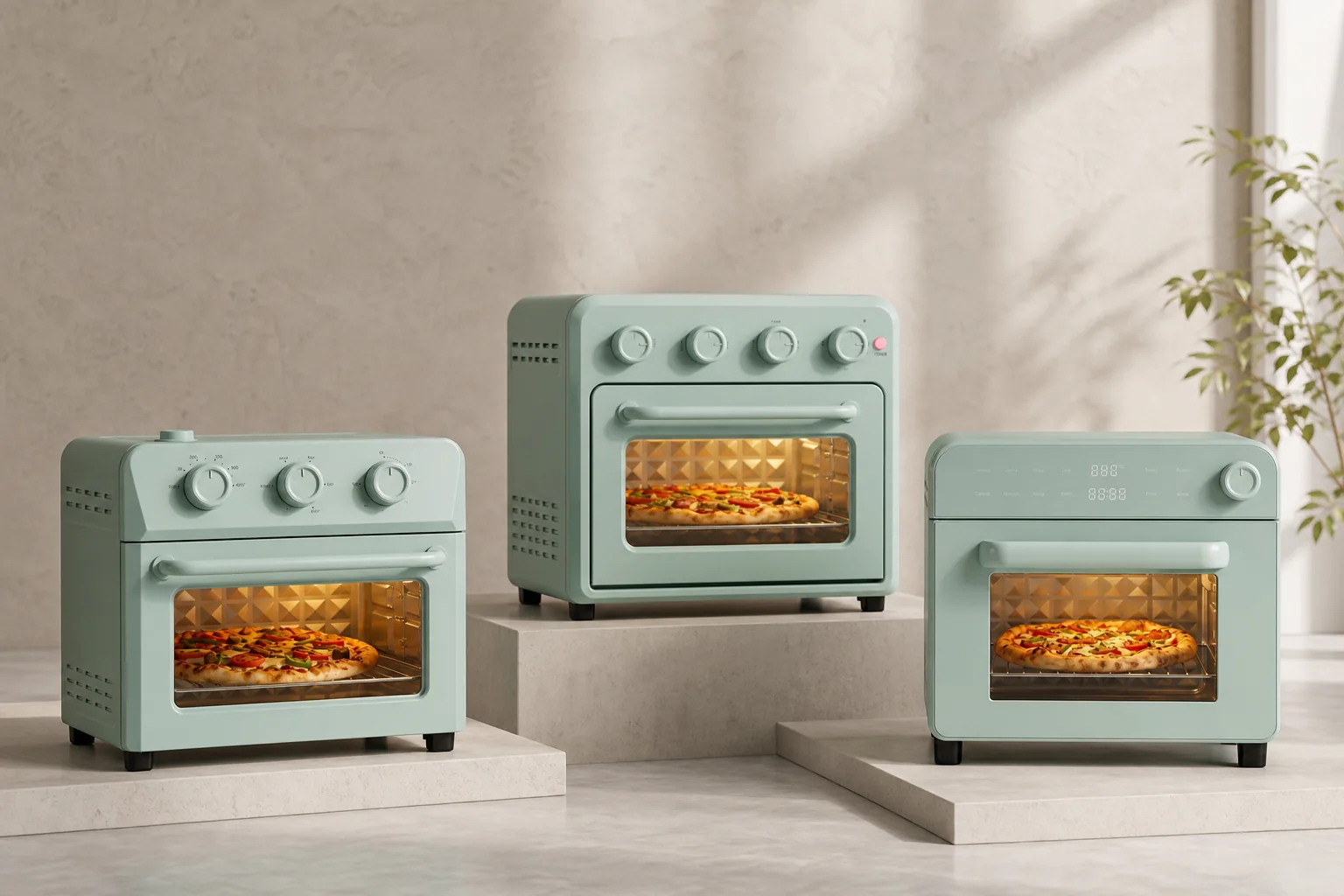
Good, Better, Best: Building an Oven Range Without Feature Clutter

A three-tier oven range works when each step serves a different buying reason. Adding functions without a clear customer job creates cost and confusion rather than value.

Three coordinated countertop oven models presented as a product range
Oven OEM & Sourcing

Start with customer jobs, not a feature ladder

A good-better-best range should give retailers and buyers three clear reasons to spend more. It should not be the same oven with an increasingly long function list. Begin with the user, channel, target retail band and primary cooking jobs for each tier.

Protect the base model

The good tier must still perform its core tasks reliably. Removing insulation, control stability or essential accessories to reach a price point can create returns and damage the entire range. Cost reduction should focus on controlled complexity: finish, interface, included accessories and non-essential convenience features.

Make the middle tier easy to explain

The better model usually needs the clearest value step. Choose improvements that are visible or demonstrable: usable capacity, convection performance, easier controls, an extra accessory or easier cleaning. If a salesperson needs a paragraph to explain the difference, the tier may be too complicated.

Give the top tier a distinct role

The best model can support a premium finish, larger cavity, stronger automation, better display or more complete accessory set. Every upgrade should connect to a target customer or channel—not merely to factory availability.

Control shared architecture

Common platforms can reduce tooling, component and service complexity, but forced commonality can also compromise the premium model. Create a matrix showing shared chassis, heaters, motors, control boards, glass, packaging and service parts. Then document which differences are commercially meaningful and which only add inventory.

Before finalising the range, test whether a buyer can identify each tier, target user and price reason in thirty seconds.

Quality framework

Key takeaways

Define one customer job for each tier.
Keep the base model credible and reliable.
Make the middle tier's value obvious.
Share architecture only where it does not weaken positioning.

Quick checklist

✓ Target user defined for each tier
✓ Retail price bands estimated
✓ Core performance protected
✓ Visible upgrade reason assigned
✓ Accessory strategy aligned
✓ Shared components mapped
✓ Service complexity reviewed
✓ Thirty-second sales explanation tested

Planning a coordinated oven range?

Share your channels and target price bands. We can help map functions and platforms across three product tiers.

Discuss Your Project
← Back to insights