
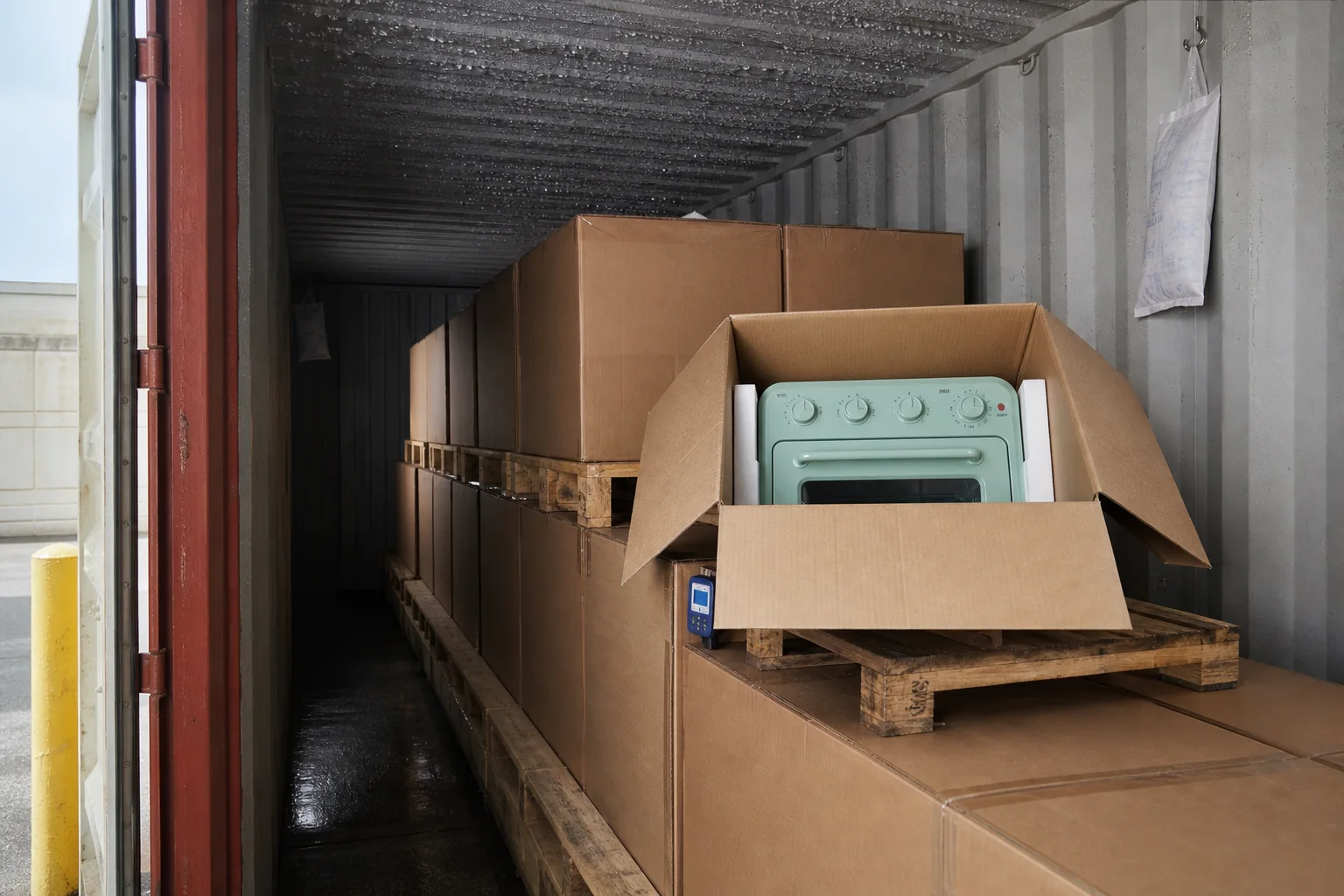
The water may already be inside
A sealed container is not a dry room. Moisture can enter with humid air, timber pallets, braces, corrugated cartons and other hygroscopic materials. When the roof cools at night, its inner surface can fall below the dew point. Droplets form and may fall onto the cargo—classic container sweat.
Desiccant is not a magic packet
A few small bags cannot absorb an unlimited moisture load. The UNECE CTU Code warns that drying agents need calculated capacity and may fail when hygroscopic cargo or dunnage is not container-dry. Start by controlling pallet moisture, loading weather, container condition and the moisture content of packaging materials.
Map the route, not just the distance
Risk depends on origin climate, destination climate, season, voyage length, deck position, inland storage and how quickly a cold container is opened in warm humid air. The CTU Code also describes cargo sweat: condensation on cold cargo exposed to warm humid air after arrival. Electronics and uncoated metal parts can be affected even if the outer carton looks acceptable.
Turn the risk into shipment controls
Inspect containers for holes and wet floors. Set limits for pallet moisture. Keep cartons dry before loading. Use a correctly sized desiccant or liner strategy where justified, and leave a record of quantity and placement. For new routes, add humidity and temperature loggers to several positions and review actual data with any damage claim.
- UNECE CTU Code: https://unece.org/transport/documents/standards/ctu-code
- CTU Code condensation mechanisms: https://wiki.unece.org/spaces/TransportSustainableCTUCode/pages/23101996/3+Mechanisms+of+condensation
- CTU Code loss-prevention measures: https://wiki.unece.org/spaces/TransportSustainableCTUCode/pages/23101998/4+Loss+prevention+measures