
Late cord changes are not cosmetic
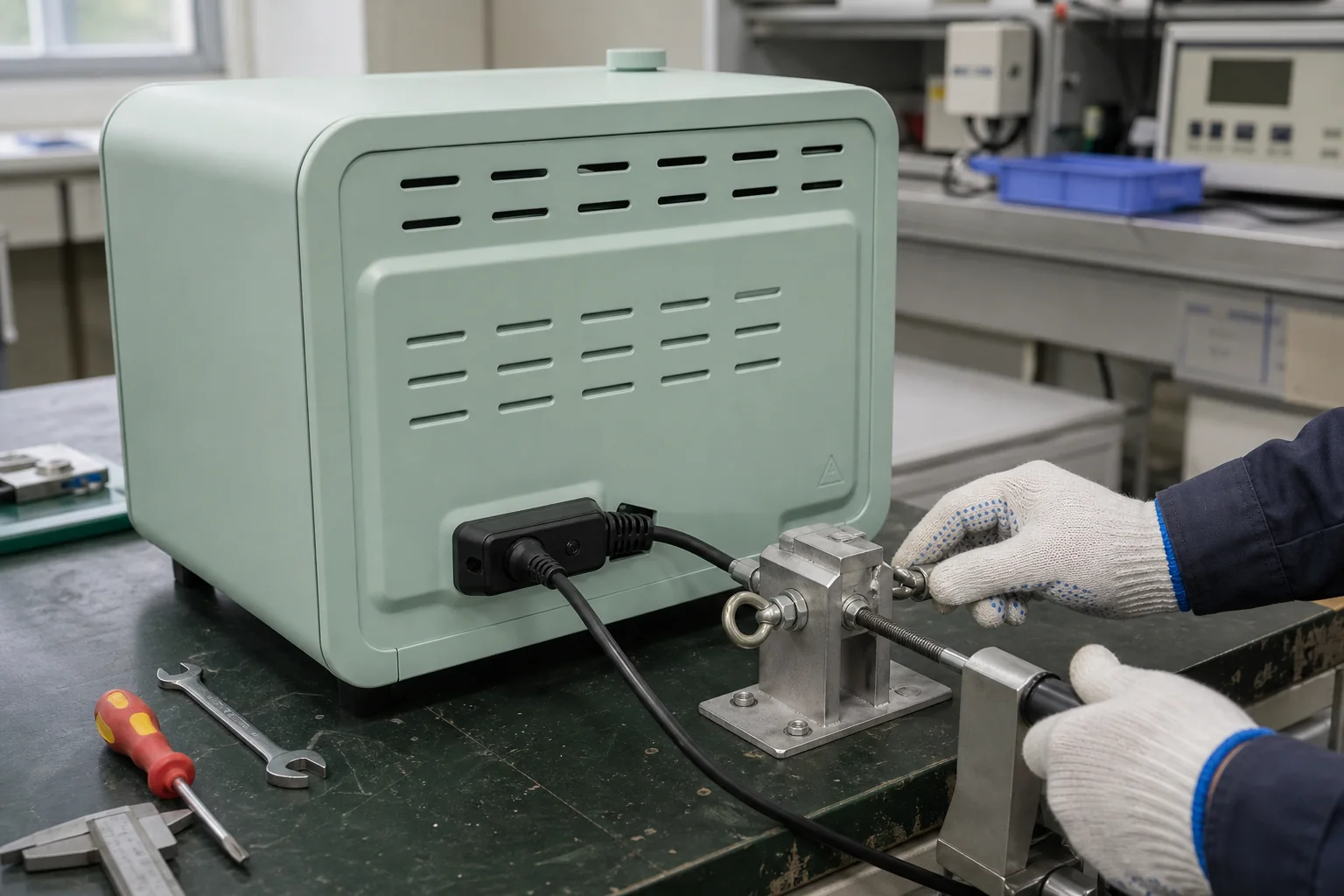
Private-label projects often leave the plug decision until artwork and packing are nearly finished. That is risky for a high-power heating appliance. Conductor area, insulation temperature rating, plug geometry, terminal preparation, cord anchorage and routing near warm panels all influence the finished product.
Follow the heat path
Electrical loss is concentrated where resistance is high: at contacts, crimps, screw terminals and damaged conductors. The practical review should cover the complete path from wall plug to internal wiring. Look for hot spots under the highest normal load, after flexing and after production assembly—not just on a pristine engineering sample.
Detachable inlets need the right temperature class
IEC 60320-1 covers appliance couplers and includes heating, temperature-rise and mechanical requirements. It also provides additional consideration for couplers used above a 35°C ambient. An inlet that fits physically is not automatically suitable beside a hot oven cavity. Fixed-cord designs still need the appliance safety review, appropriate national plug requirements and robust strain relief.
Put the cord set under change control
The approved file should identify the exact plug, cord specification, supplier, conductor size, terminal, crimp, routing and anchorage. A substitute that looks identical can have different materials or contact performance. Treat the cord assembly as a controlled safety component and include it in incoming inspection and production traceability.
- IEC 60320-1 appliance couplers: https://webstore.iec.ch/en/publication/64901
- IEC 60999-1 conductor clamping units: https://webstore.iec.ch/en/publication/4118
- IEC 60335-1 appliance safety: https://webstore.iec.ch/en/publication/61880