
Payment and ownership are different questions
An invoice may say “tooling charge” without defining whether the buyer owns a physical tool, has an exclusive right to use it, or is only contributing to development cost. Resolve this before money is paid. Contract treatment varies by jurisdiction, so obtain qualified legal advice for the final agreement.
Identify the asset
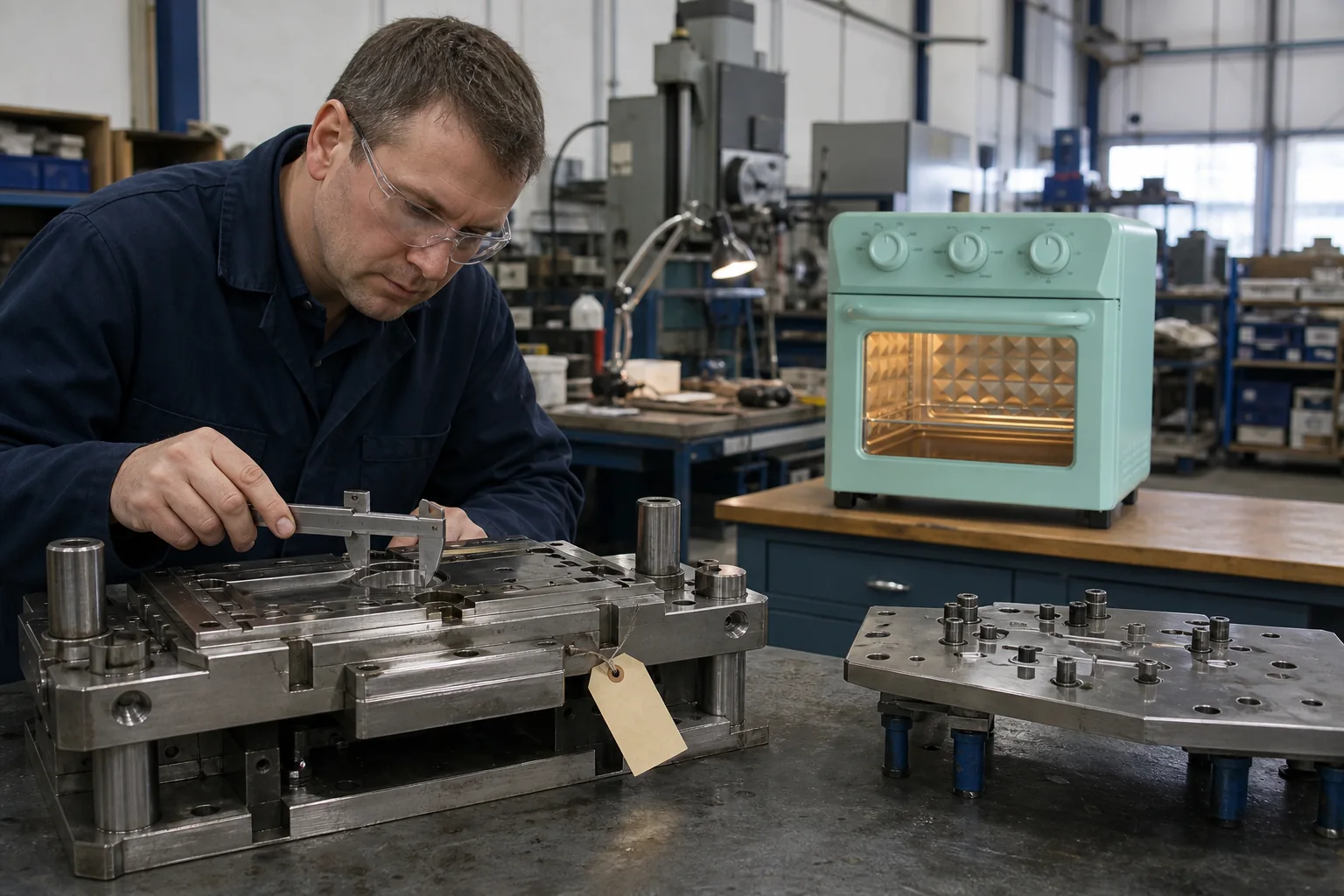
List each mould, die, jig, fixture, test device and software file covered by the payment. Give physical tools an asset number and permanent ownership marking. Record location, supplier, creation date, drawings and acceptance condition.
Define permitted use
State whether the tool may be used for other customers, related models or spare parts. If exclusivity applies, define the product, territory and duration. Confidential drawings, firmware, recipes and process know-how may need separate treatment from the physical tool. WIPO notes that companies commonly share trade-secret information in manufacturing arrangements and should manage confidentiality and ownership when collaboration ends.
Plan maintenance and changes
Agree who pays for routine maintenance, damage, wear, engineering changes and replacement at end of life. Require written approval before modifying buyer-owned tooling. An inexpensive unrecorded repair can change product dimensions or appearance.
Plan the end before the start
Define access rights, inventory checks, transfer procedure, shipping cost, storage fees and disposal approval. If the supplier relationship ends, can the tool operate elsewhere, or does it depend on proprietary factory equipment?
A practical tooling register is often more useful than one broad ownership sentence because it connects the agreement to identifiable assets.
Official references
- [WIPO Guide to Trade Secrets and Innovation](https://www.wipo.int/web-publications/wipo-guide-to-trade-secrets-and-innovation/en/part-iv-trade-secret-management.html)
- [WIPO technology transfer agreements](https://www.wipo.int/en/web/technology-transfer/agreements)