
Start with the service promise
A brand offering replacement rather than repair needs a different parts plan from a distributor with local technicians. Define warranty length, countries, service channel, expected turnaround and whether end users or trained personnel may replace parts.
Build a service BOM
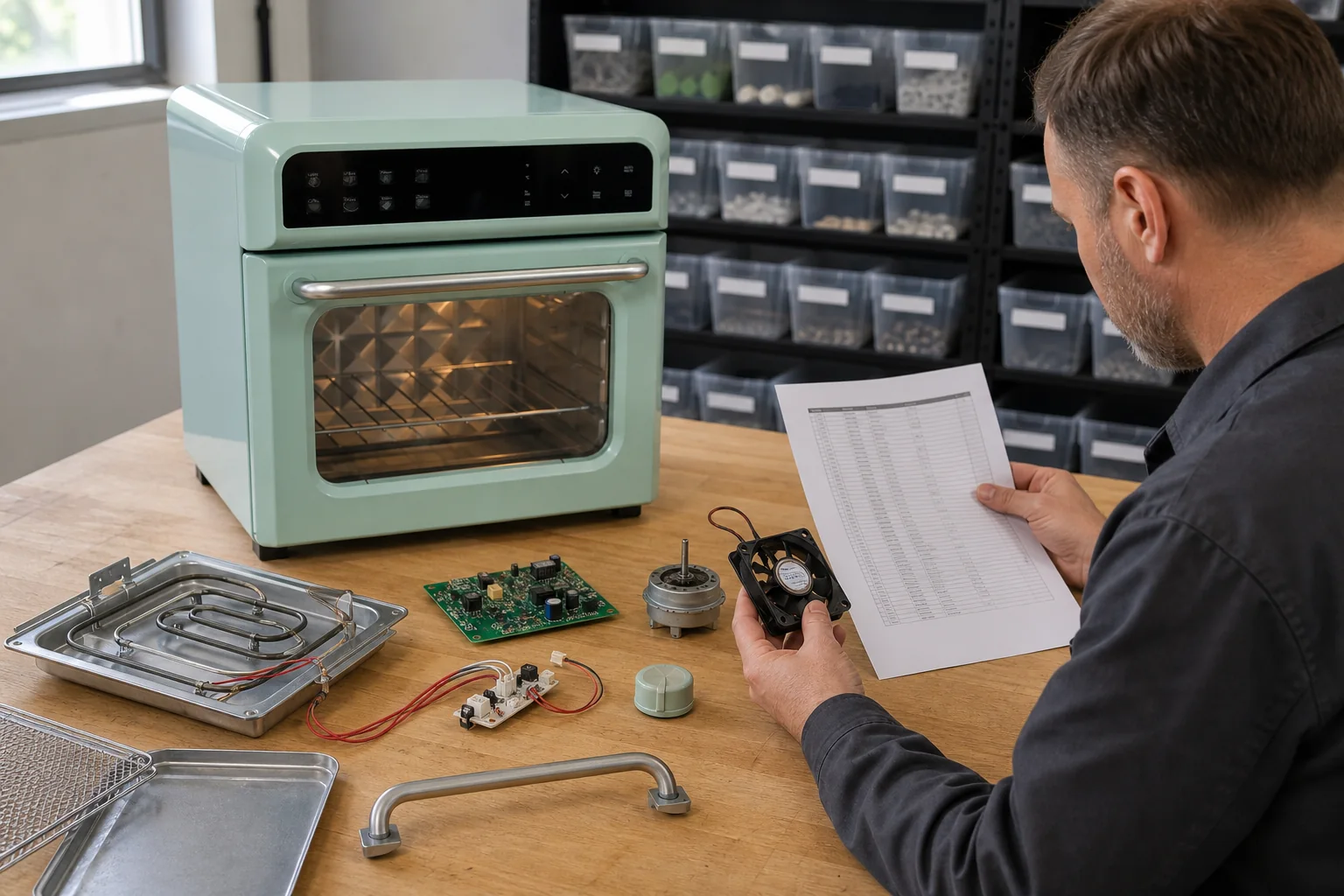
Do not order a random percentage of every component. Classify parts by failure exposure, safety relevance, diagnostic certainty, replacement difficulty, lead time and obsolescence risk. Door handles, trays and knobs have different demand patterns from control boards, motors or heating assemblies.
For each service part, define its part number, compatible model revisions, packaging, label, installation instruction and storage conditions. A component that fits several hardware revisions should be verified, not assumed.
Use early data carefully
Pilot failures and first production returns can guide the initial stock, but small samples are unstable. Record units sold, time in service, symptom, confirmed root cause, action taken and cost. Separate “no fault found,” shipping damage, misuse and manufacturing defect. ISO 10002 describes complaint handling as a process that includes receiving, tracking, analysing and using complaints to improve products and services.
Plan replenishment and end of life
Agree reorder lead times, minimum order quantities and who owns slow-moving stock. Identify parts likely to become unavailable and decide whether to place a final buy. When a component changes, update compatibility records and service instructions.
The objective is not a warehouse full of parts. It is a controlled path from field symptom to correct resolution.
Official references
- [ISO 10002 complaints-handling guidelines](https://www.iso.org/standard/71580.html)
- [ISO 9001 quality management systems](https://www.iso.org/standard/62085.html)