
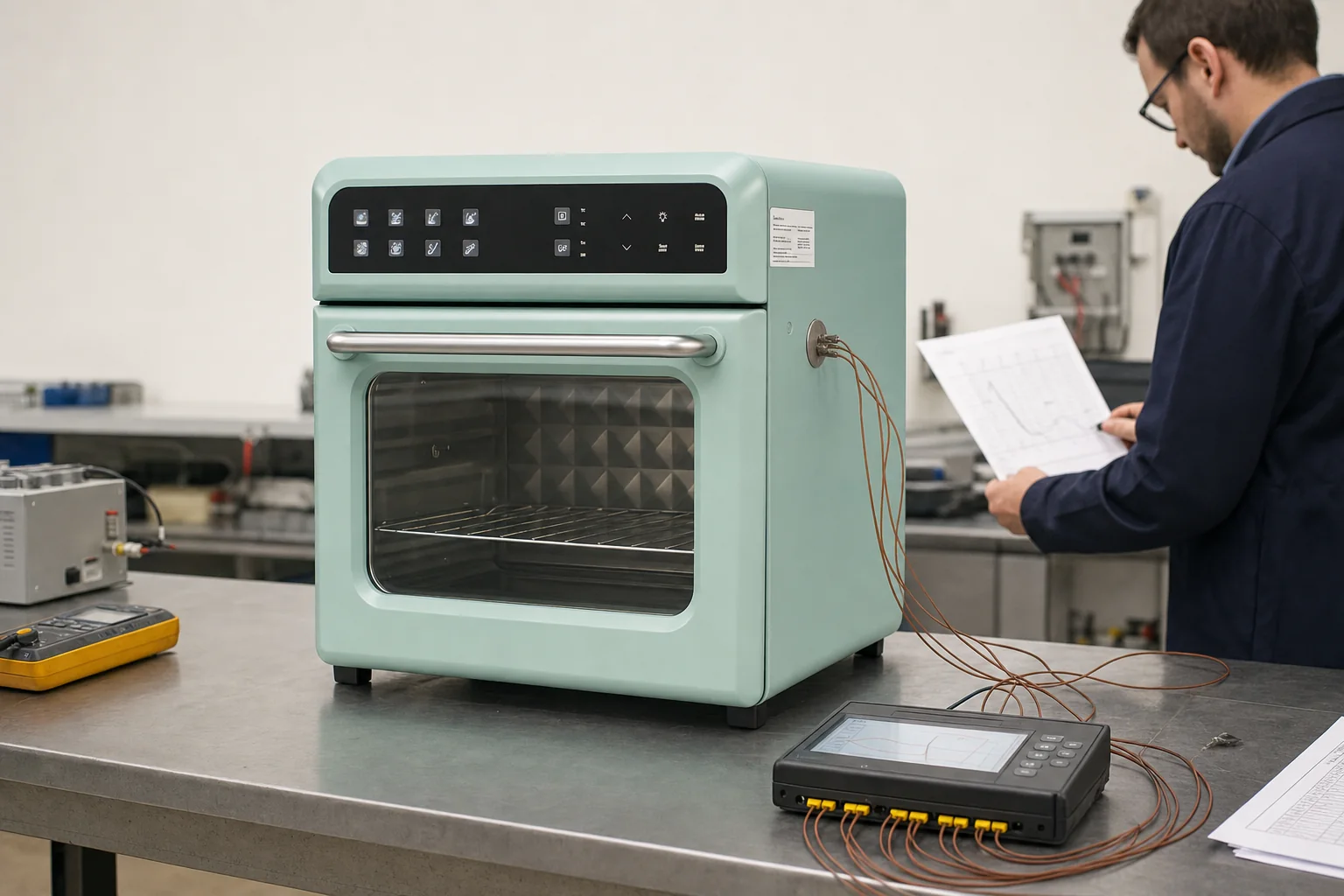
A number near the line needs context
Suppose a requirement says a point must not exceed 200°C. One report shows 199.8°C and another shows 200.2°C. It is tempting to call the first a pass and the second a fail. That may ignore probe accuracy, logger calibration, placement, repeatability and other contributors to measurement uncertainty.
Ask for the decision rule before the result arrives
A decision rule explains how uncertainty is considered when declaring conformity. Some projects use simple acceptance at the stated limit; others use a guard band to reduce the risk of accepting a nonconforming product. The buyer, supplier and laboratory should agree the rule when the test is commissioned—not after a marginal result appears.
Uncertainty does not make data useless
It makes the limits of the evidence visible. A well-run report identifies the measurand, method, equipment, calibration status, uncertainty where relevant and the rule used for conformity. If two laboratories disagree near a limit, compare their methods and uncertainty budgets before debating the last decimal place.
Use accredited-laboratory language correctly
ILAC G8 provides guidance on decision rules and statements of conformity under ISO/IEC 17025. ILAC G17 addresses measurement uncertainty in testing. Buyers do not need to become metrologists, but the RFQ should require a clear conformity rule for critical temperatures, power, leakage, dimensions and other limit-based results.
- ILAC guidance series, including G8 and G17: https://ilac.org/publications-and-resources/ilac-guidance-series/