
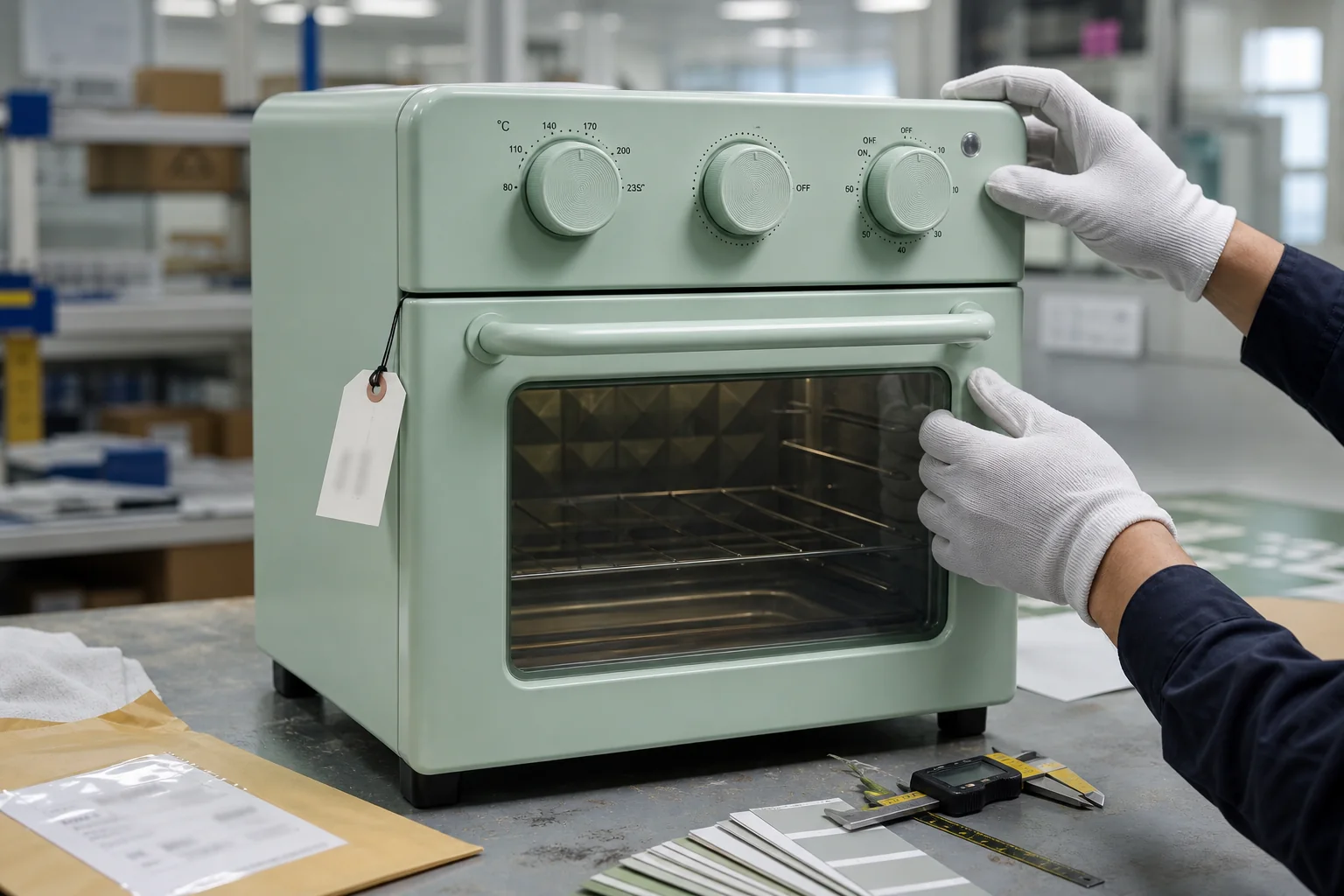
A sample is not a specification
Teams often approve an oven sample with an email saying “looks good.” Months later, the factory and buyer remember different details. A physical sample cannot show hidden component grades, approved software version, test limits or packaging requirements. It should be one part of a controlled approval package.
Identify the sample
Give the approved unit a unique number. Record model, colour, voltage, date, sample stage, serial number, software version and approving people. Seal or label it so it cannot quietly become a working unit. Ideally, buyer and supplier keep matching samples or a verified photo record of the same details.
Freeze what can be seen
Approve colour under agreed lighting, surface finish, gaps, alignment, printing, knob feel, door movement, display behaviour, accessories and visible workmanship. Colour judgement should refer to a defined colour standard or measured tolerance where appearance is critical.
Freeze what cannot be seen
Attach the bill of materials revision, critical component list, drawings, wiring diagram, rating label, firmware identification, packaging specification and safety-critical approvals. State which items may vary within an approved supplier list and which require written buyer approval.
Connect the sample to tests
A golden sample should not become an excuse to accept every characteristic by visual comparison. Temperature performance, electrical safety, noise and reliability still need documented methods and limits. ISO 9001 emphasises controlled documented information and processes that meet customer requirements.
Close deviations before approval
If the sample is accepted with open issues, list each deviation, owner and closing date. “Approved with comments” is not a production release unless everyone knows which comments block production.
Official reference
- [ISO 9001 quality management systems](https://www.iso.org/standard/62085.html)