
LINDEN INSIGHTS

Insights for Product and Sourcing Teams

Practical buyer guides, engineering notes and market-ready checklists for countertop oven programmes.

Illustrative real electric-oven timer photograph (CC0); not a LINDEN product
Engineering Guide

Oven Temperature Uniformity: A Practical Validation Plan for B2B Buyers

A single display temperature cannot prove even cooking. Learn how to compare temperature spread, overshoot and recovery under repeatable conditions.

Illustrative real toaster-oven photograph (public domain); not a LINDEN product
Technology Explained

Convection vs Air Fry: What Airflow Claims Really Mean

Air fry is a cooking mode, not a complete engineering specification. Buyers should validate airflow, load capacity and food results together.

Illustrative real electric-oven photograph (public domain); not a LINDEN product
Energy & Performance

Preheat, Recovery and Idle Energy: Three Metrics That Change Operating Cost

Rated wattage alone does not explain speed or energy use. Compare preheat, door-opening recovery and idle consumption under the same method.

Illustrative real toaster-oven photograph (public domain); not a LINDEN product
Buyer Guide

Rated Litres vs Usable Oven Capacity: How to Compare Cavities

Nominal litres are useful, but tray area, rack spacing, door clearance and airflow zones often decide what customers can actually cook.
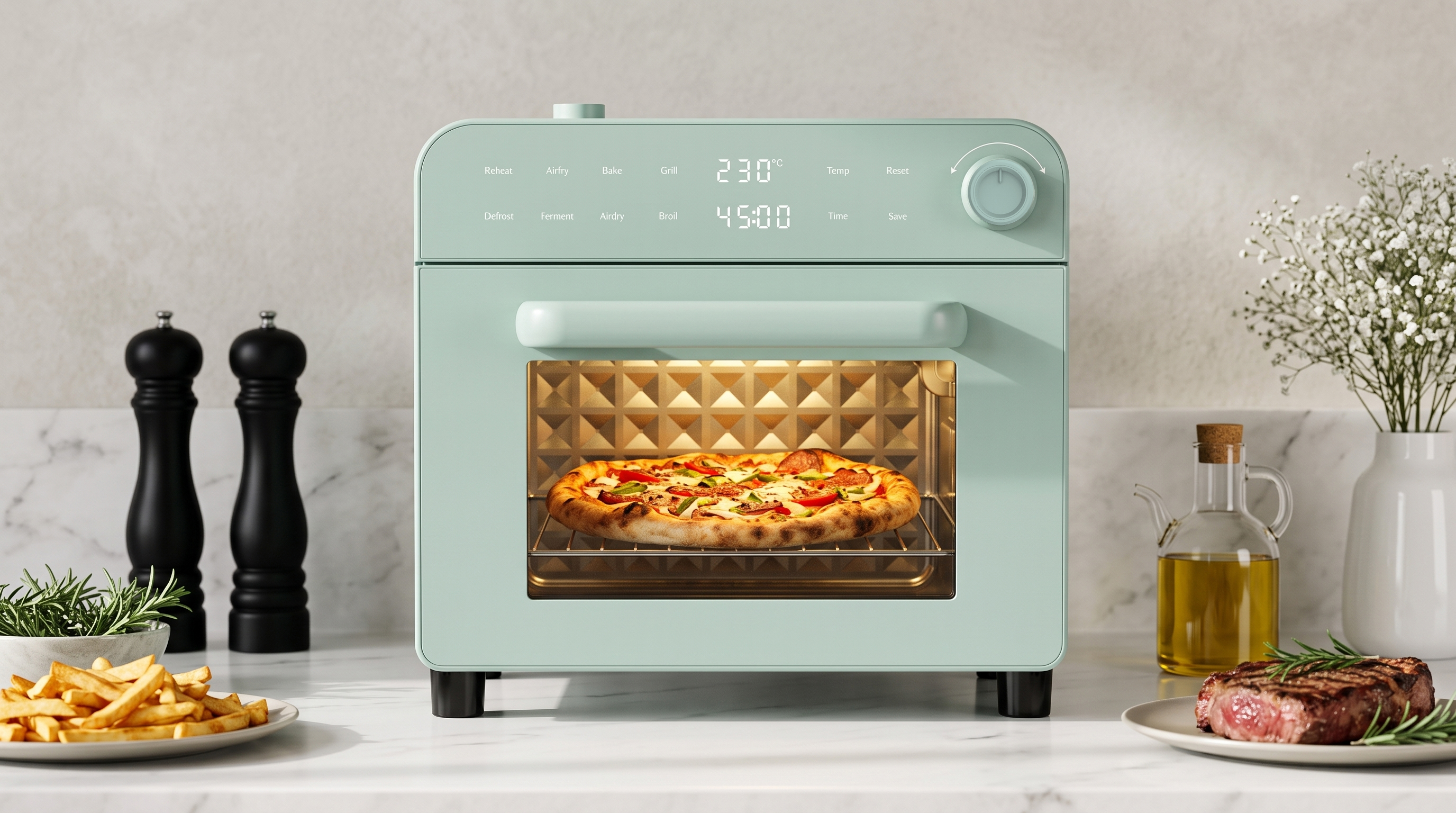
Air fry oven OEM manufacturing and sourcing guide
Buyer Guide

How to Evaluate an Air Fry Oven OEM Partner: 7 Questions for Procurement Teams

A practical framework for comparing manufacturing capability, compliance readiness, project risk and launch support before supplier nomination.
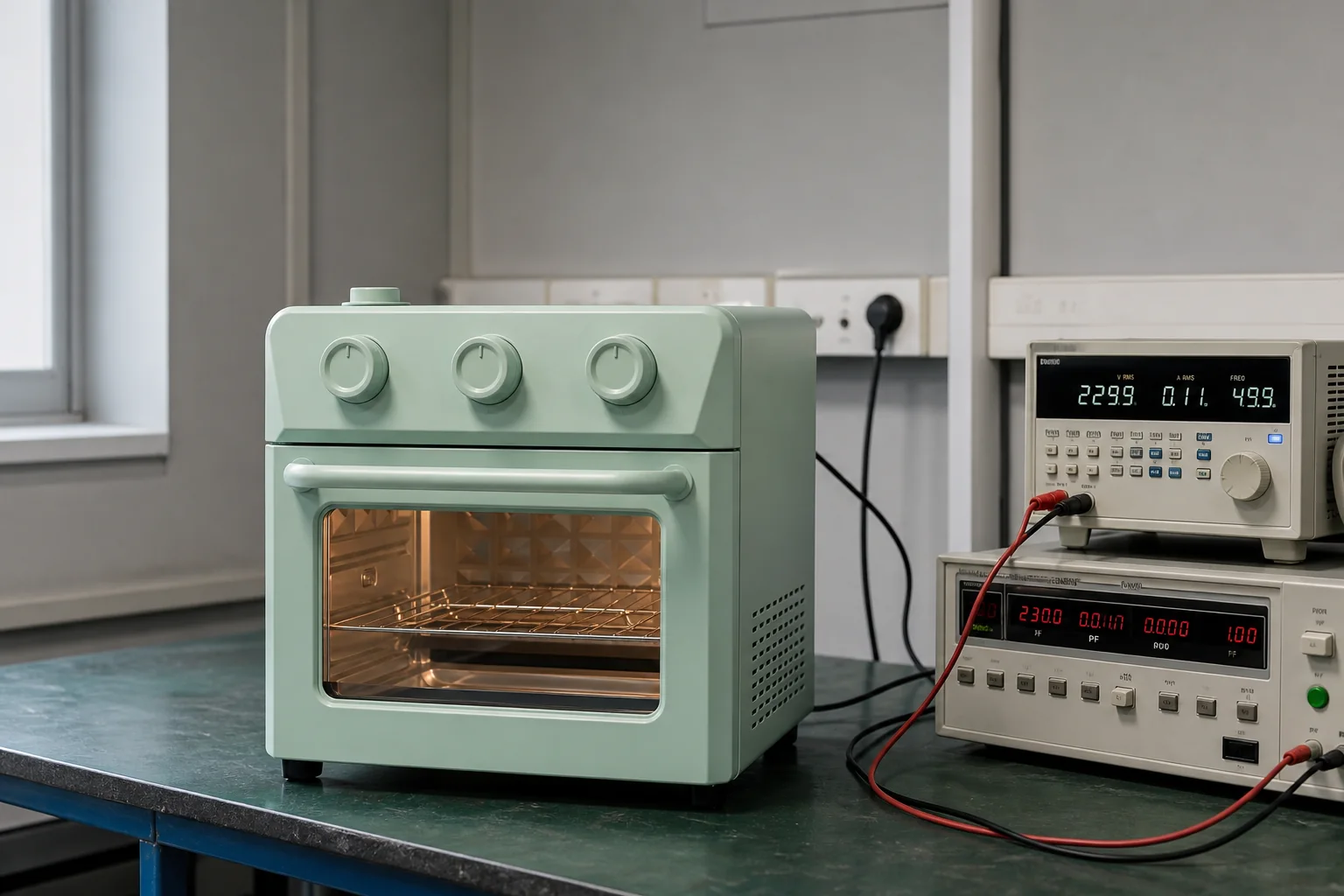
LINDEN countertop oven connected to a laboratory power analyser and variable AC supply
Electrical Engineering

The 230 V Assumption: Why Oven Performance Changes Across Markets

A 220–240 V rating does not make every grid condition identical. Voltage, frequency and local supply variation can change heat-up time, fan behaviour and the evidence behind a performance claim.
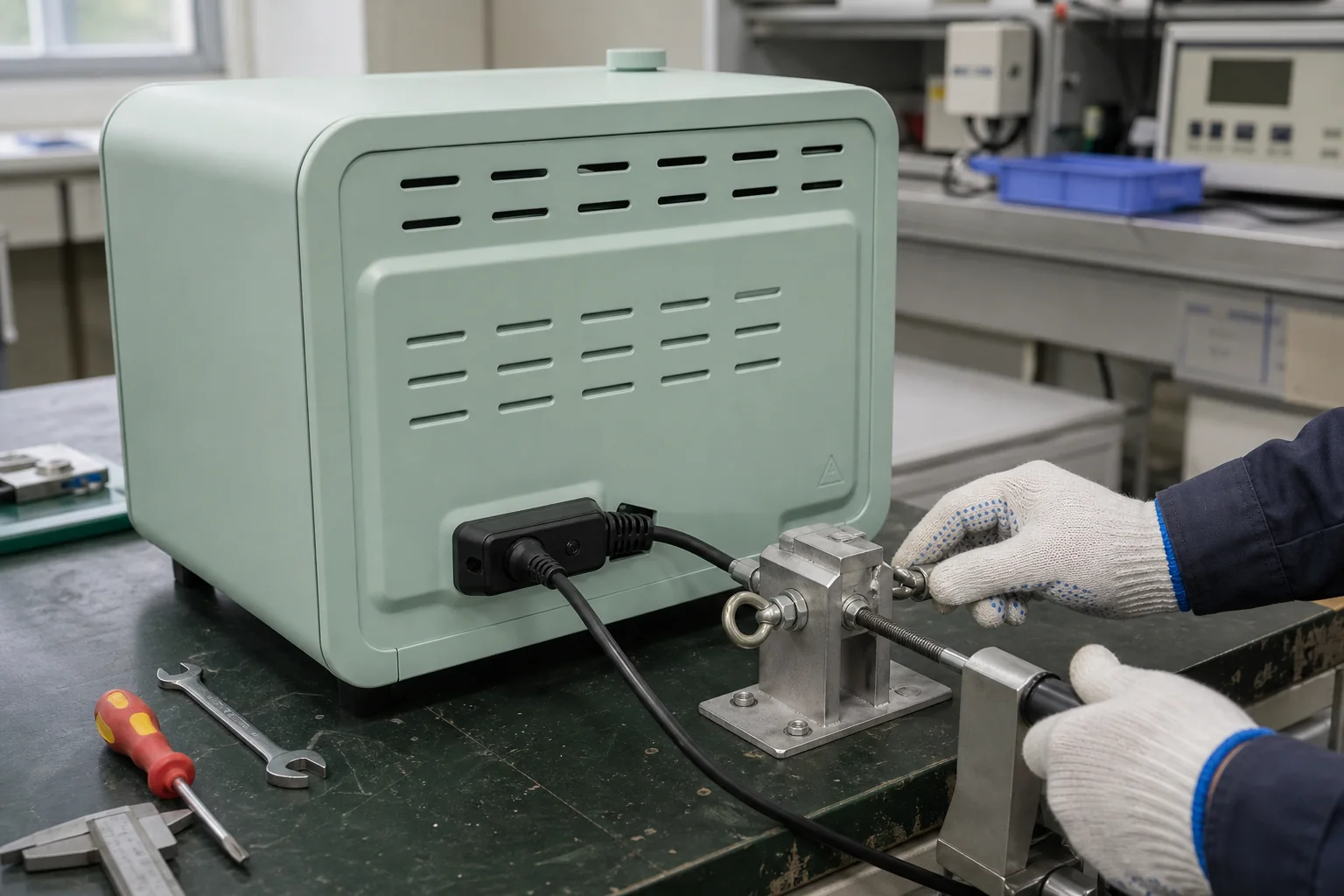
Rear of a LINDEN oven during a realistic power cord strain relief and temperature-rise inspection
Safety Engineering

The Power Cord Is Part of the Oven, Not a Packaging Accessory

Plug, cord, inlet, terminal and strain relief form one current-carrying system. Changing a cord set late can alter temperature rise, mechanical stress and certification status.
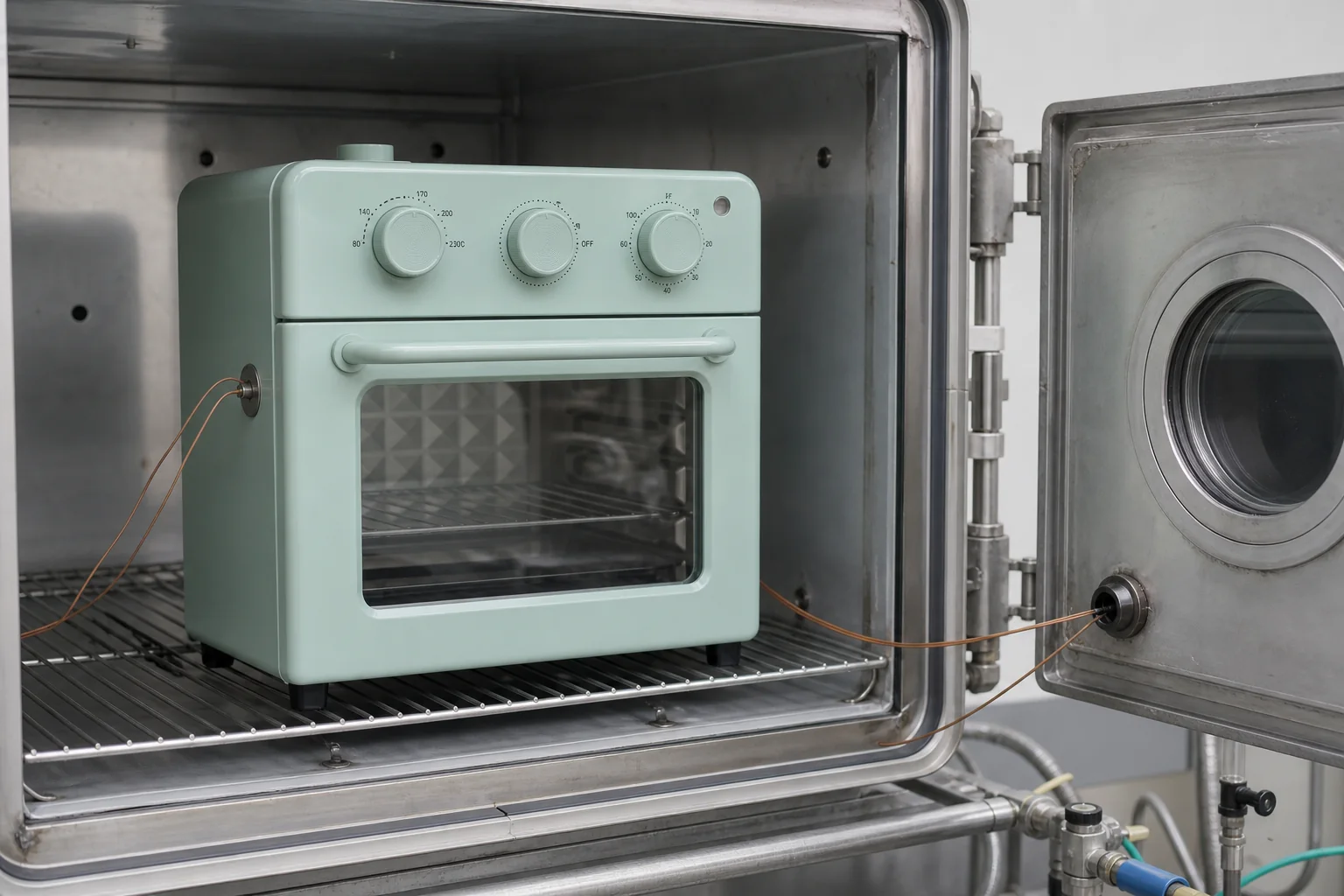
LINDEN countertop oven undergoing a believable high-altitude environmental engineering evaluation
Market Engineering

Selling Ovens Above 2,000 Metres: The Altitude Check Most RFQs Miss

Air pressure falls with altitude. Electrical clearances, cooling assumptions and cooking behaviour deserve a specific review when the sales territory includes high-altitude cities.
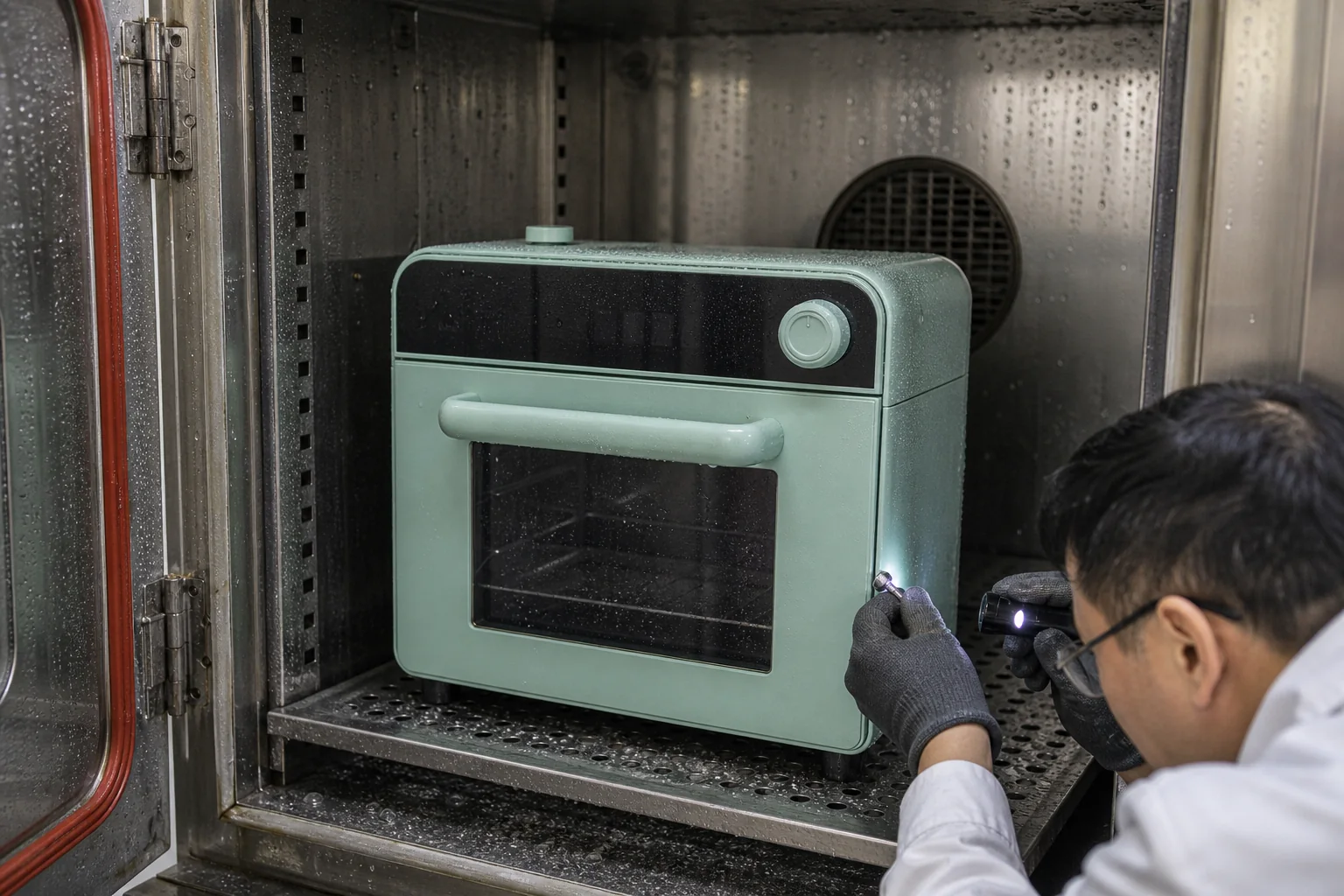
LINDEN oven in a realistic humidity and cyclic salt-mist product validation chamber
Environmental Validation

Coastal Markets Need More Than a Stainless-Steel Front

Salt and humidity reach screws, cut edges, connectors and circuit boards that customers never see. A bright front panel alone says little about long-term corrosion resistance.

Oven OEM buyer reviewing an RFQ beside a countertop oven sample
Procurement Playbook

How to Write an Oven OEM RFQ That Produces Comparable Quotations

A usable RFQ does more than request a price. It fixes the commercial assumptions, technical boundaries and evidence requirements that make supplier quotations genuinely comparable.
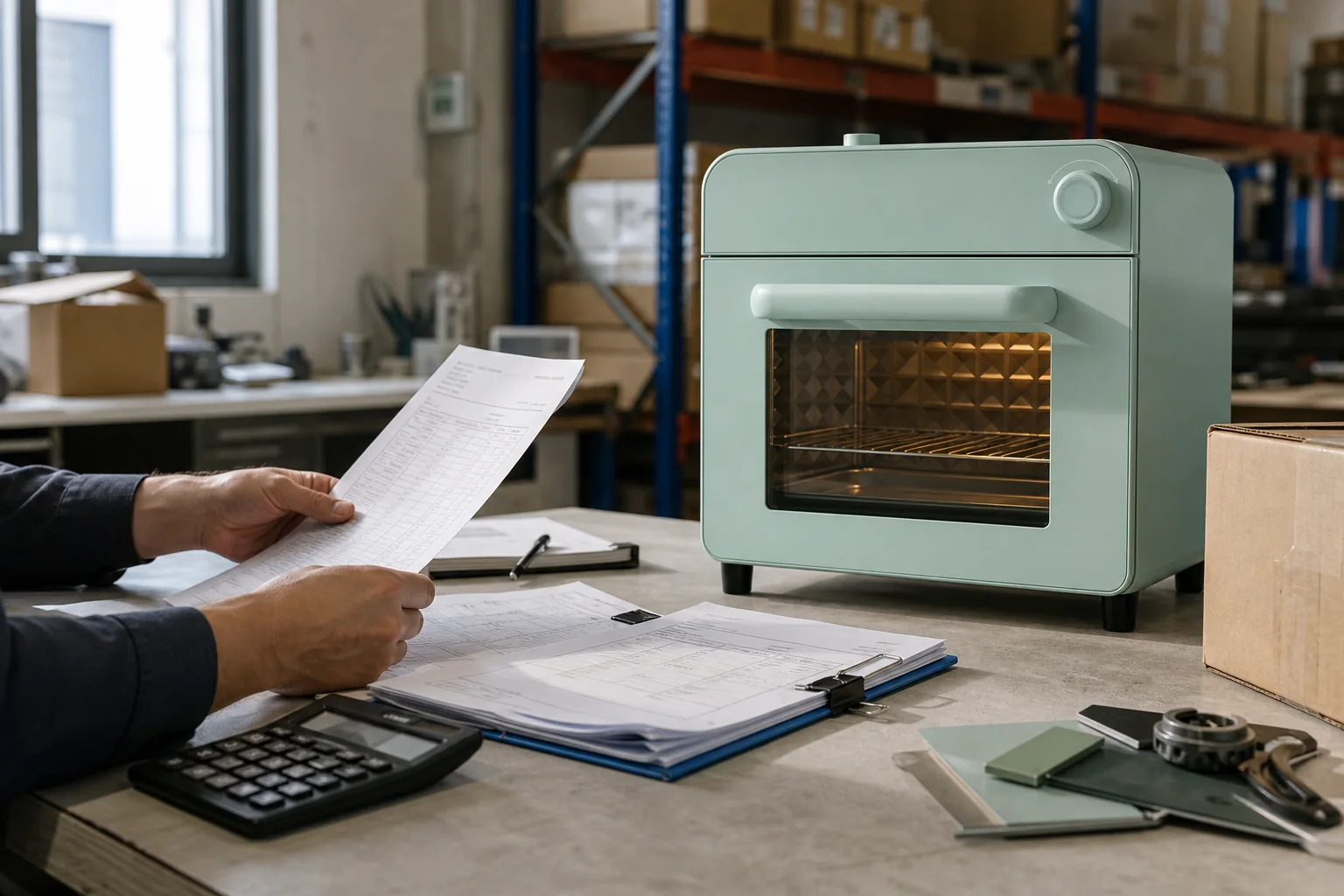
Procurement cost review with an oven sample and shipping documents
Commercial Planning

The Cheapest Oven Quote May Be the Most Expensive Program

Unit price is only one line in an oven programme. Buyers should normalise certification, tooling, packaging, logistics, quality and warranty assumptions before choosing a supplier.
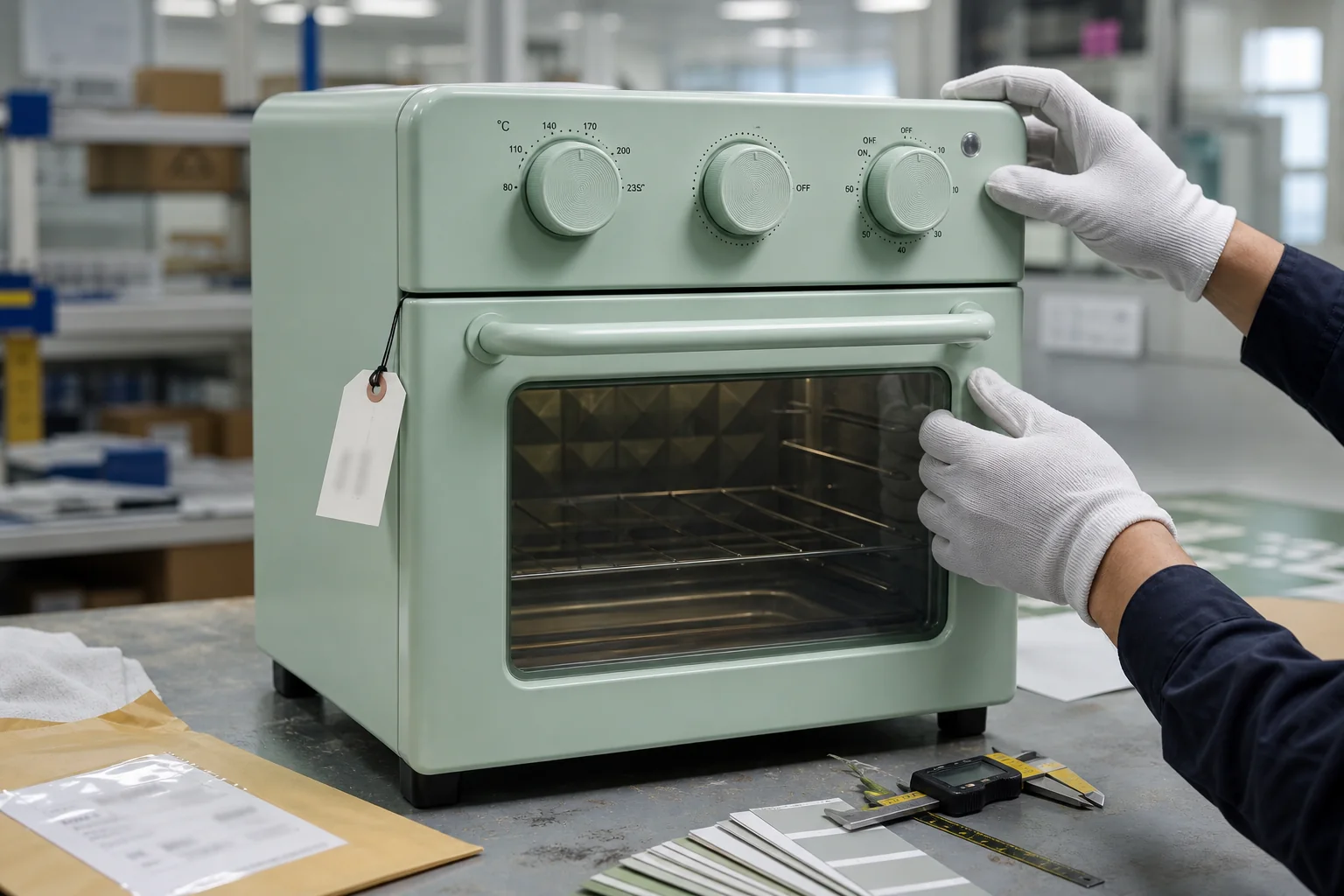
Approved countertop oven golden sample in a quality inspection room
Quality Control

What a Golden Sample Must Freeze Before Mass Production

A golden sample is useful only when it is tied to a controlled specification, approved deviations and measurable acceptance criteria.

Illustrative real electric-oven photograph (public domain); not a LINDEN product
Compliance

Portable, Built-In or Commercial? Choose the Right Oven Safety Standard

Standards follow intended use and construction. Selecting the wrong scope early can invalidate quotations, test plans and launch timing.

Illustrative real built-in-oven photograph (CC0); not a LINDEN product
Compliance

EU Oven Energy Labels: What Buyers Should Verify—and What Is Out of Scope

The EU oven label reports cavity volume and energy per cycle, but small and portable ovens can fall outside this specific labelling scope.

Illustrative real toaster-oven photograph (public domain); not a LINDEN product
Materials & Safety

Oven Food-Contact Materials: The Documentation Buyers Should Request

Trays, racks, coatings, seals and accessories need material-specific evidence linked to intended food, time and temperature conditions.

Illustrative real electric-oven photograph (CC0); not a LINDEN product
Materials & Safety

Nonstick Coatings and PFAS: How to Ask for Evidence Without Oversimplifying

PFAS is a broad chemical class. A credible sourcing decision starts with exact coating identity, intended use, migration evidence and market-specific rules.

Illustrative real toaster-oven photograph (public domain); not a LINDEN product
Food Science

Acrylamide and Oven Browning: Evidence-Based Ways to Reduce Risk

Acrylamide can form in starchy foods during high-temperature cooking. Program design should manage time, temperature and endpoint color together.

Illustrative real oven-control photograph (CC0); not a LINDEN product
Food Safety

Oven Setpoint Is Not Food Temperature: A Buyer’s Guide to Core-Temperature Safety

Cavity air temperature and food core temperature answer different questions. Safe-use content should direct customers to a food thermometer.

Illustrative real built-in-oven photograph (CC0); not a LINDEN product
Product Design

Manual, Steam-Assist, Catalytic or Pyrolytic Cleaning: A B2B Trade-Off Guide

Cleaning systems affect cost, insulation, controls, coatings, instructions and customer expectations. Compare the whole system, not the feature name.

Illustrative real electric-oven photograph (public domain); not a LINDEN product
Safety Engineering

Cool-Touch Claims: How External Surface Temperature Is Actually Evaluated

A cool handle does not mean every accessible surface stays cool. Claims need defined points, operating modes and standardized safety evaluation.

Illustrative real toaster-oven photograph (public domain); not a LINDEN product
Engineering Guide

Oven Fan Noise: How to Write a Testable B2B Specification

A dB value is incomplete without distance, room, operating mode, load and measurement quantity. Write conditions before setting a limit.

Illustrative real electric-oven photograph (CC0); not a LINDEN product
Quality Engineering

Oven Reliability Testing: Turning ‘Long Life’ Into Verifiable Evidence

Reliability is not one cycle count. A credible plan links use profile, failure modes, sample size, inspections and production controls.

Illustrative real toaster-oven photograph (public domain); not a LINDEN product
Compliance

CE, CB and NRTL: A Practical Certification Roadmap for Oven Programs

CE marking, IECEE CB documents and US NRTL certification serve different legal and market functions. Plan the route by country and channel.

Illustrative real built-in-oven photograph (CC0); not a LINDEN product
Compliance

US DOE Cooking-Product Rules: What the 2028 Compliance Date Means

DOE standards and test procedures apply by defined product class and scope. Buyers should map models early and preserve test evidence through launch.

Illustrative real electric-oven photograph (public domain); not a LINDEN product
Compliance

EMC, RoHS and REACH: Three Different Compliance Questions for Electronic Ovens

EMC concerns electromagnetic disturbance; RoHS restricts substances in electrical equipment; REACH governs chemicals more broadly. One report cannot replace all three.

Illustrative real connected-kitchen oven photograph (CC0); not a LINDEN product
Connected Products

Connected Oven Cybersecurity: What Buyers Should Put in the Product Brief

Security depends on the device, app, cloud service and update process. Define support periods, vulnerability handling and safe remote functions before nomination.

Illustrative real toaster-oven photograph (public domain); not a LINDEN product
Packaging & Logistics

Glass-Door Oven Packaging: Building a Transit Test That Matches the Distribution Channel

Packaging should be tested as a product-package system against the real parcel, LTL or unit-load channel—not with a generic drop claim.

Illustrative real electric-oven photograph (CC0); not a LINDEN product
Quality Engineering

Supplier Change Control: Protecting Oven Performance After Approval

The approved sample is a configuration, not just a shape. Control component, material, process, firmware and factory changes through evidence-based approval.
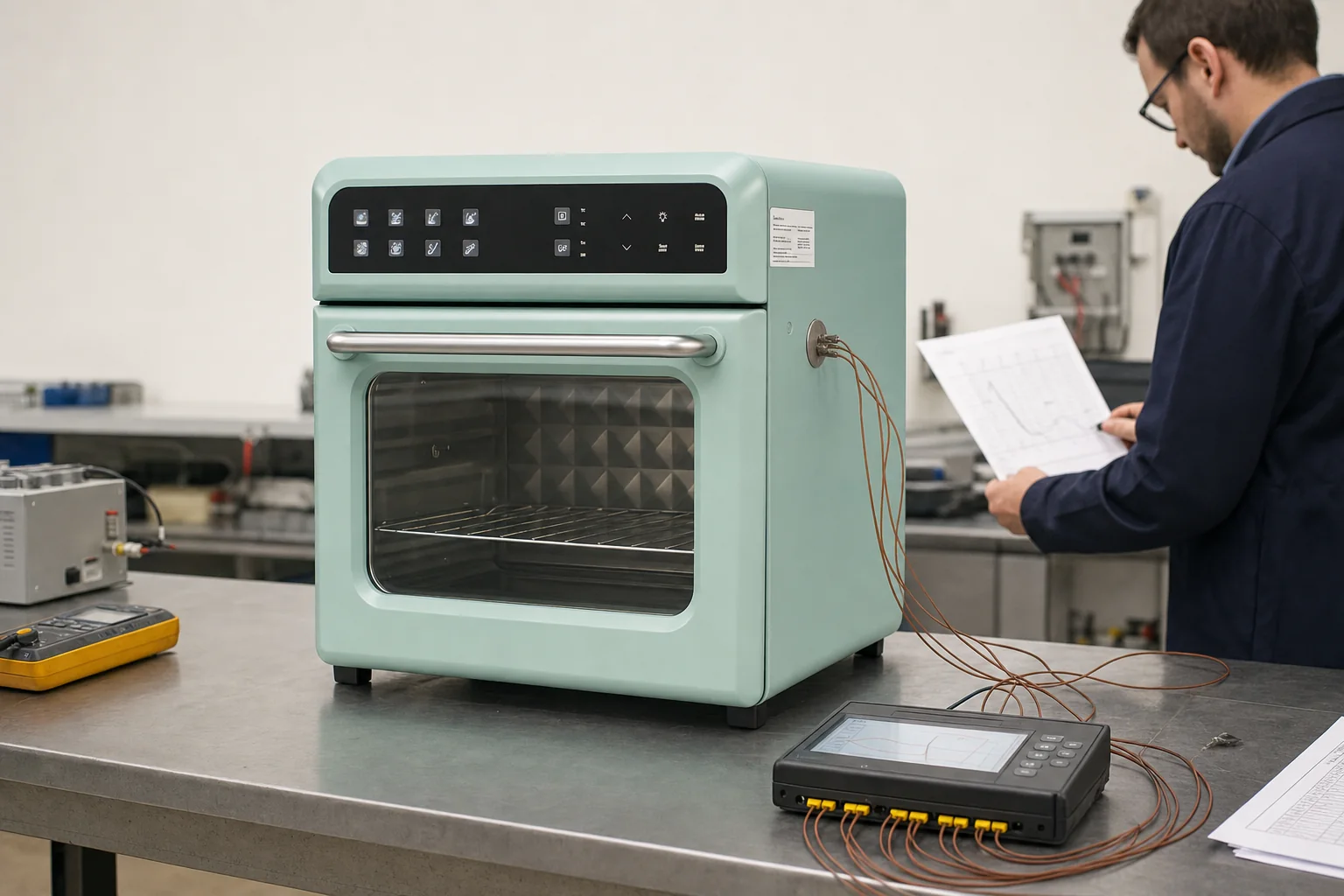
Realistic oven laboratory scene with calibrated thermocouples, a data logger and an engineer reviewing results
Laboratory Practice

When 199.8°C Passes and 200.2°C Fails: Measurement Uncertainty in Supplier Reports

A result close to a limit is not self-explanatory. Buyers need the measurement uncertainty and the decision rule before treating a laboratory report as a clear pass or fail.
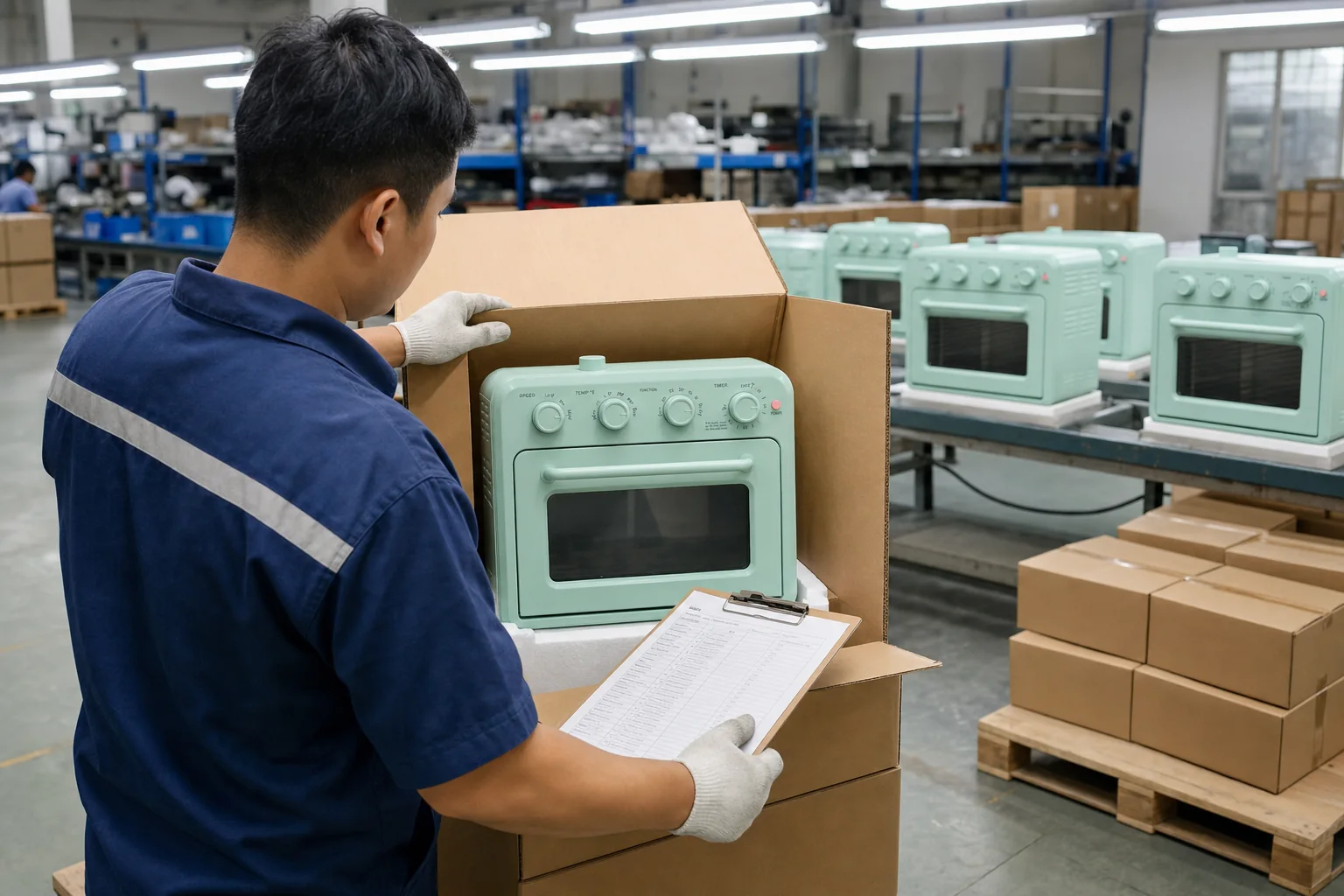
Natural factory photograph of an inspector sampling finished LINDEN ovens and cartons on a production floor
Supplier Quality

AQL Is a Sampling Plan, Not Permission to Ship Defects

Acceptance sampling helps decide whether to accept a lot. It does not promise that every shipped unit is good, and it should not replace controls for safety-critical characteristics.
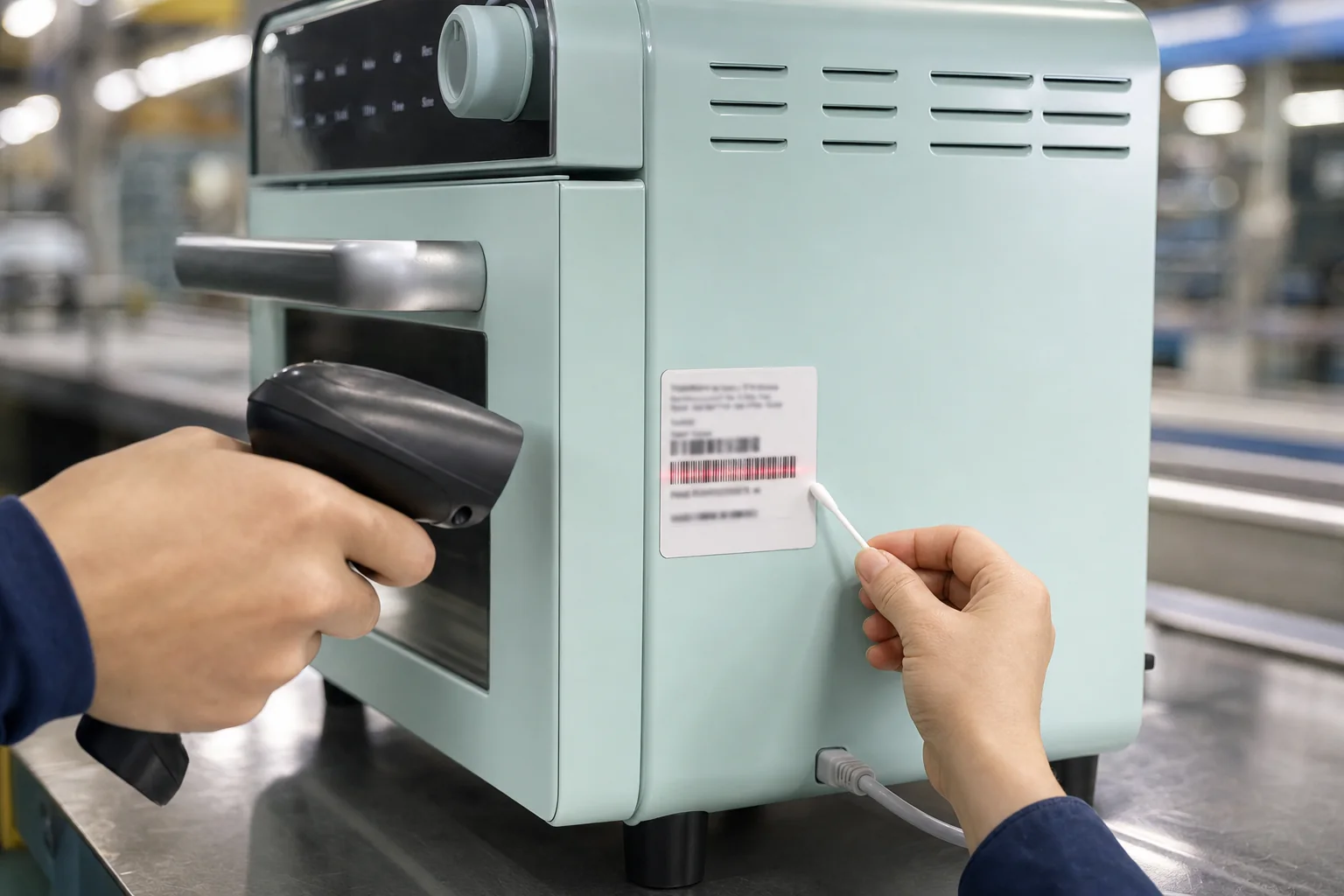
Close-up documentary photograph of a durable rating label and serial code being checked on a LINDEN oven
Product Compliance

If the Rating Label Fades, Traceability Fades With It

A rating label must do more than look correct at shipment. Product identity, electrical ratings and economic-operator information need to remain legible through heat, cleaning and service.
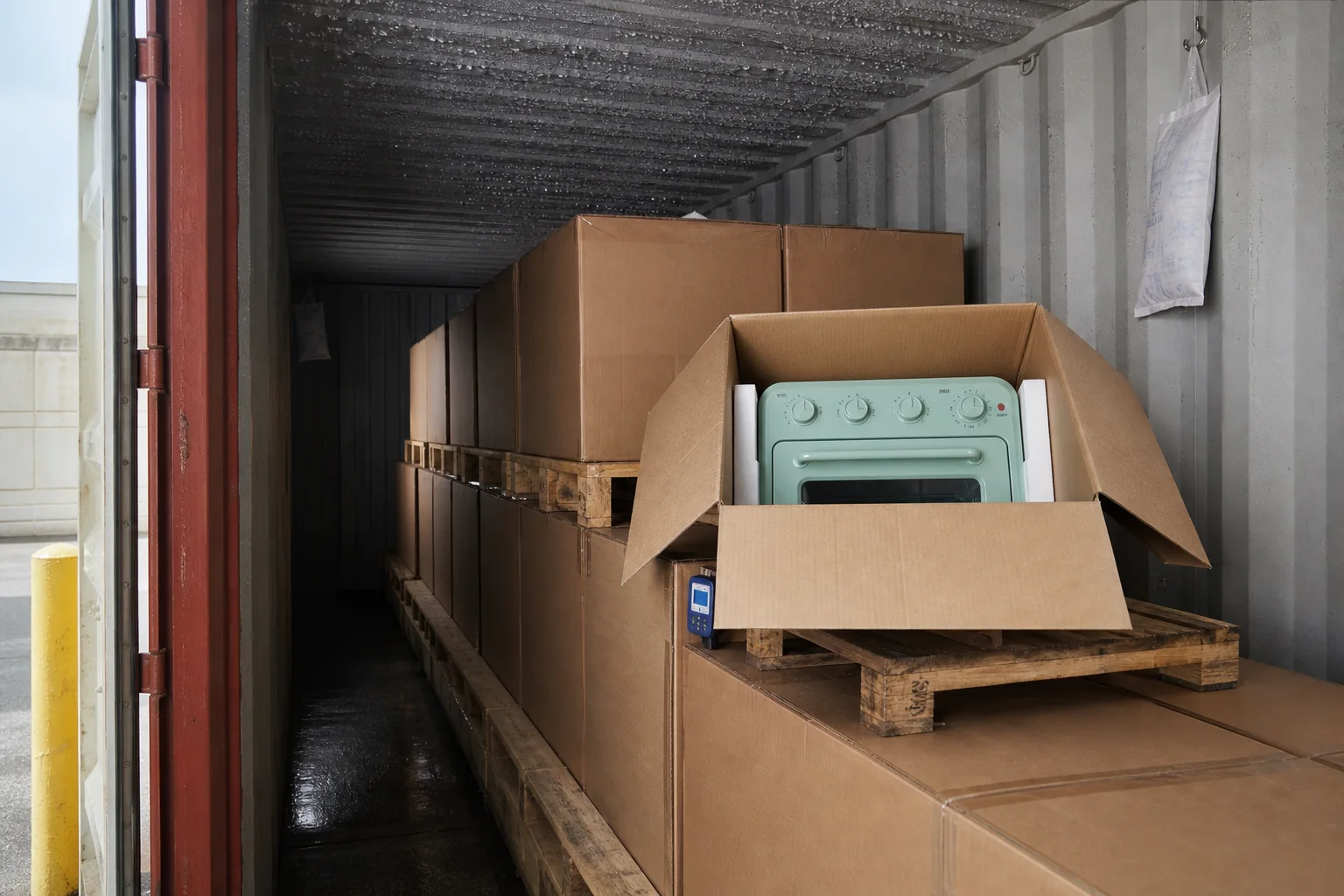
Realistic shipping container loaded with LINDEN oven cartons and visible roof condensation controls
Logistics Engineering

Container Sweat: The Quiet Cause of Rust, Soft Cartons and Dead Displays

Long sea voyages create daily temperature swings. Moisture from pallets, cartons and humid loading air can condense inside a container and damage ovens before the cartons are opened.
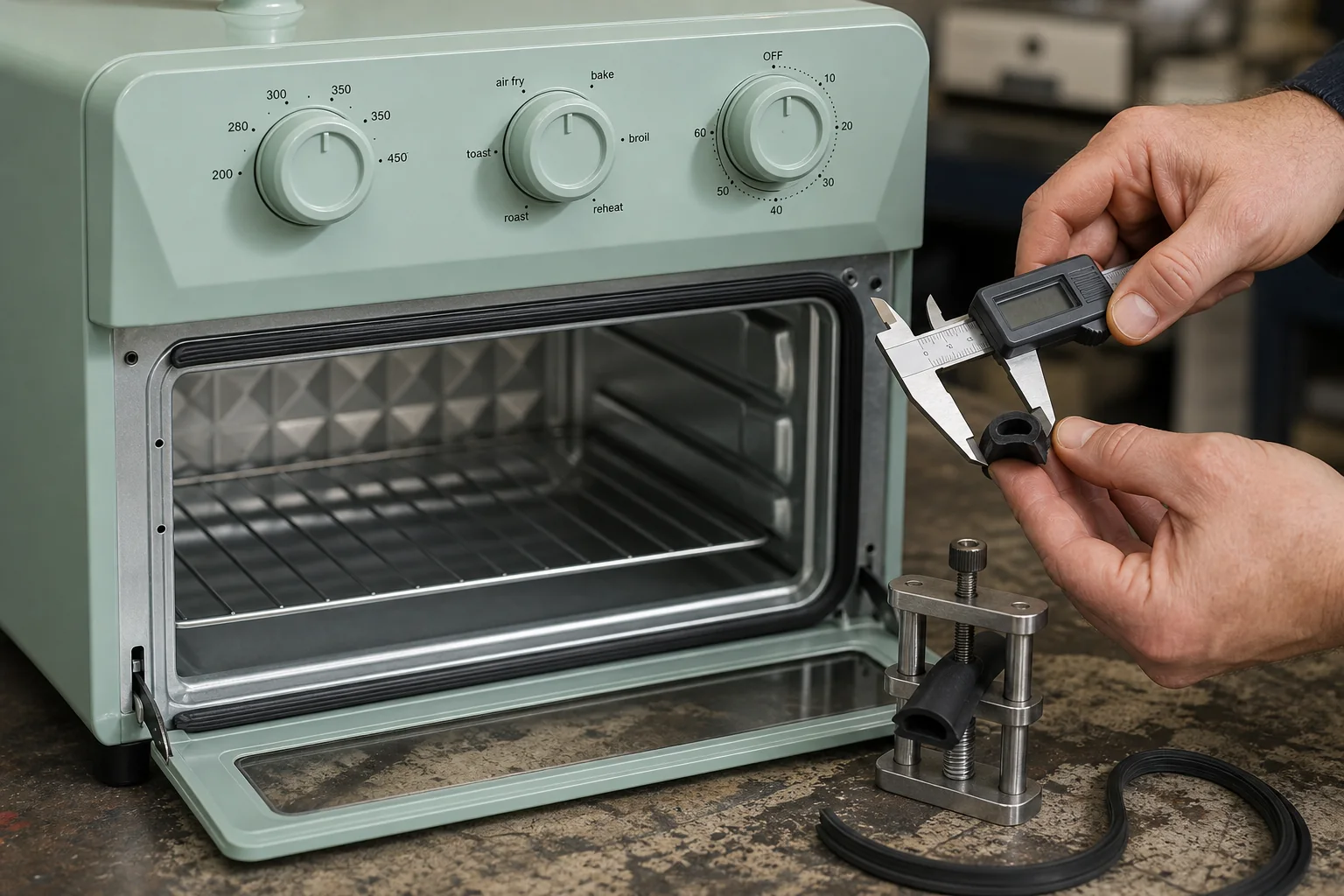
Natural close-up of a LINDEN oven door gasket being measured with a compression fixture and calliper
Component Engineering

Door Gaskets Age Under Compression, Not Just Heat

An oven seal can look intact and still lose recovery. Compression set, joint quality and door geometry influence heat leakage, condensation and cooking consistency over time.
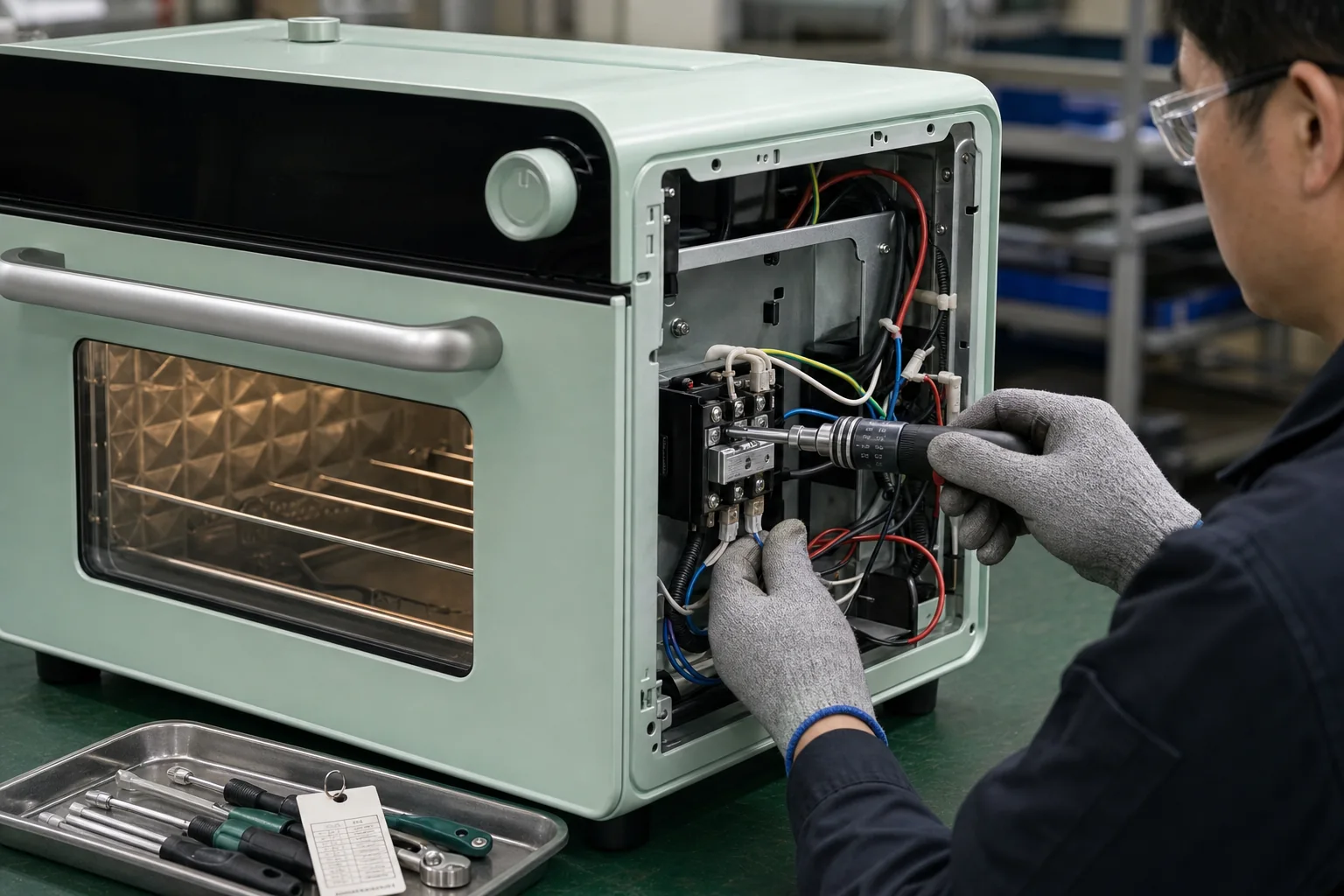
Documentary factory close-up of a technician tightening a LINDEN oven electrical terminal with a calibrated torque tool
Production Engineering

One Loose Terminal Can Outrun a Good Safety Certificate

A certified design still depends on repeatable assembly. Terminal preparation, tightening torque and tool verification can decide whether a high-current oven connection stays cool in service.
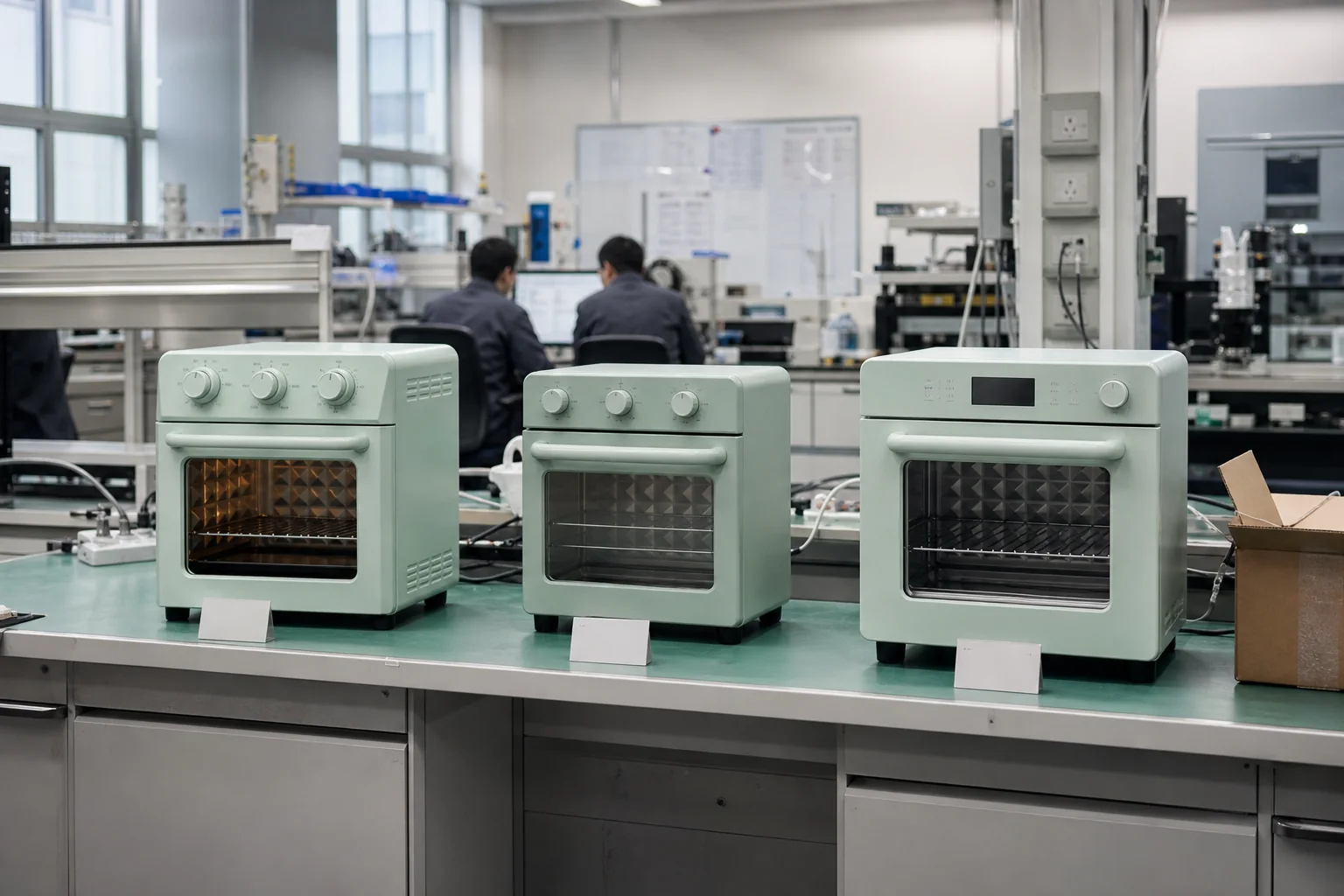
Several oven samples at different development stages in a factory review area
Project Management

Prototype, Certification Sample or Pilot Build? Give Each Sample a Job

Sample rounds become expensive when every unit is expected to prove everything. A staged approval plan assigns a clear question and exit criterion to each build.
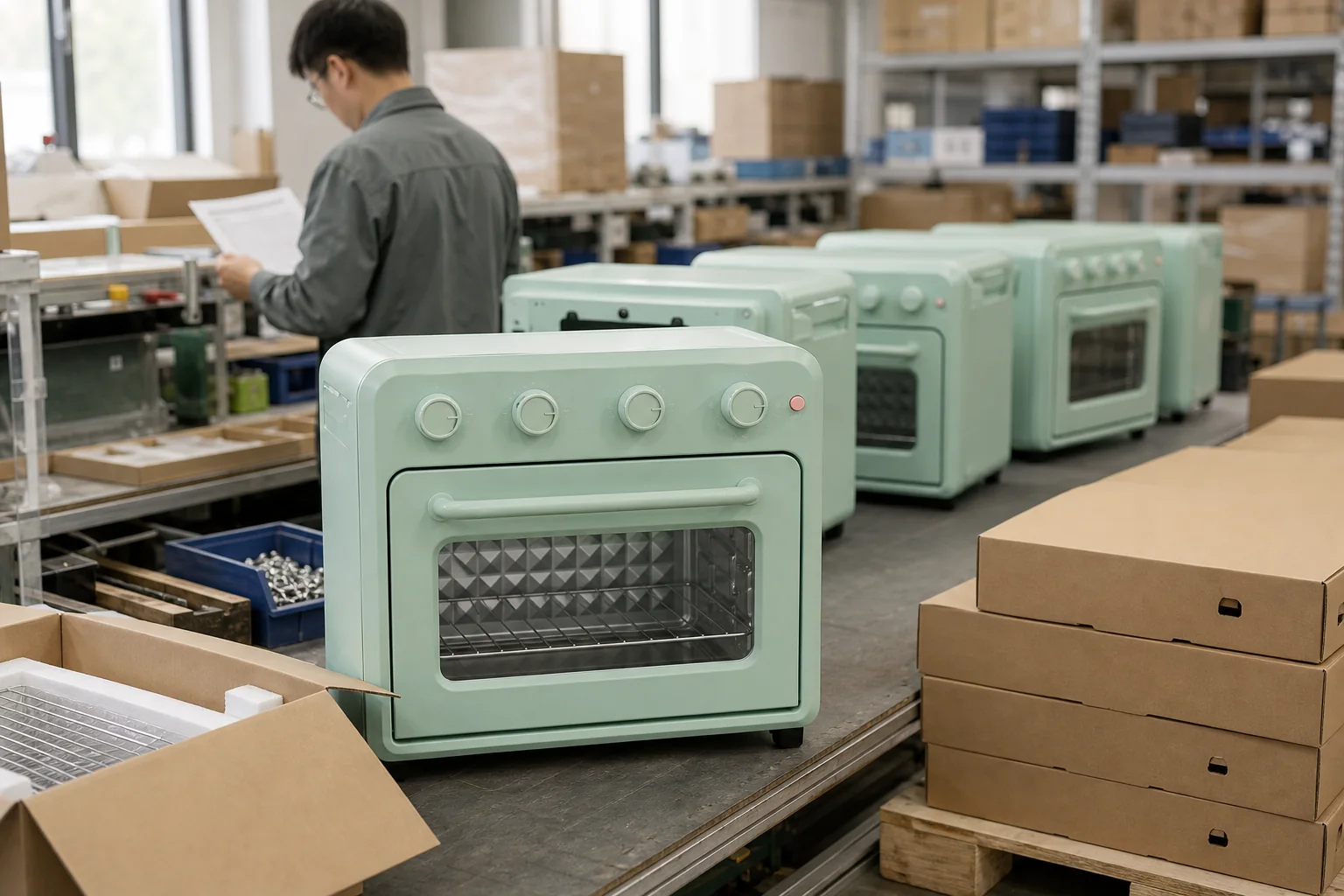
Countertop ovens and component cartons prepared for an OEM production order
Supply Chain

MOQ Is a Cost Structure, Not Just a Factory Rule

An oven MOQ usually comes from several different constraints. Separating them helps buyers negotiate the right variable instead of asking for one unexplained number to disappear.
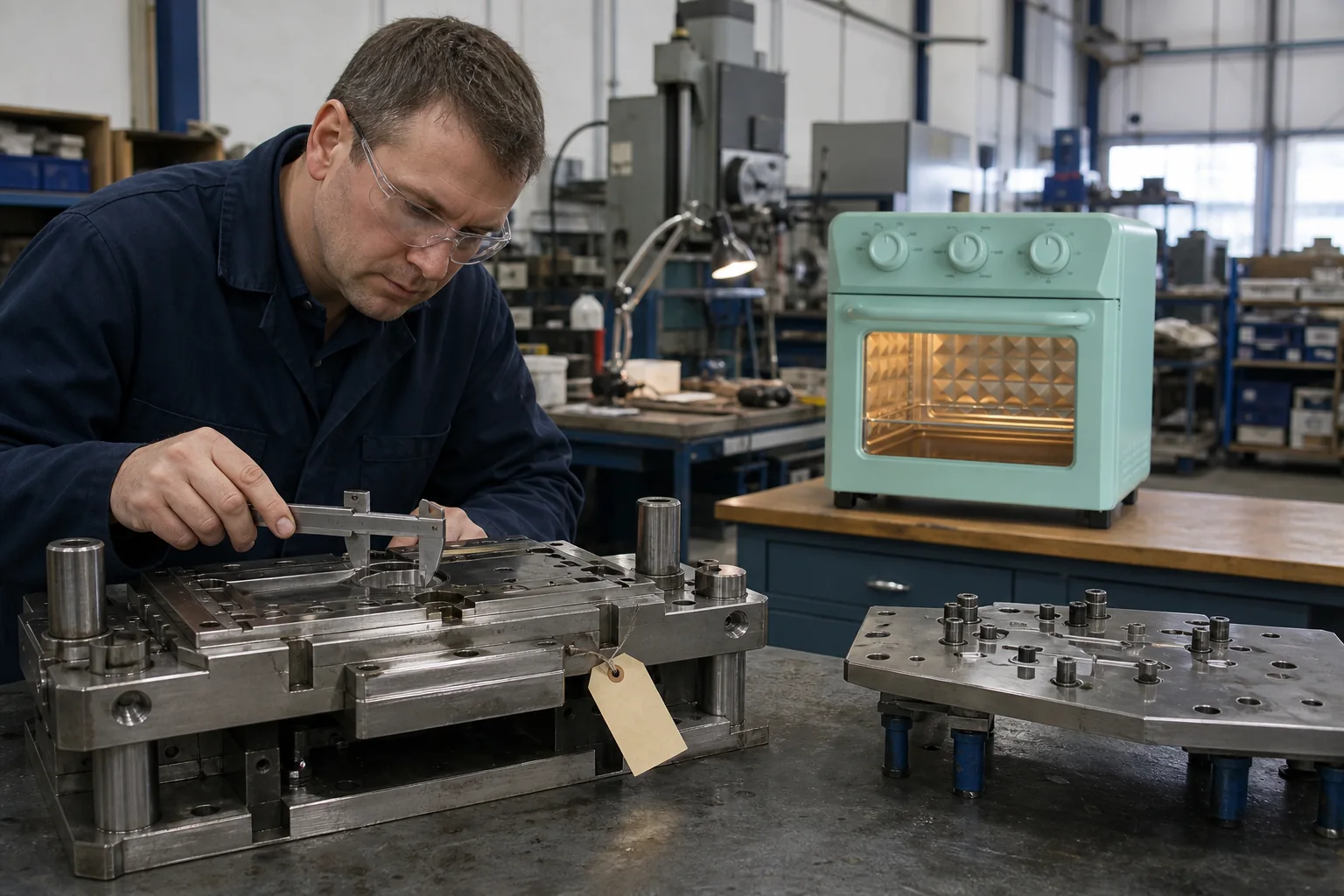
Oven tooling and approved product sample in a manufacturing workshop
IP & Tooling

Who Owns the Tooling? Questions to Settle Before You Pay

Paying a tooling invoice does not answer every ownership question. Buyers need a written record covering identification, use, maintenance, changes, storage and programme exit.
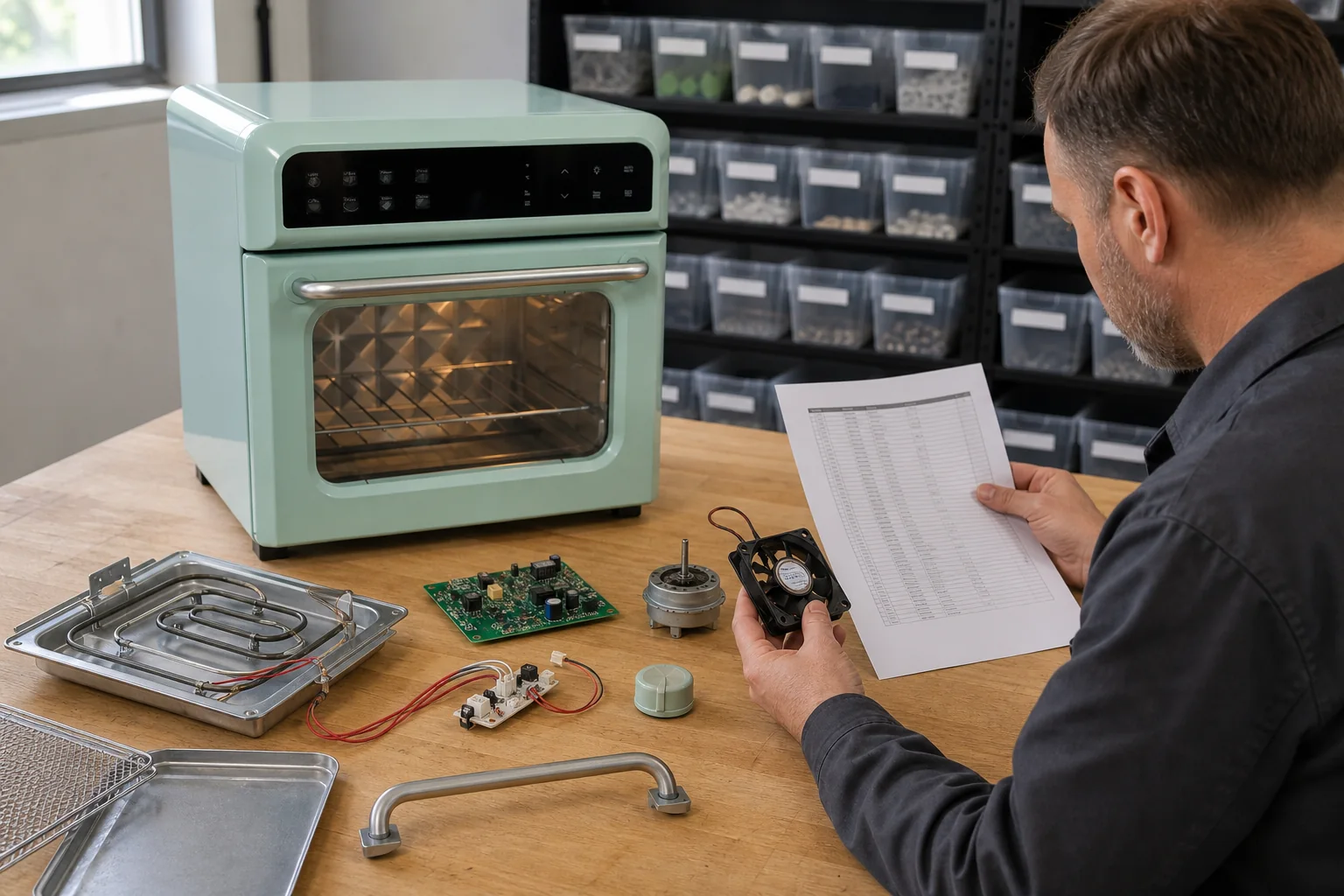
Oven spare parts organised beside a finished countertop oven
After-Sales Planning

Spare Parts Planning Before Launch: A Three-Year Oven Programme

Spare parts should be planned from the bill of materials and service model before the first shipment, not after complaints begin.
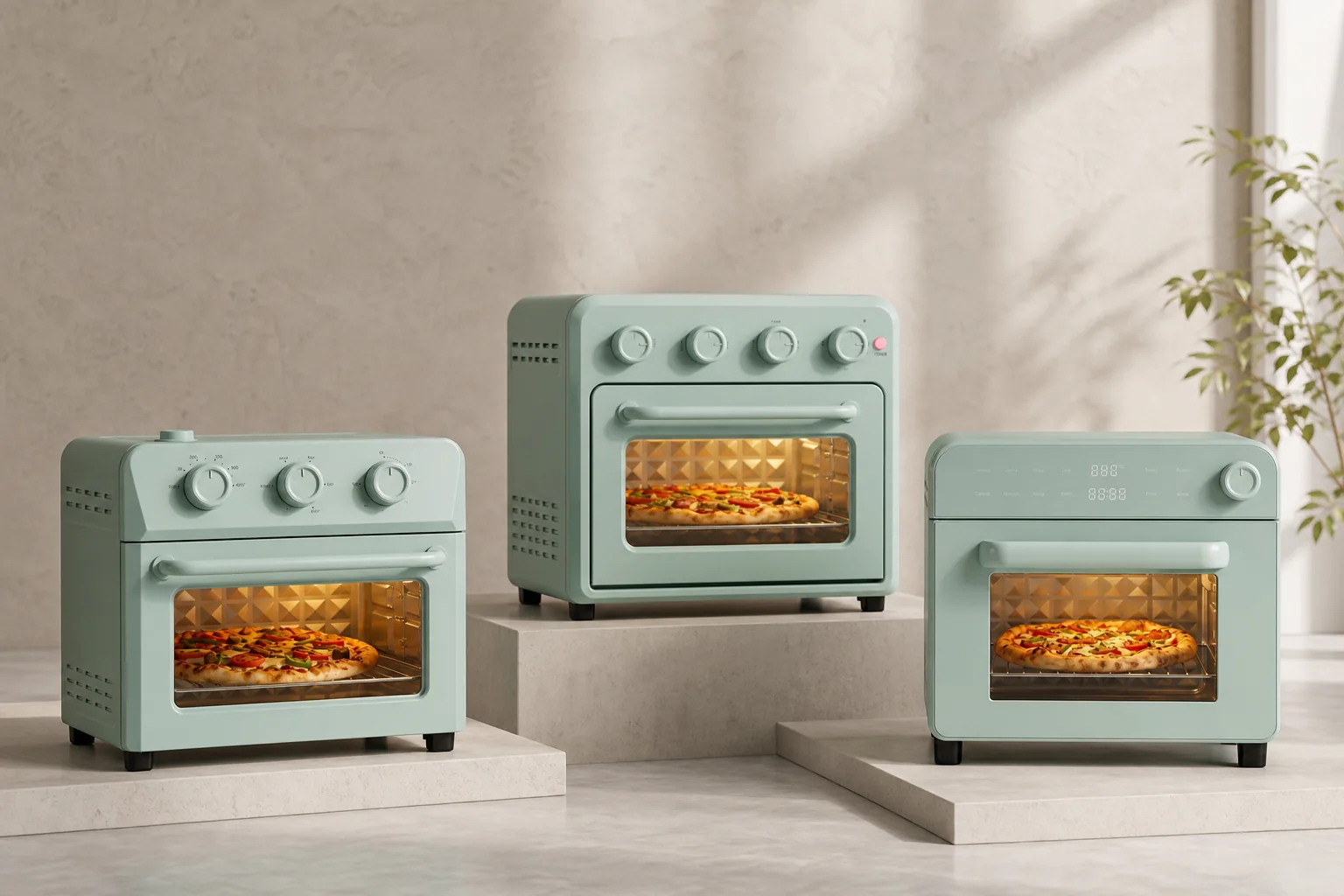
Three coordinated countertop oven models presented as a product range
Portfolio Strategy

Good, Better, Best: Building an Oven Range Without Feature Clutter

A three-tier oven range works when each step serves a different buying reason. Adding functions without a clear customer job creates cost and confusion rather than value.
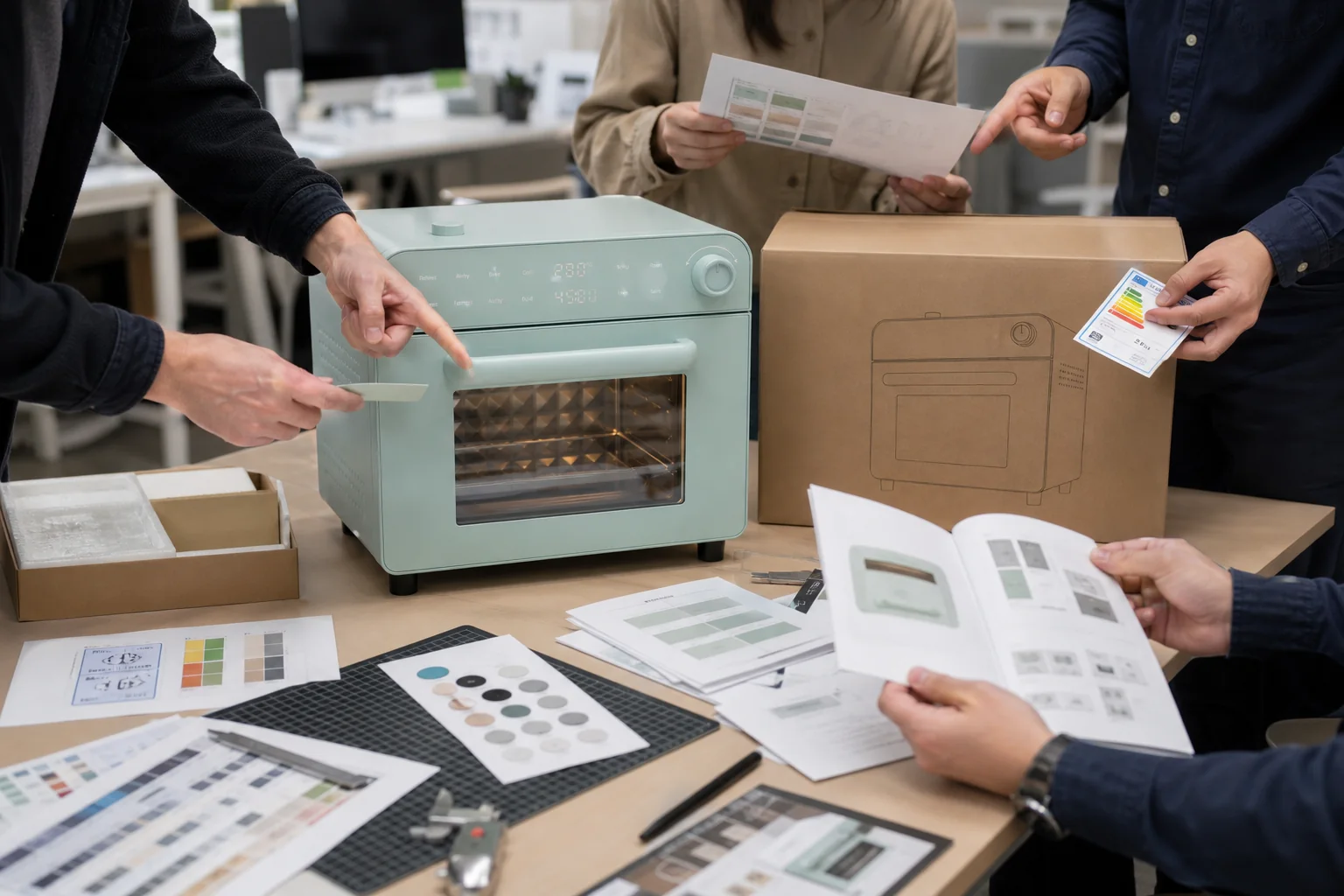
Oven packaging artwork, rating label and manual under controlled review
Compliance Operations

Artwork Approval Is a Compliance Gate, Not a Design Detail

Cartons, labels, manuals and online listings carry safety and traceability information. They need controlled approval just as much as the appliance construction.
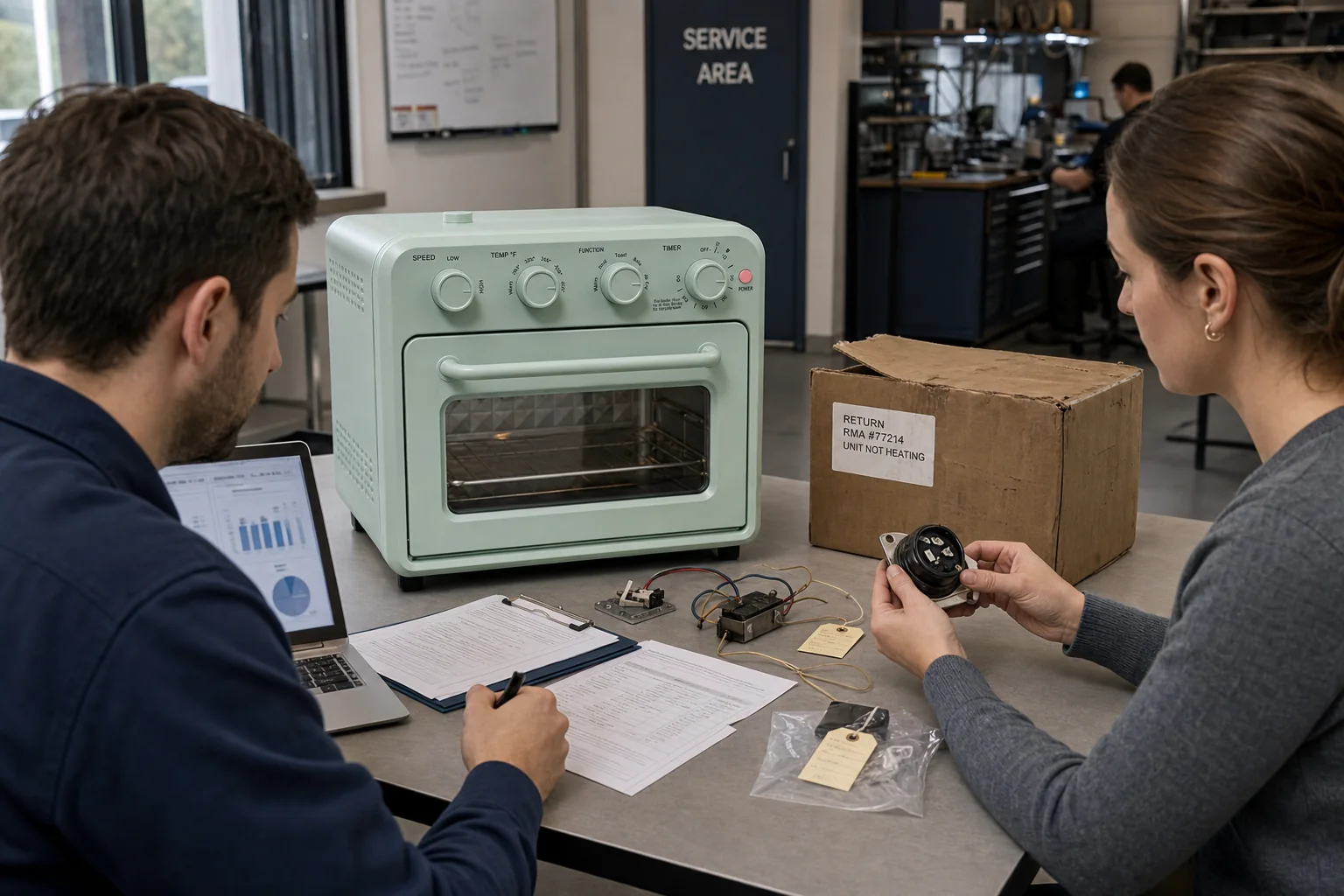
After-sales analyst reviewing oven return data and service components
Financial Planning

Warranty Reserve Planning: Turn Field Failures Into a Working Model

A useful warranty model connects units sold, time in service, confirmed failure modes and actual resolution costs instead of relying on one unexplained percentage.
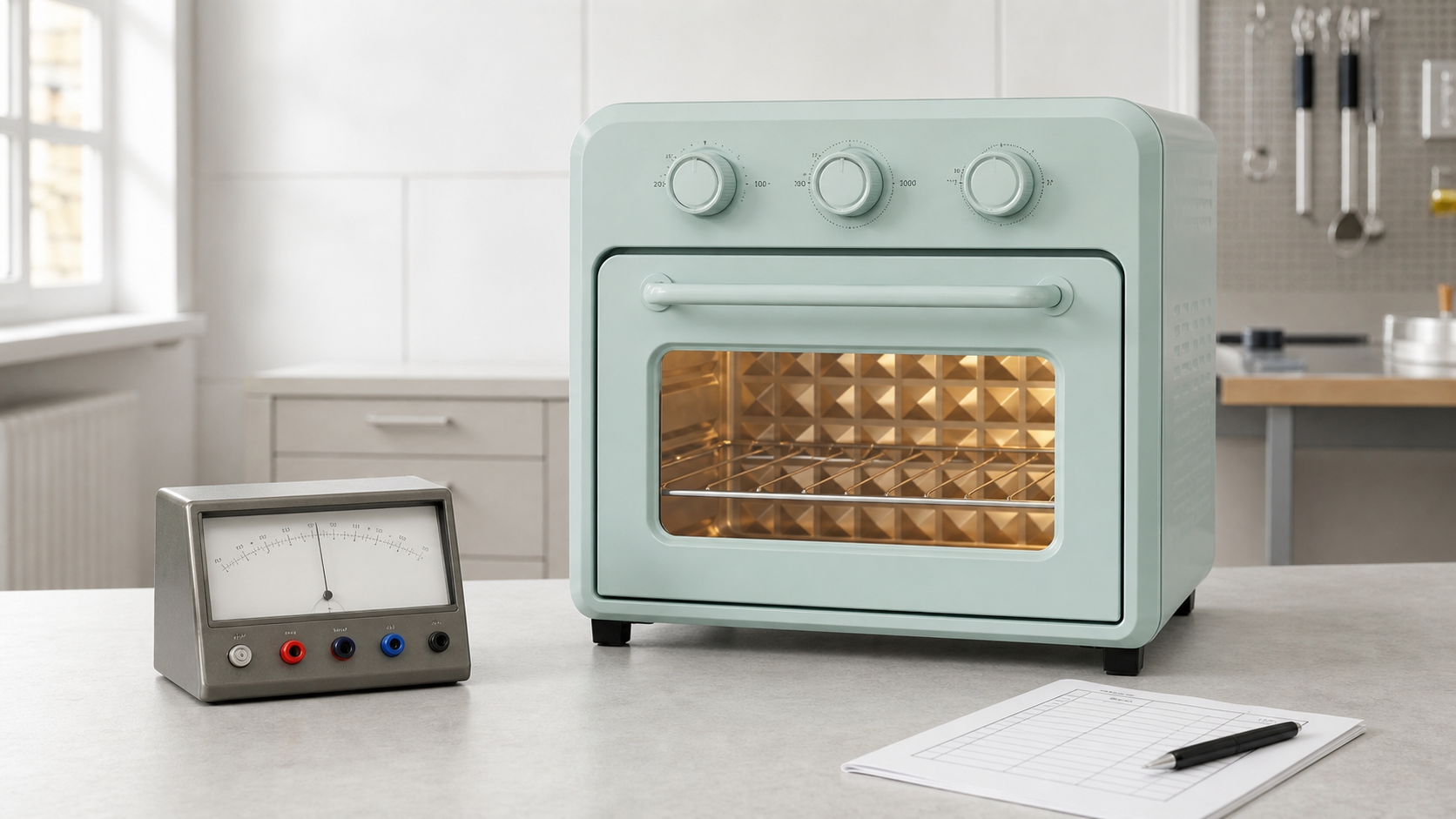
The 120 V Scope Trap: Why a Countertop Oven Can Fall Outside DOE’s Conventional-Oven Definition
Market Compliance

The 120 V Scope Trap: Why a Countertop Oven Can Fall Outside DOE’s Conventional-Oven Definition

A precise way for US-facing buyers to separate a countertop oven’s product class from the energy rules that apply to conventional household ovens.
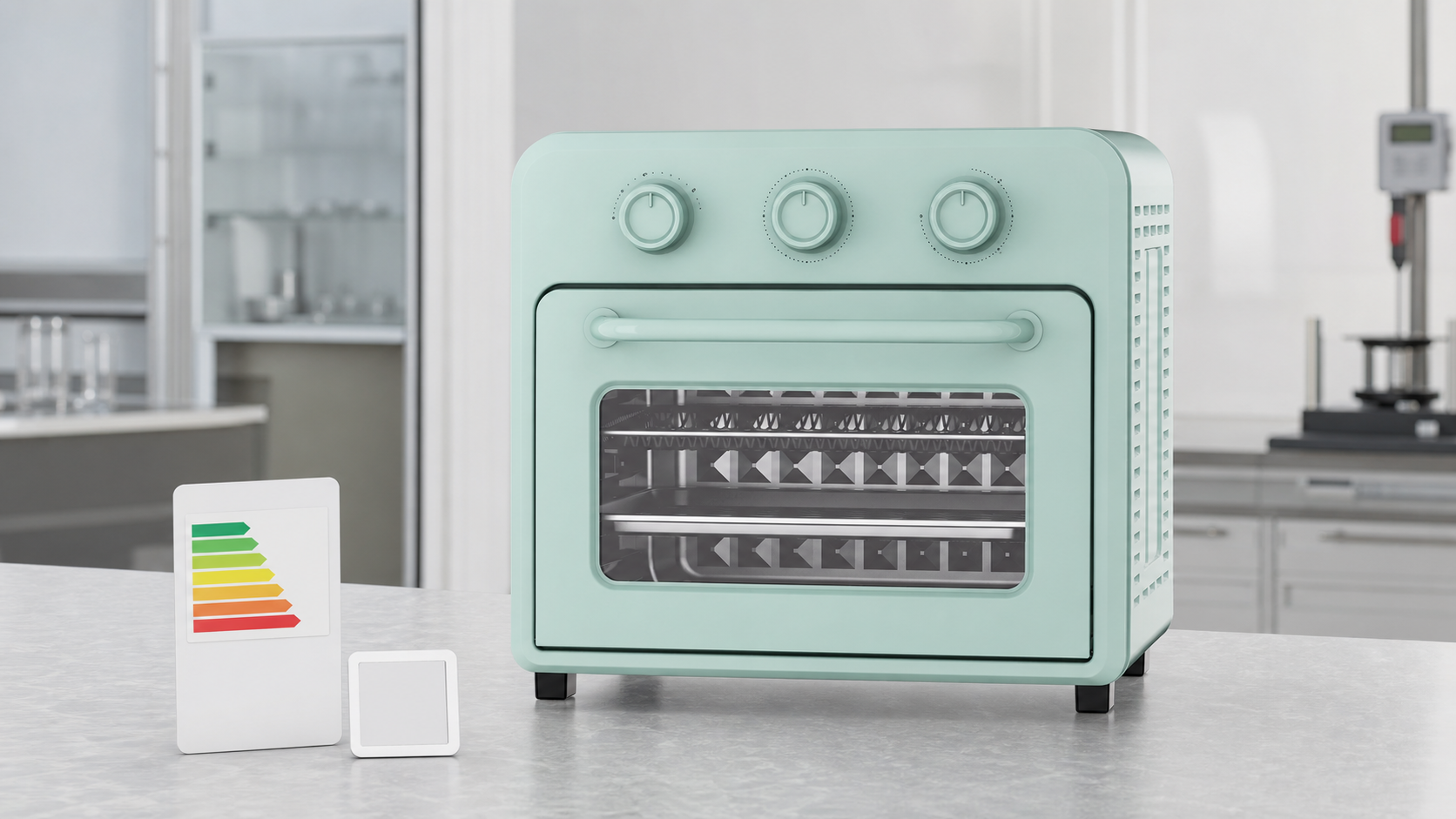
Small Oven, Different Rulebook: Separating EU Energy-Label Scope from CE and GPSR Duties
EU Compliance

Small Oven, Different Rulebook: Separating EU Energy-Label Scope from CE and GPSR Duties

Why being outside the domestic-oven energy-label scope is not a pass from broader EU product responsibilities.
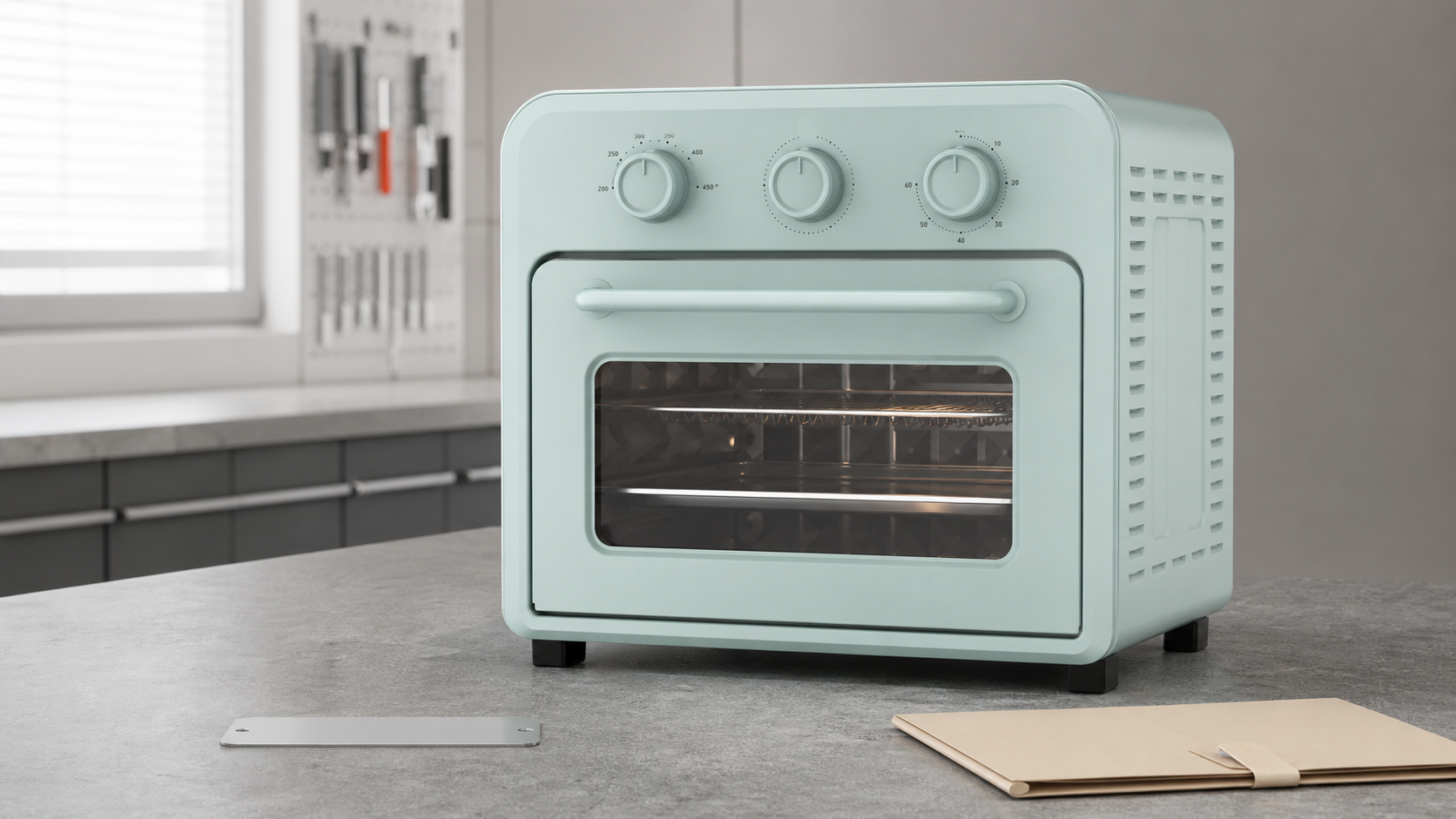
EU GPSR Traceability for Countertop Ovens: The Data You Need Before a Problem Happens
EU Compliance

EU GPSR Traceability for Countertop Ovens: The Data You Need Before a Problem Happens

A practical traceability file for brands that need to connect a product, batch, online listing and corrective action quickly.
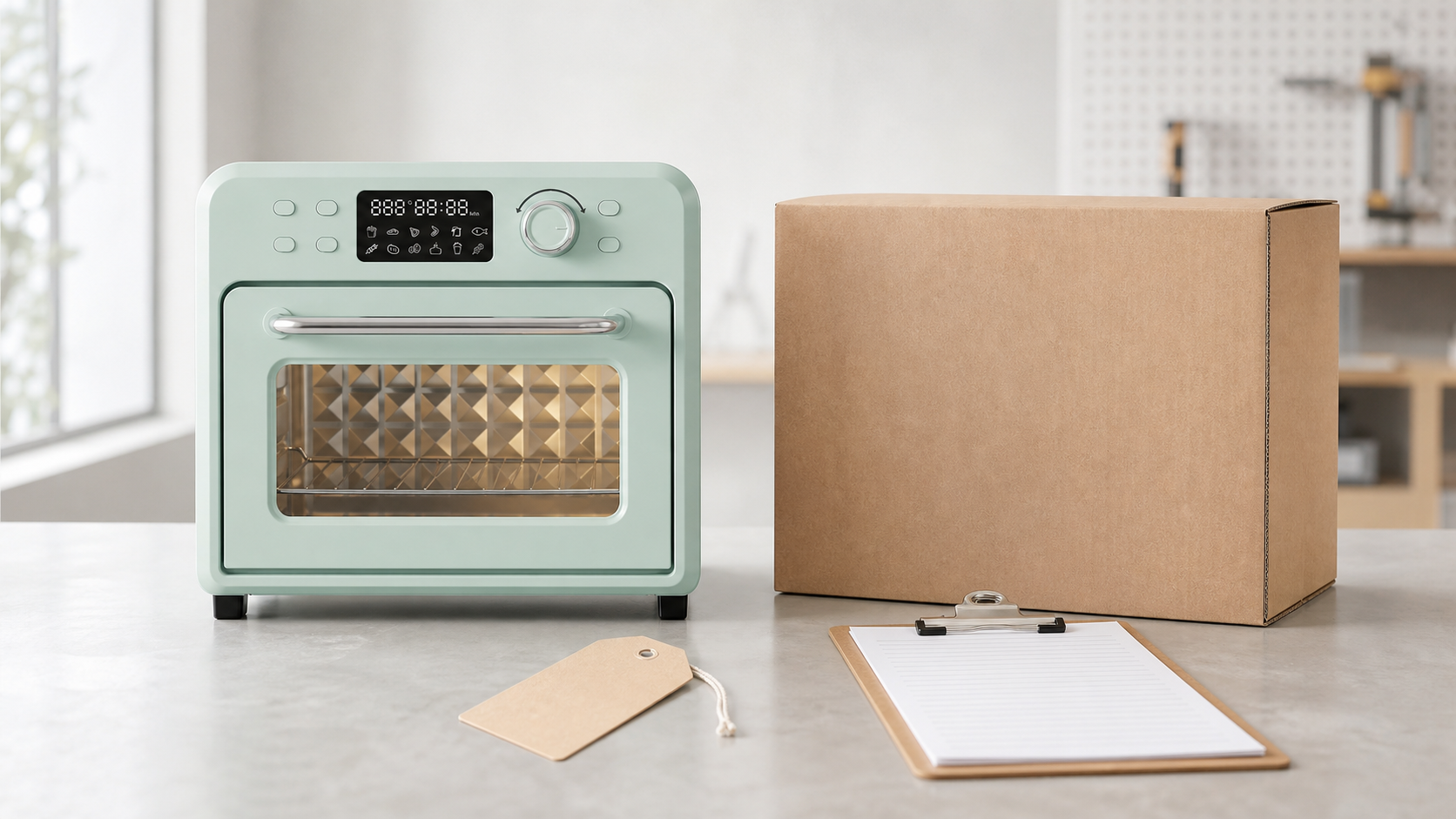
Recall-Ready by Design: Serial Numbers, Evidence Packs and the First 48 Hours
Product Safety

Recall-Ready by Design: Serial Numbers, Evidence Packs and the First 48 Hours

A sober planning guide for building recall readiness into the product and programme before a field incident occurs.
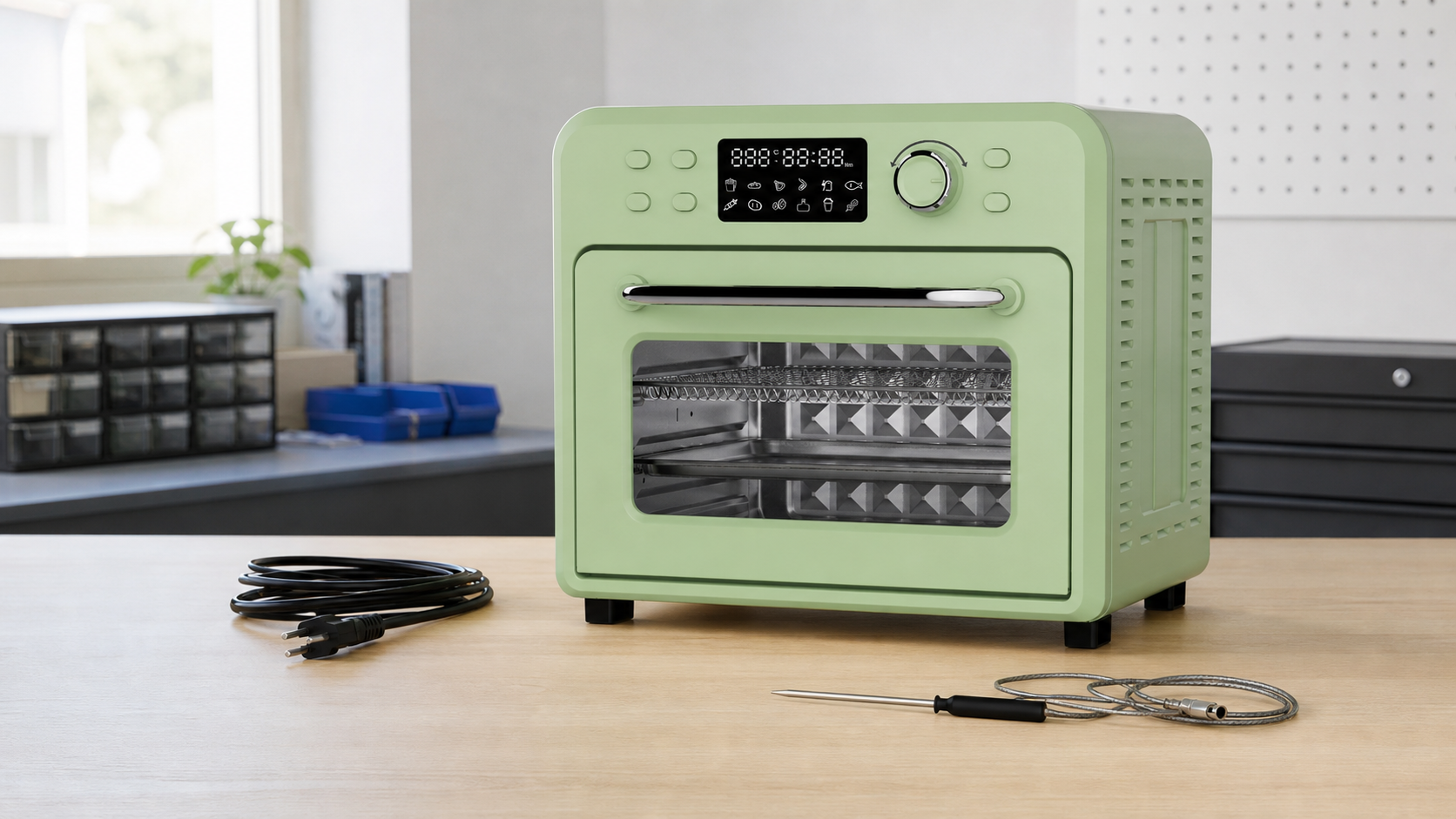
Wiring Is a System: Preventing Overheat Failures from Terminals to Strain Relief
Safety Engineering

Wiring Is a System: Preventing Overheat Failures from Terminals to Strain Relief

Why a safe heating circuit depends on connection design, assembly control and validation—not only the heating element rating.
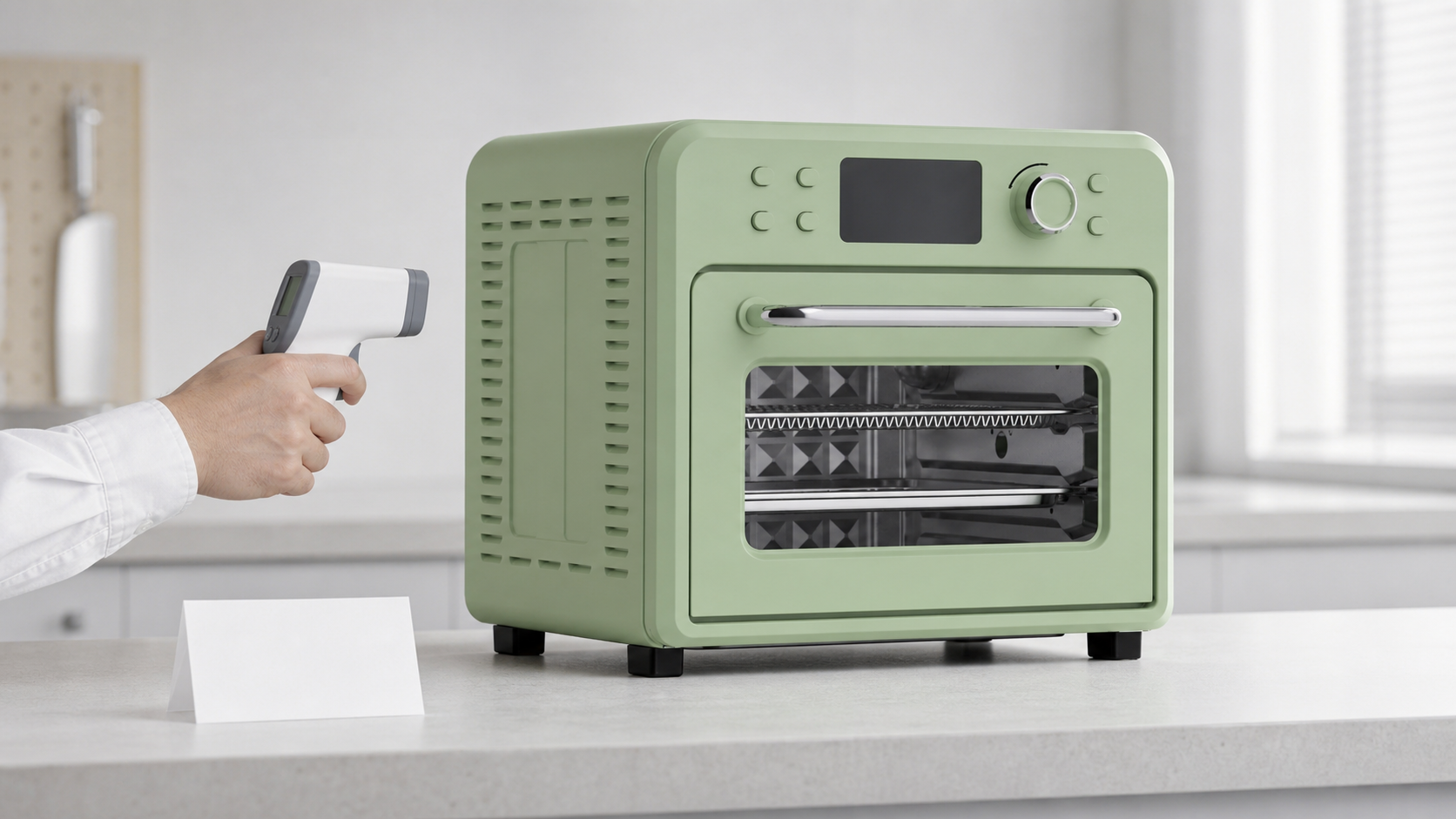
What “Cool Touch” Should Mean: A Contact Map, Heat Soak and Claim Boundary
Safety Engineering

What “Cool Touch” Should Mean: A Contact Map, Heat Soak and Claim Boundary

Turn a vague comfort claim into a testable product requirement that product, engineering and marketing can all understand.
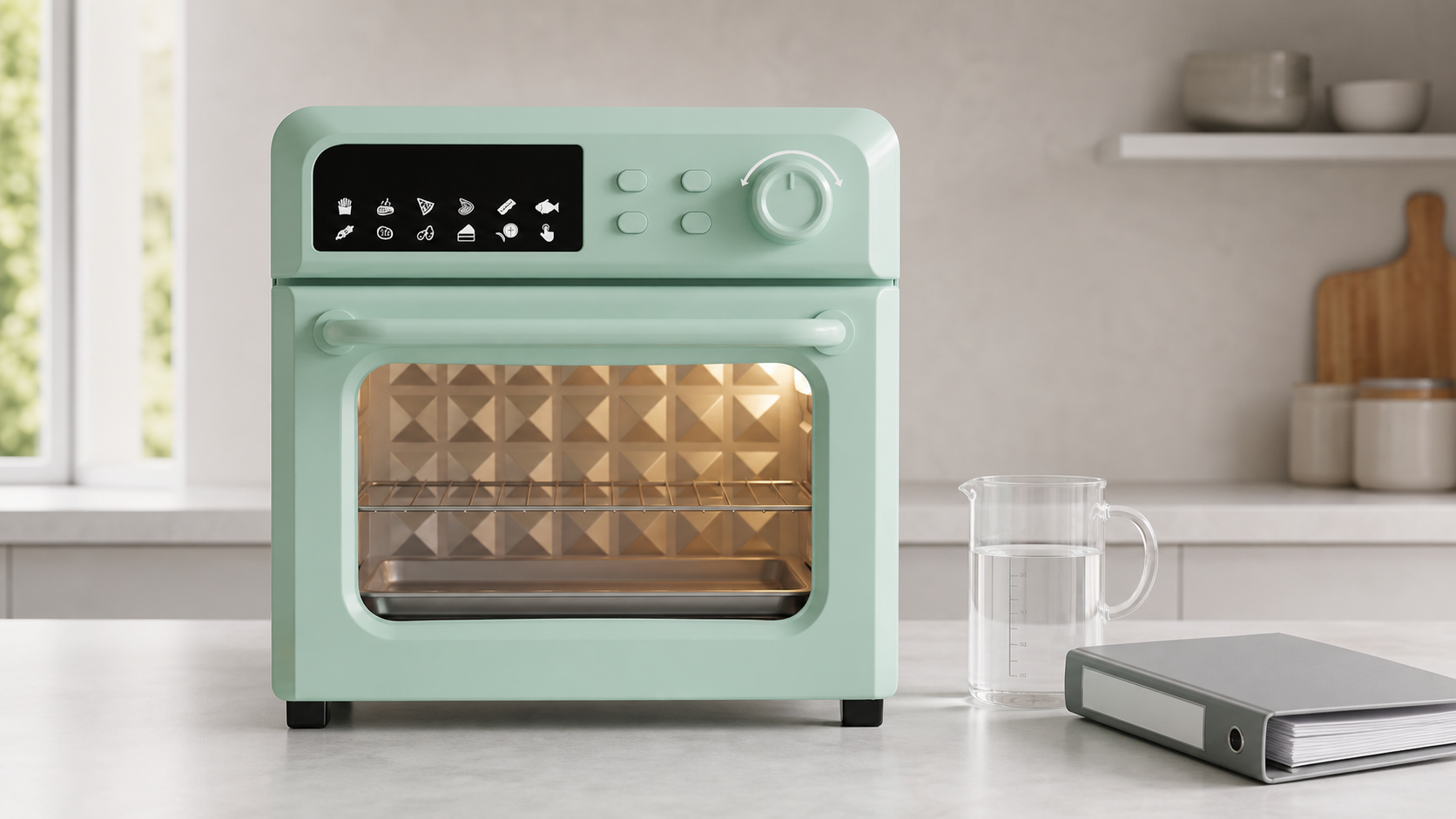
The Air-Fry Health Claim Checklist: What Marketing May Need to Prove
Claims & Marketing

The Air-Fry Health Claim Checklist: What Marketing May Need to Prove

A practical evidence filter for fat, calorie and health-related claims around air-fry functions.
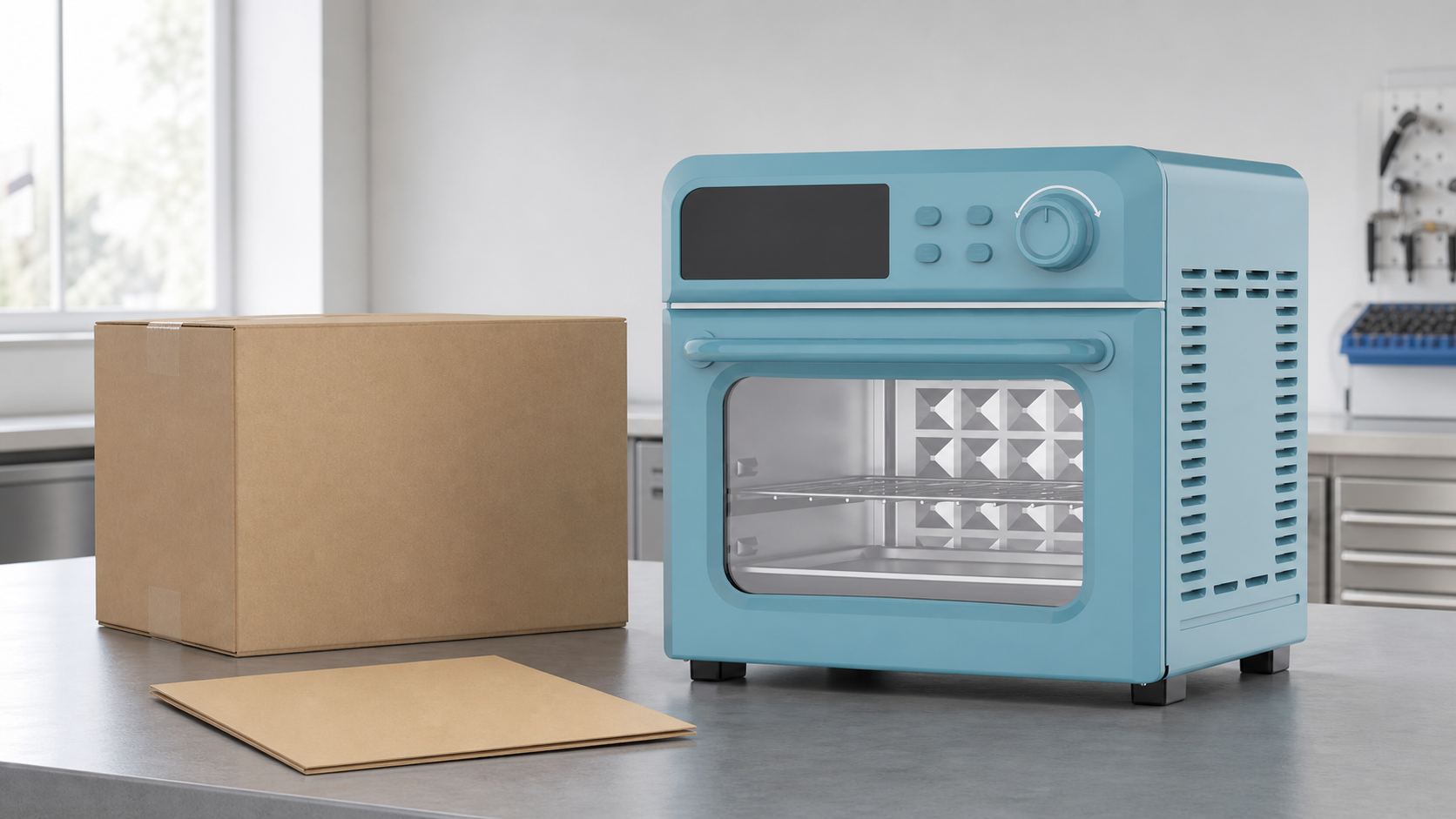
Origin Claims Need an Evidence File: “Made in USA”, “Designed in USA” and Imported Ovens
Claims & Marketing

Origin Claims Need an Evidence File: “Made in USA”, “Designed in USA” and Imported Ovens

How purchasing, packaging and web teams can keep origin statements specific, truthful and supported.
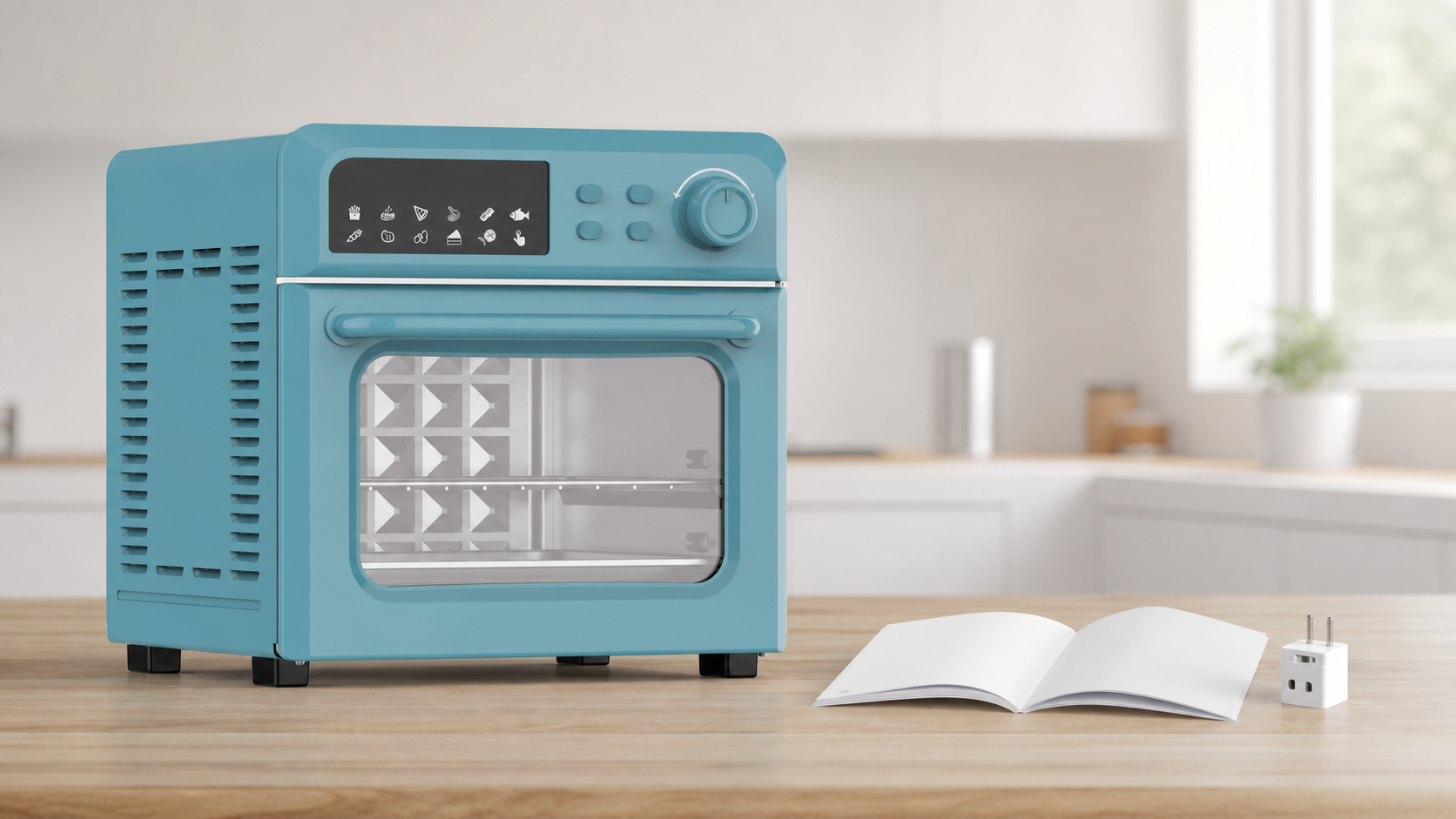
Canada Launch Brief: EnerGuide, Bilingual Labels and the 120 V Distinction
Market Compliance

Canada Launch Brief: EnerGuide, Bilingual Labels and the 120 V Distinction

A focused pre-launch check for brands adapting an oven programme for Canada.
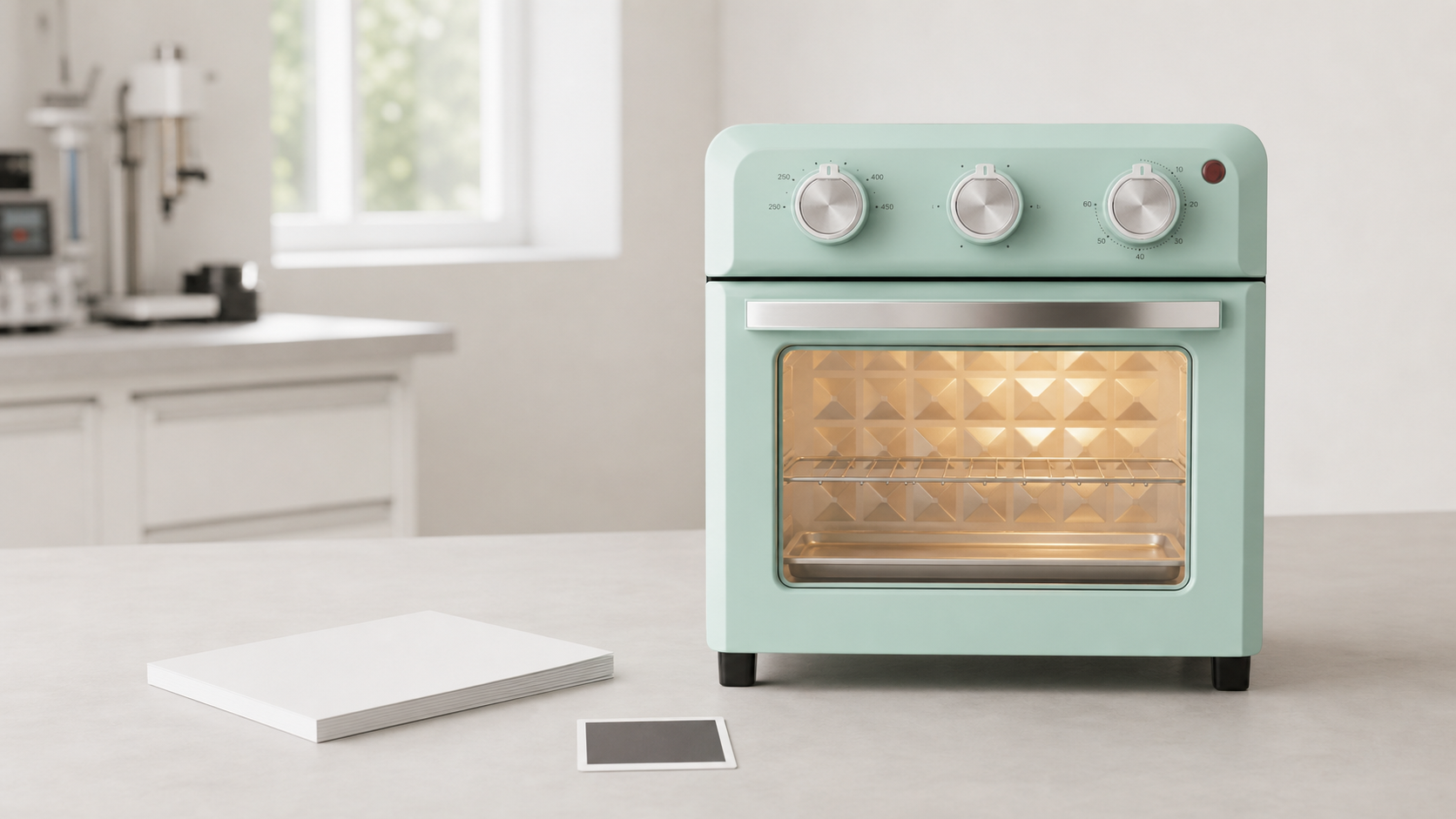
QR Codes Do Not Replace Critical Warnings: Building a Version-Controlled Oven Manual
Product Information

QR Codes Do Not Replace Critical Warnings: Building a Version-Controlled Oven Manual

How to use digital manuals without making safety information hard to find, unstable or impossible to match to a product revision.
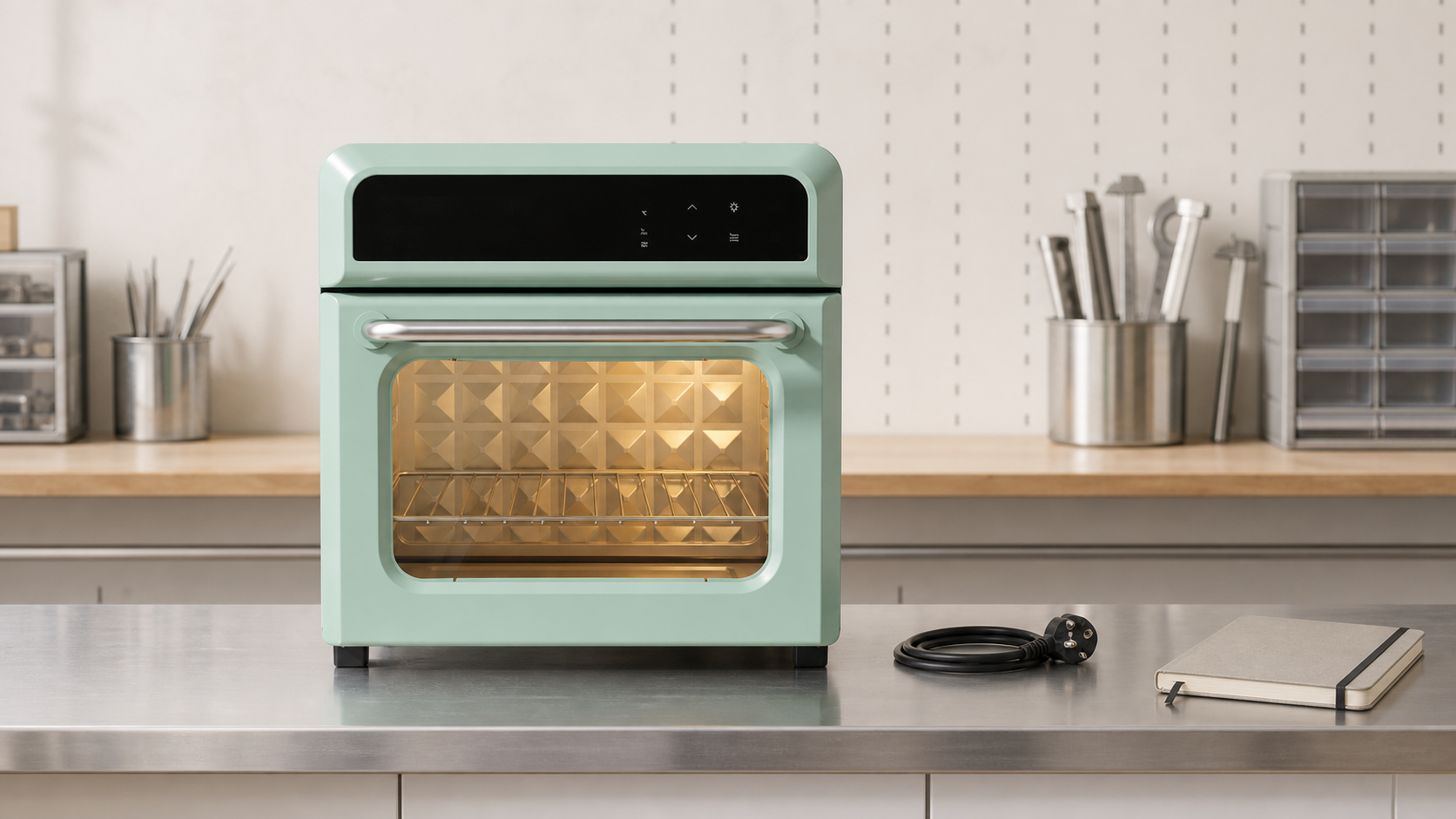
Digital Controls After a Power Cut: Safe Recovery vs. Unintended Restart
Control Design

Digital Controls After a Power Cut: Safe Recovery vs. Unintended Restart

A buyer’s framework for making power-interruption behaviour an explicit product requirement rather than an accidental firmware outcome.

Smart Features Without Fragility: Update Policy, Support Life and Offline Use
Connected Products

Smart Features Without Fragility: Update Policy, Support Life and Offline Use

A procurement brief for Wi-Fi-enabled ovens that protects the core cooking product when apps, accounts or cloud services change.
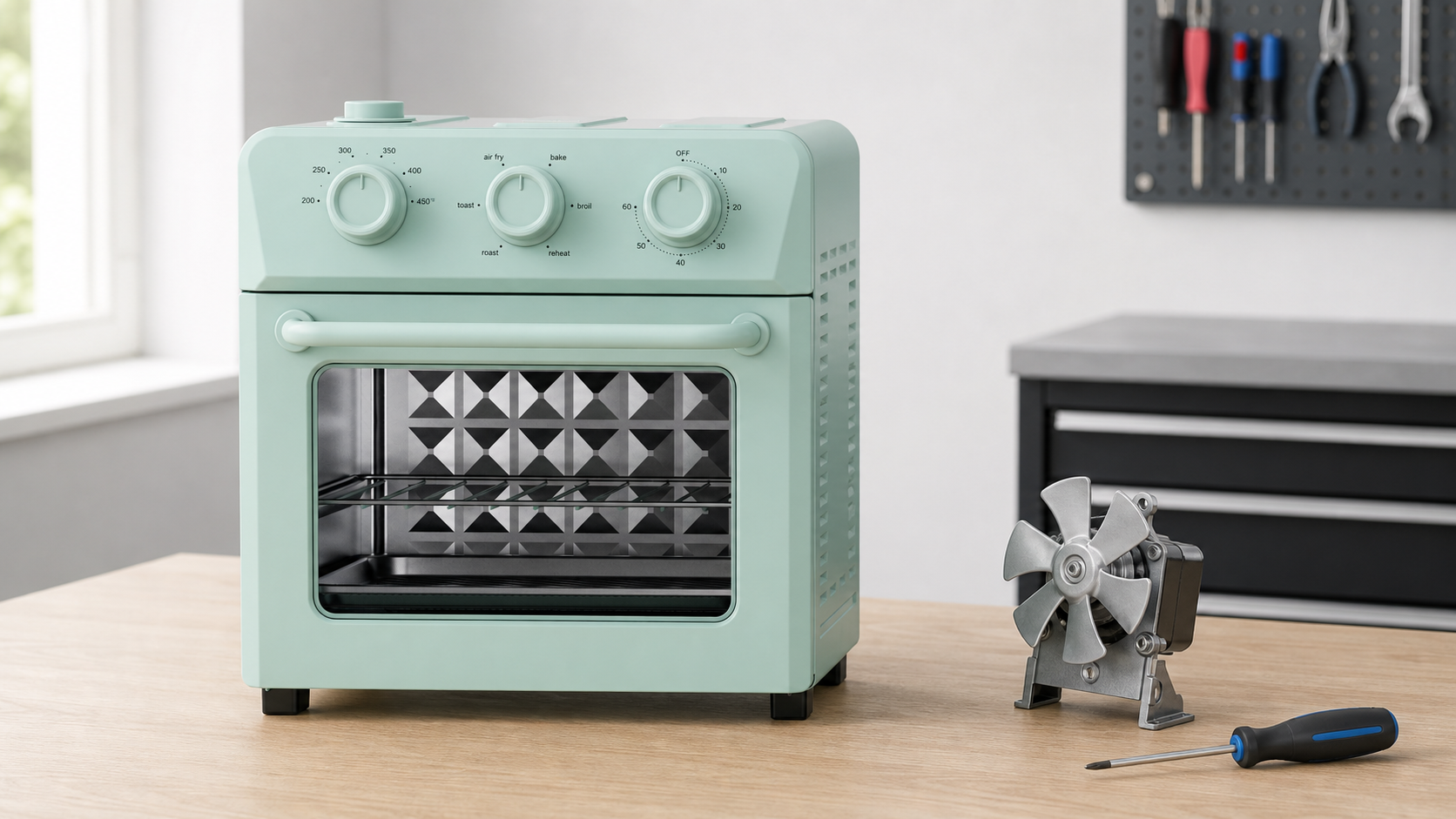
The False Economy of a Non-Serviceable Fan Motor: Repairability as After-Sales Engineering
After-Sales Planning

The False Economy of a Non-Serviceable Fan Motor: Repairability as After-Sales Engineering

How serviceability choices affect warranty cost, customer recovery time and the usable life of a countertop oven.
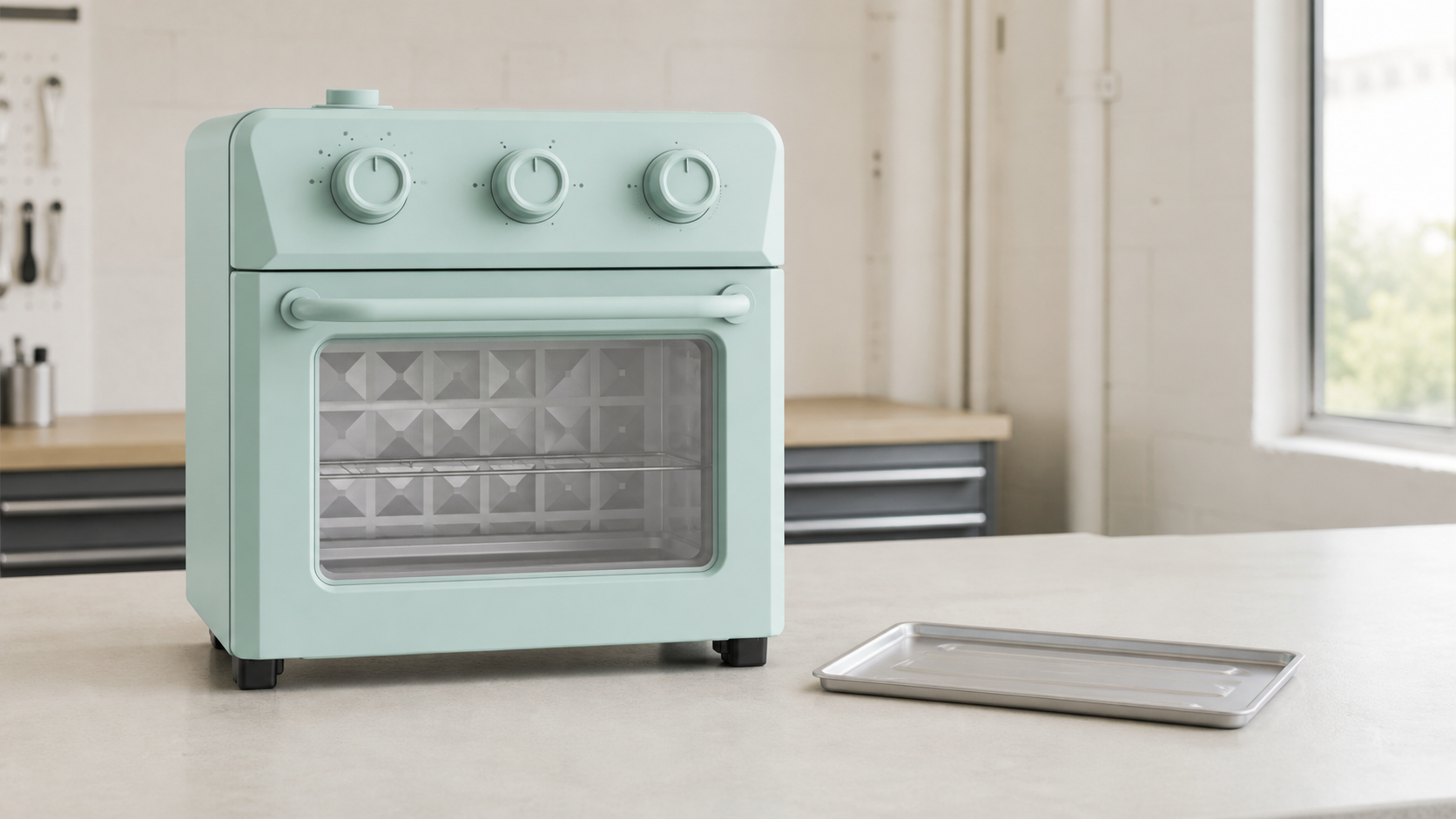
Grease, Crumbs and Fire Load: Designing Cleanout Around the Airflow Path
Product Design

Grease, Crumbs and Fire Load: Designing Cleanout Around the Airflow Path

Why cleanability must be considered together with grease routes, heater clearance, airflow and user behaviour.
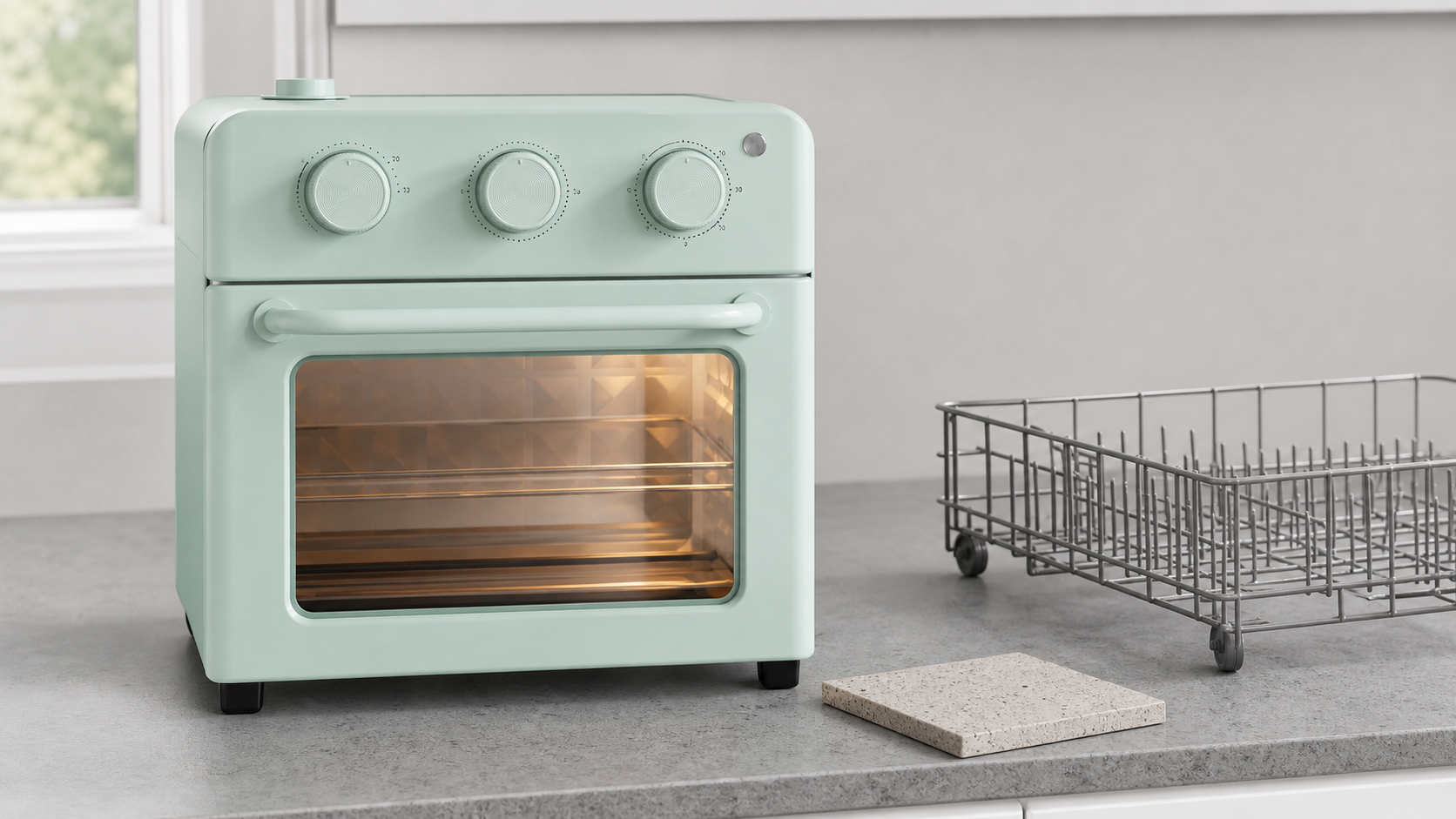
The “Dishwasher-Safe” Claim: A Materials and Finish Validation Plan
Claims & Marketing

The “Dishwasher-Safe” Claim: A Materials and Finish Validation Plan

A practical method for deciding whether racks, trays, baskets and handles can carry a dishwasher-safe claim.
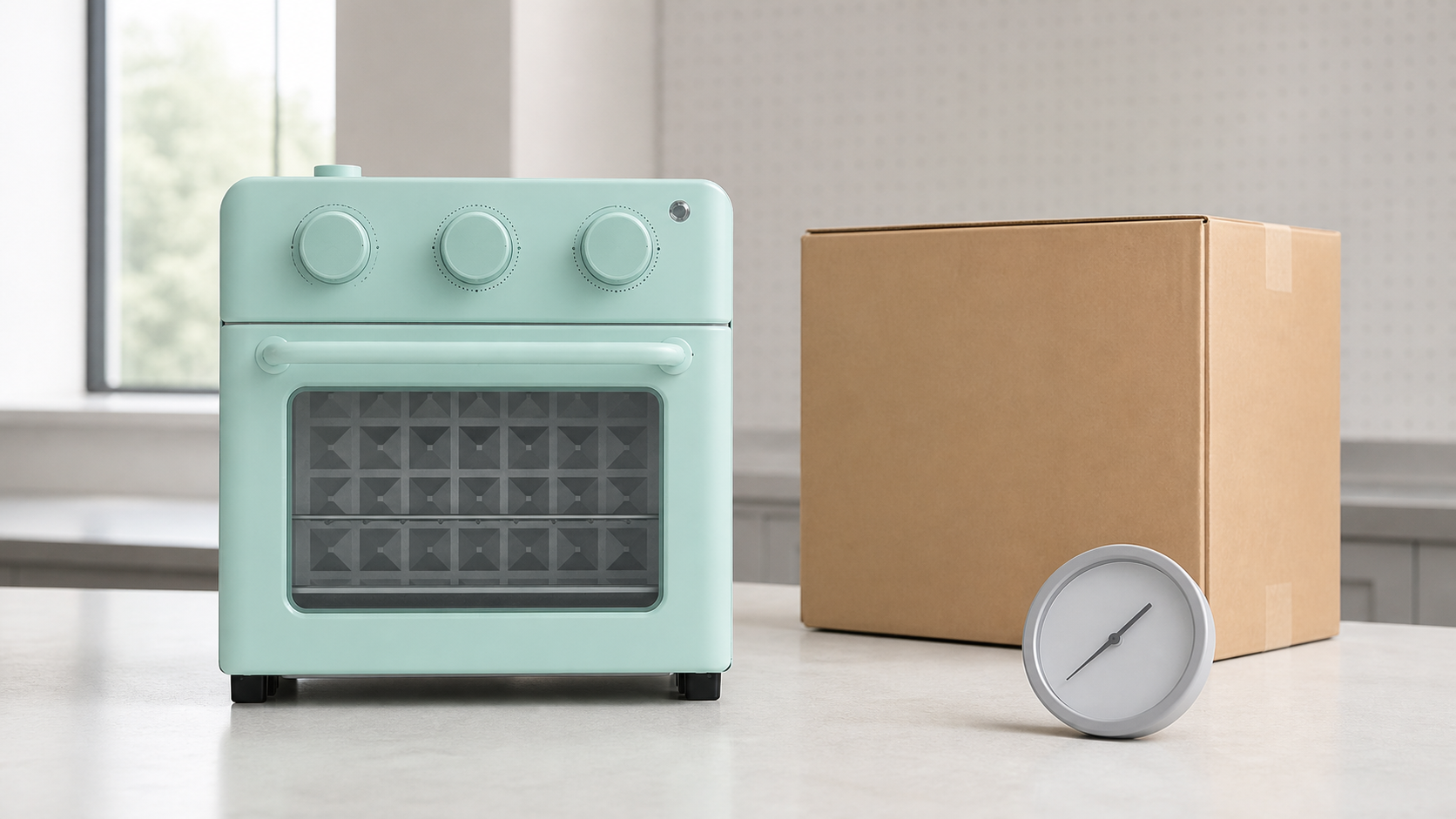
Shipping a Hot-Climate Product: Heat, Humidity and Storage-Condition Risks
Logistics Engineering

Shipping a Hot-Climate Product: Heat, Humidity and Storage-Condition Risks

A pre-shipment risk review for ovens that may sit in warm, humid warehouses or containers before sale.
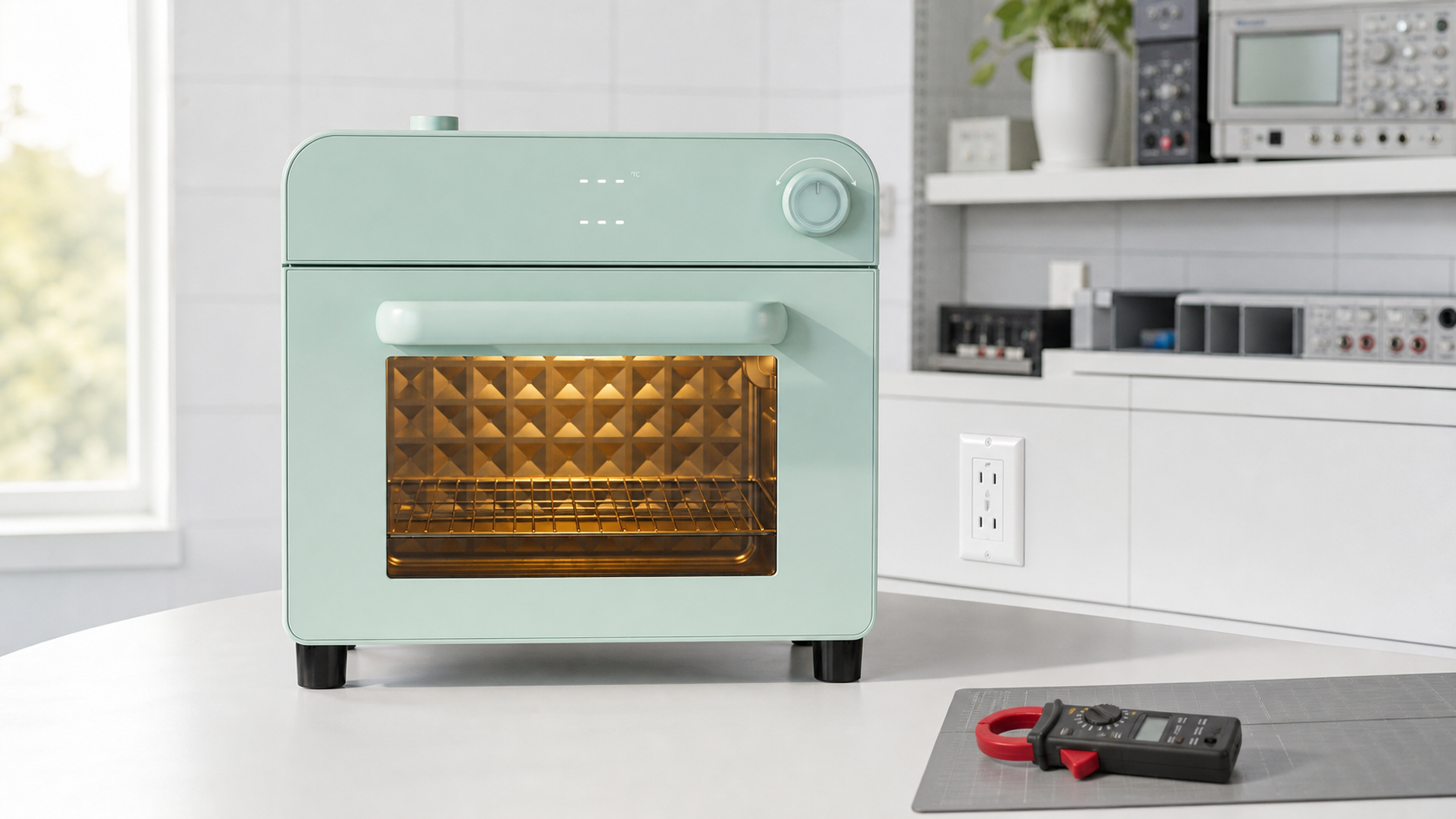
The 15 A Kitchen Reality: Circuit Loads, Plug Choices and Inrush Expectations
Electrical Engineering

The 15 A Kitchen Reality: Circuit Loads, Plug Choices and Inrush Expectations

Questions to settle before a high-power countertop oven reaches a kitchen where other appliances share the circuit.
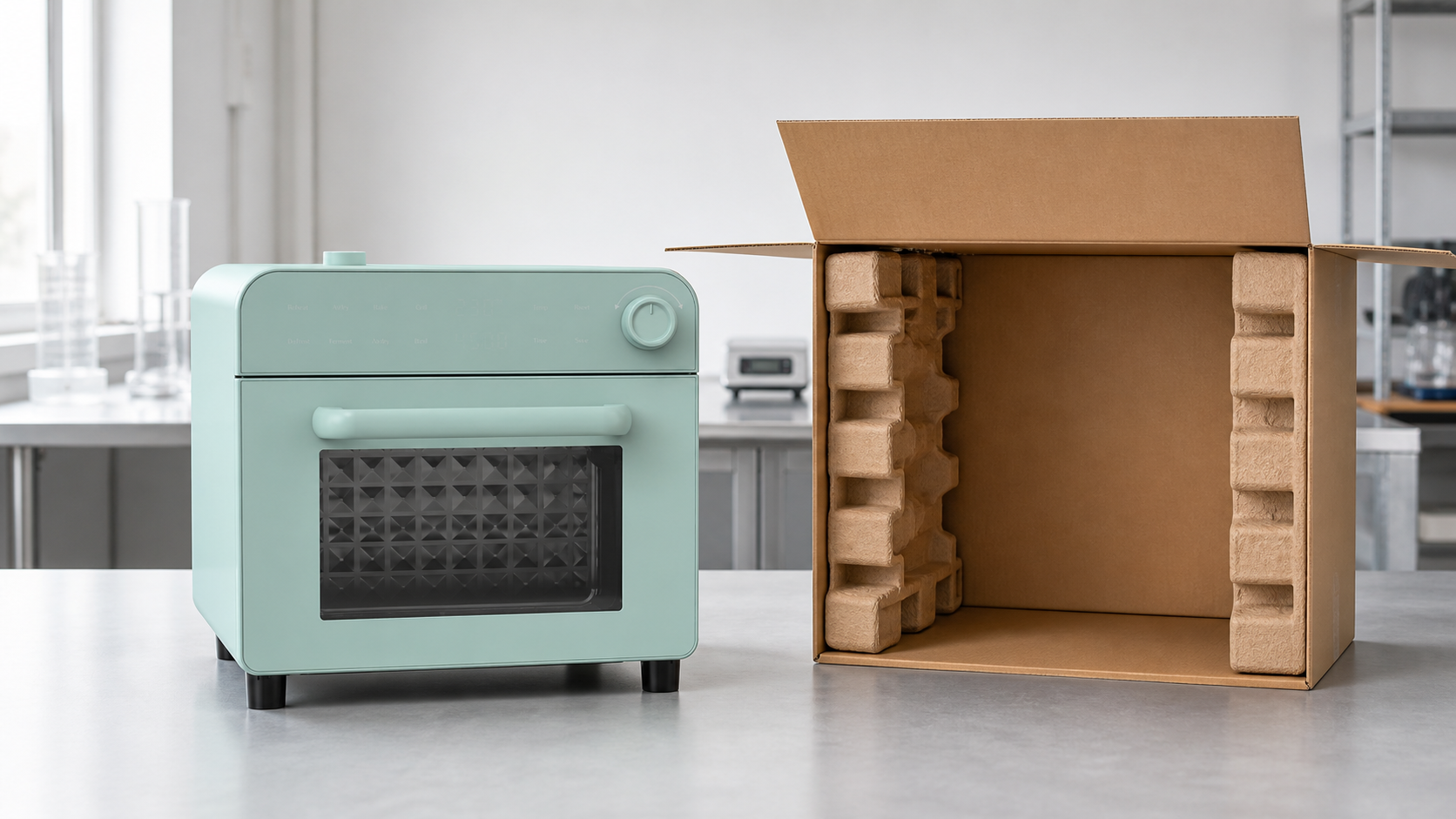
Packaging Compliance vs. Product Safety: Keep EPR, Transit Tests and Warnings Separate
Sustainability & Logistics

Packaging Compliance vs. Product Safety: Keep EPR, Transit Tests and Warnings Separate

A clear division of responsibilities for teams that need to reduce packaging impact without weakening protection or safety information.

End of Life Starts in the CAD File: Materials, Fasteners and Small-Appliance Recycling
Sustainability & Design

End of Life Starts in the CAD File: Materials, Fasteners and Small-Appliance Recycling

Design choices that can make an oven easier to identify, service and route responsibly at end of life—without overstating recyclability.

An Image Is a Claim: How Product Renders Can Mislead About Capacity, Accessories and Features
Claims & Marketing

An Image Is a Claim: How Product Renders Can Mislead About Capacity, Accessories and Features

A review process for product images that keeps visual selling assets aligned with the production SKU and evidence file.

From insight to action

Have a product brief or sourcing question?

Share your market, volume and certification direction with our team.

Discuss Your Project